Parasites are among the oldest companions of humankind, and they have evolved remarkably clever ways of finding a new host. How do parasites enter the human body? It is really asking about the many doors that exist between us and our environment: the mouth, the skin, the bite of an insect, and even the bond between mother and child. You have to understand these entry points, which explain the parasitic infection causes, help people recognize their own risk, and make prevention far more practical. This blog walks through the common parasite sources and the most common routes, from the food on your plate to the soil under your feet, and explains how a medicine such as ivermectin 12 mg fits into treatment.
Table of Contents
ToggleThe Hidden Hitchhikers on Your Plate and in Your Glass
How do parasites enter the human body? The most frequent route for parasite transmission is the one that begins at the dinner table. Intestinal parasites such as Giardia, Entamoeba, and Cryptosporidium travel as microscopic cysts or eggs that survive well outside the body. When food is washed, prepared, or irrigated with unsafe water, or handled by someone who has not washed their hands, these tiny forms are swallowed along with the meal. Raw salads, unpeeled fruit, and street-side snacks left uncovered are classic examples of contaminated food that carry hidden passengers.
How do parasites enter the human body? Water is an equally important carrier. Streams, wells, ponds, and municipal supplies that are polluted with sewage can harbor cysts that resist chlorine and survive for weeks. Once swallowed, the parasite passes through the stomach acid in a protective shell, then releases itself in the intestine, where warmth and nutrients allow it to multiply.

When Dinner Fights Back: Raw and Undercooked Meat
Some parasites live inside animals and wait for a human to eat the tissue. How do parasites enter the human body? Undercooked meat is a well-known source, and different animals carry different risks. Pork can contain tapeworm cysts and Trichinella larvae, beef may harbor another type of tapeworm, and raw or lightly cooked freshwater fish can carry fish tapeworm and liver flukes. Wild game and undercooked sausages are also risky. Because the larvae are embedded in muscle, they survive until the meat is eaten and then mature in the gut, sometimes growing into adult worms that can stay for years. Cooking meat to a safe internal temperature, or freezing it for the appropriate period, kills most of these organisms.
Walking Into Trouble: Contaminated Soil
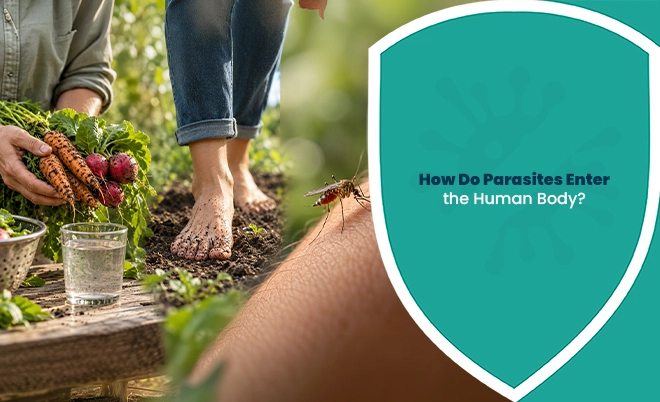
How do parasites enter the human body? Soil is a quiet reservoir of infection, especially in warm, damp regions with limited sanitation. Roundworm and whipworm eggs are passed in the feces of an infected person, settle into the ground, and become infectious after a few weeks. Children who play in dirt and then put their fingers in their mouths are at particular risk, as are gardeners and farmers. Contaminated soil can also deliver parasites through the skin. Hookworm larvae, for example, penetrate bare feet and then travel through the bloodstream to the lungs, are coughed up, and are swallowed to mature in the intestine.
Wings, Bites, and Borrowed Blood
How do parasites enter the human body? Not every parasite needs to be swallowed. Insect bites are an efficient delivery system, and the best known are mosquito borne parasites. Female Anopheles mosquitoes transmit the Plasmodium organisms that cause malaria, while other mosquito species spread the worms behind lymphatic filariasis. Sandflies carry Leishmania, tsetse flies carry the trypanosomes of sleeping sickness, and triatomine bugs transmit Chagas disease. In each case, the insect acts as a living syringe, injecting the parasite directly into the skin or bloodstream when it feeds. These infections are generally not related to the digestive tract in any way. Consequently, they are often mistaken for viral fever in the initial stages. Using repellents, bed nets, and protective clothing remains the best defense.
How Parasites Spread: Hands, Habits, and Hygiene
Poor hygiene is the thread that connects many routes of infection. How do parasites enter the human body? If hands are not washed after using the toilet, changing diapers or handling soil, microscopic eggs can be transferred from the fingers to food and then to the mouth. The cycle is easily kept in overcrowded homes with shared bathrooms and no clear water. Eggs are often found under fingernails, especially in children who bite or scratch their nails.
Passing It On: Between People
Person to person transmission occurs when a parasite or its eggs pass directly from one individual to another. How do parasites enter the human body? Pinworms are a familiar example. An infected child scratches the itchy skin around the anus at night, picks up eggs, and then spreads them to bedding, toys, and other family members. Giardia and Cryptosporidium can spread through close contact, shared towels, or swimming pools. Head lice and scabies mites spread by contact with hair or skin. Trichomonas is a type of parasite that’s sexually transmitted. Toxoplasma can be passed from mother to baby during pregnancy. Uncommon cases of transmission by organ transplants and blood transfusions.
From Paw to Person: Our Animal Bonds
How do parasites get into the human body? Infection is caused by animal to human transmission. People can get Toxoplasma if they clean litter boxes or gardens with contaminated soil. Cats shed Toxoplasma in their feces. Dogs and cats can carry roundworm and hookworm larvae, and the eggs can reach children who play where pets defecate. Dogs in some regions carry Echinococcus, a tapeworm that causes slow-growing cysts in the liver and lungs. Livestock, rodents, and wild animals add to the pool, and handling raw meat or farm animals without washing afterward can complete the chain. Regular deworming of pets and prompt disposal of animal waste greatly lowers this risk.
Why Some People Are More Vulnerable
Each patient does not experience the same pain and the same risk of parasitic infection. Pregnant women and children face a higher risk compared to young adults. Travellers may get infected when they travel low sanitation areas or tropical regions. Moreover, those who have weak immune systems can be infected easily. How do parasites enter the human body? People who work directly with water, soil, or animals have a high risk of being infected. People need to focus on their foods and drinks for precaution. The common symptoms are diarrhea, abdominal pain, bloating, weight loss, fatigue, itching, rashes, and visible worms in stool. Because these symptoms overlap with many other conditions, proper testing, usually stool examinations, blood tests, or imaging, is the only reliable way to confirm the diagnosis.
How Do Parasites Enter The Human Body? Medical Option
When parasitic diseases are confirmed, treatment is usually straightforward, and ivermectin 12 mg is one widely used option. Ivermectin is an antiparasitic medicine that binds to nerve and muscle cells in certain parasites, causing paralysis and death. It is especially effective against Strongyloides, one of the more troublesome intestinal worms, and it is also used for onchocerciasis (river blindness), scabies, and some other worm infection causes. A single dose is often enough for some conditions, while others require repeated courses. The 12 mg tablet is a common strength, but the number of tablets depends on body weight and the type of infection, so the dose must be set by a healthcare provider.
Some practical points are worth knowing. Ivermectin does not work against every parasite, so it should be used only when a clinician has identified a suitable target. The common side effects are dizziness, nausea, itching, and a temporary skin rash.
How Do Parasites Enter The Human Body? Everyday Prevention
Parasite prevention depends on blocking each of the pathways described above. Wash hands thoroughly with soap before eating and after using the toilet. People need to drink boiled water or filtered water. You have to wash raw fruits and vegetables. Cook meat and fish thoroughly, wear shoes outdoors, and keep fingernails short. Use insect repellent, sleep under treated nets in malaria regions, and keep pets dewormed. Where mass deworming programs exist, taking part protects both you and your community.
Summing Up
Parasites reach us through food, water, soil, insects, other people, and animals, and most infections are preventable with consistent habits. When it does occur, it can be effectively cleared with accurate diagnosis and appropriate treatment, including medicines such as ivermectin 12 mg when recommended. Get immediate medical attention if you have ongoing digestive symptoms, a fever that can’t be explained, or unusual changes to your skin after you’ve been traveling or have known exposure.
FAQs
1. How does ivermectin 12 mg work?
This medication stops worms from connecting to glucose from their hosts’ bodies. This works by paralyzing and killing the parasites. Moreover, they prevent them from reproducing or growing in their hosts’ bodies in the future.
2. How do parasites enter the human body?
Parasites enter the human body through skin penetration. They can also enter through contaminated soil and water. People can be infected from the contact of infected people.
3. Is only contaminated water cause of infection?
Contaminated water does not need to be swallowed by the glassful: brushing teeth, rinsing vegetables, or swallowing a little pool water by accident can be enough.
4. How does Strongyloides infect people?
Strongyloides follows a similar path and can even reinfect the same person for decades. Simply wearing shoes dramatically reduces this form of parasite exposure.
5. Can pregnant or small children take ivermectin?
In people with heavy infections, who live in areas where some parasites are endemic, or who are pregnant or giving the medicine to a small child, always seek medical advice first. Taking ivermectin without a diagnosis or in doses that are not recommended for you may be ineffective and unsafe.