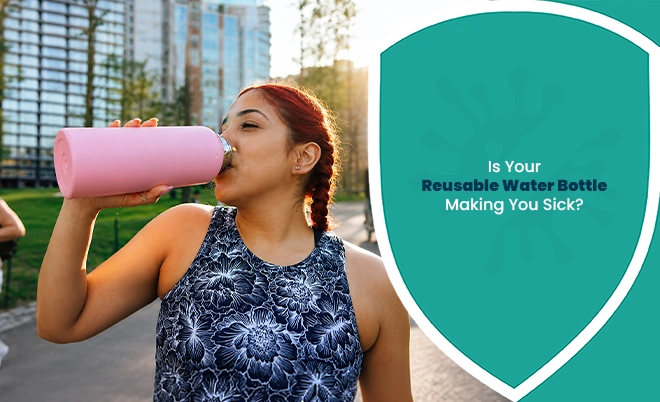
It’s with you all of the time. It’s always on your work desk, in your gym bag, in your car, and beside your bed at night. You’ve made a decision to use a reusable water bottle, which has become part of your daily routine. You have chosen to give up the plastic water bottle, and you are now drinking water in a reusable bottle.
Table of Contents
ToggleWhat happens if the bottle you’ve been drinking from daily is actually hiding something less healthy than water?
The shocking fact is that the bacteria in reusable water bottles can increase in numbers much more quickly than most people. The moisture, heat, and remaining particles can create an environment for the growth of germs in your favourite bottle. An unwashed bottle could introduce you to harmful bacteria, mold, and even infections, rather than make you healthy.
Before you take another sip, you may want to ask yourself one question: When’s the last time you really cleaned your reusable water bottle?
Do You Know? Your Reusable Water Bottle Bacteria Could Be Dirtier Than You Think
You might quickly rinse your bottle and believe it’s clean. However, bacteria know how to hide where you can’t find them. Narrow openings, rubber seals, straws, and bottle caps can hold moisture and food particles. With warm temperatures, microbes start to multiply. Studies and research indicate that reusable bottles can harbor a lot of bacteria when they are not regularly cleaned. It’s not the bottle but the environment within the bottle.
Think about your daily routine:
- Drinking directly into the bottle.
- Your mouth can harbor bacteria that spread into it.
- This bottle can keep closed for hours.
- Moisture is held in place in the interior
- You fill it many times without cleaning it out
This makes it a perfect example of a reusable water bottle for bacteria to grow.
What Types of Germs Can Hide Inside Your Bottle?
There could be more than one unwanted microorganism in your bottle.
- coli
A problem that needs to be addressed is contamination of water bottles with E coli bacteria. E. coli bacteria are actually normally linked to digestive illness and inadequate hygiene. Contamination can happen if:
- The use of plastic gloves is not mandatory.
- Not washing hands properly.
- Bottles are not thoroughly cleaned.
- There is contamination in the water sources.
Symptoms can include stomach pain, diarrhea, nausea, vomiting, and fever.
Mold
Black, damp, sheltered areas inside the lids of water bottles and inside straws are prime breeding grounds for the growth of mold in water bottles. Mold exposure can cause allergic reactions, sinus irritation, coughing, and so on.
Fungi
Water bottle fungal infection risks may also be influenced by humid conditions, particularly for those with compromised immune systems. Fungi can cause:
- Mouth irritation
- Throat discomfort
- Oral infections
Streptococcal Bacteria
Sometimes you share your bottles with your friends, co-workers, and family members. This may make you more susceptible to bacteria that cause throat infections.
One rising question is whether a strep throat water bottle scenario is considered by some. The answer is Yes. Contaminated bottles can spread germs from person-to-person.
Warning Signs Your Bottle May Be Making You Sick
At first, your symptoms may appear as if they are occurring at random. Then, you feel tired, your throat is feeling irritated, and your stomach is feeling a bit off. You believe that you had taken stress, weather changes, or food is responsible for that. However, your bottle may need a tune-up.
Here are some of the typical dirty water bottle symptoms:
- Frequent sore throat
- Upset stomach
- Nausea
- Diarrhea
- Headaches
- Bad breath
- Persistent cough
- Mild fever
- Sinus irritation
If symptoms occur again and again, and you can’t see any cause, you may need to check your hygiene routine, such as how you clean bottles.
The Sneaky Places Germs Love Most
It’s okay to wash the main container, but take the time to wash the smaller parts. Unfortunately, bacteria don’t always select the easy-to-clean area. High-risk spots include:
- The bottle cap gathers up saliva and wetness. This is frequently neglected when cleaning.
- The small rubber seals (Rubber gaskets) can hold water and may allow for the growth of mold.
- Use of reusable straws leaves narrow areas in the straw where residue can form.
- Small cracks and openings provide hiding places for bacteria.
Do You Not Think Treatment Is Needed?
Minor exposures to BGSUs are rarely associated with serious illness. When bacterial infections are severe, however, medical attention is warranted. Water bottle infection treatment is solely based on the organism that produces the symptoms. Sometimes antibiotics are prescribed for proven bacterial infections. These can be typical categories, such as:
Amoxycillin – Zylomox 250mg
Amoxycillin is a penicillin antibiotic and is used to treat certain infections caused by bacteria, such as respiratory or throat infections. The mechanism of action is by disrupting the formation of the bacterial cell wall.
Azithromycin Category – Azithromycin 250 mg Tablets (Sandoz)
Azithromycin is a member of the macrolide antibiotic group and can be used to treat some respiratory tract, ear, skin, and throat infections caused by bacteria. Unlike penicillin-type antibiotics, it works by interfering with the process of making proteins in bacteria.
But these antibiotics should not be used without the supervision of a medical specialist. Why? Because:
- Not all infections are caused by bacteria.
- Antibiotic treatment is not recommended for mold exposure
- Viral infections cannot be treated with antibiotics.
- Misuse may lead to higher antibiotic resistance.
However, if symptoms continue or get worse, a healthcare provider must decide on the best treatment for water bottles.
Are You Cleaning Your Bottle The Wrong Way?
Many think that just rinsing with water is sufficient. Unfortunately, bacteria disagree. When it comes to how to clean water bottle, here’s how to do it effectively!
- Dip parts in warm detergent solution
- If appropriate for your bottle type, use vinegar or baking soda solutions!
- Carefully clean rubber seals with a scrubber.
- Ensure drying of each part is complete before assembly
- If there is moisture remaining in will cause bacteria to grow.
Wrong Habits Increase Contamination
Each day, you can make the bacteria grow without realizing it. Avoid these mistakes:
- Just pouring fresh water into a dirty bottle adds more water.
- The residue leftover from protein shakes, juice, coffee, and flavored drinks.
- Bacteria multiply more rapidly when it is hotter.
- The sharing of saliva leads to an increase in exposure to bacteria found in saliva.
- Typically, microbial activity is responsible for foul smells.
How Many Times Will You Change Your Bottle?
All good bottles will eventually deteriorate. Change bottles when signs of wear are evident:
- Cracks
- Persistent odors
- Mold that’s stubborn to come out of.Persistent mold.
- Damaged seals
- Discoloration
- Scratched interiors
Little scratches form in which bacteria can survive cleaning.
Final Thoughts
Your reusable bottle is supposed to be a way to improve your lifestyle – not a source of covering up dangers.
The good news?
There is no need to stop using reusable bottles. All you have to do is think of them as the food contact surfaces they are. Daily cleaning can help to limit the amount of reusable water bottle bacteria, decrease the chance of exposure to mold in water bottle contamination, and prevent unwanted illnesses after just a few minutes each day.
Every time you pick up your bottle, keep in mind the following:
- You’re not drinking water, you’re drinking water that has been organically grown.
- You’re getting what it’s eaten.
FAQs
- Is it true that reusable water bottles are home to bacteria?
Yes. If you keep your water bottle unclean, then bacteria grow. moisture, saliva, and trapped residue are the main reasons of unclean water bottle.
- How does my water bottle become contaminated?
Sore throat, stomach ache, nausea, diarrhea, foul-smelling breath, and headaches are the factors.
- Does the doctor prescribe Amoxycillin if the infection is related to a problem with the bottle?
Amoxycillin can be used to treat certain confirmed infections caused by bacteria, but the treatment with Amoxycillin should be based on the medical evaluation.
- When will I change my bottles?
Once a week. But you should clean your bottles daily with lukewarm water and detergent.