I’ve been meaning to write about fungal infections for a while, mostly because I keep noticing how casually people talk about them until they actually get one. Then suddenly it’s the most urgent thing in their life.
Table of Contents
ToggleThese aren’t some rare medical mystery, by the way. They’re everywhere. Your skin, your gut, the damp corner of your bathroom, and the air you’re breathing right now probably have fungal spores floating in it somewhere. Doesn’t mean you’re sick. Just means fungi are, well, everywhere.
They’re Not All the Same Thing, Which Is Kind of Annoying
Here’s the part nobody explains properly upfront: there are so many types of fungal infections that lumping them all into one category doesn’t really work. Some live on skin. Some settle into nails. A few, rarer ones, go deep into organs, though that’s usually only in people with seriously weakened immune systems.
Athlete’s foot, ringworm, yeast infections, and oral thrush these are the common fungal infections most people have actually dealt with, or at least know someone who has. Nobody really wants to talk about it, though. There’s still this weird embarrassment around fungal stuff that doesn’t exist for, say, a cold.

Okay, but how do they even spread
This is the part that confuses people the most, honestly. Fungi aren’t bacteria, and they aren’t viruses. They move around in their own strange way.
How fungal infections spread usually comes down to skin-to-skin contact, sharing towels, walking barefoot on a damp gym floor, that kind of thing. Sometimes it’s not even person to person. Sometimes it’s just moisture. Fungi love moisture in a way that’s honestly a little unsettling once you think about it.
This fungus spreads more easily in warm, humid places. That’s basically the whole formula. Locker rooms. Sweaty socks left in a gym bag. Shared nail clippers (please stop doing this). A damp swimsuit left balled up for two days because you forgot about it.
Some Are Contagious, Some Really Aren’t
People tend to assume all fungal infections are contagious, but that’s not fully accurate. Contagious fungal infections: ringworm is the classic example that can absolutely pass from person to person, or even from a pet to a person, which surprises people.
But something like an internal yeast overgrowth isn’t really something you “catch” from someone else. It’s more your own body’s environment shifting in a way that lets fungi multiply. Different mechanism entirely, even though people mix the two up constantly.
What Actually Causes Them
The causes of fungal infections are honestly kind of boring compared to how uncomfortable the actual infections are. Weakened immunity. Antibiotics wipe out the good bacteria that normally keep fungi in check. Humidity. Tight, non-breathable clothing. Walking barefoot in public showers or pool areas.
Fungal infection causes it, and yeah, I basically just covered this above, there’s some overlap here I won’t pretend isn’t there. It really just comes down to fungi finding a warm, damp spot and deciding to stick around. That’s most of it. Not glamorous. Not complicated. Just biology doing what biology does.
The Skin Ones Are the Most Common, By Far
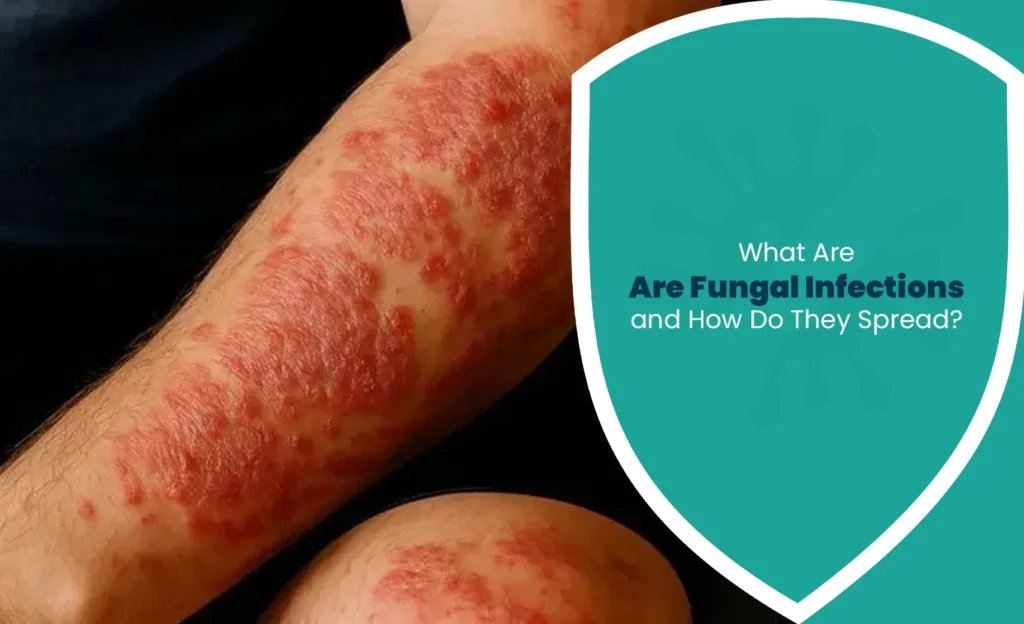
Skin fungal infections are probably what most people picture when they hear the word “fungal” in the first place. Red patches. Itching. That classic ring-shaped rash everyone associates with ringworm, even though it’s not actually a worm (still find that naming choice odd).
These infections on the skin tend to be the easiest to catch early, at least compared to internal ones, which can sit unnoticed for way longer than they should. You see a weird patch, you scratch it, you Google it at 1 am, you panic slightly, and then you finally go to a pharmacy.
What They Actually Feel Like
Fungal infection symptoms vary a lot depending on where exactly the infection is sitting. Itching, obviously. Redness. Flaking skin. Sometimes a smell that’s hard to describe politely. Sometimes just this low-grade irritation that doesn’t go away no matter what lotion you try.
In fungal infections in humans generally, symptoms tend to build up gradually instead of hitting all at once, which is honestly part of why people ignore them for way too long. Nobody wakes up one morning suddenly infected. It creeps in.
Fungal Diseases Are More Common Than People Assume
Fungal diseases. Yeah, that sounds a bit dramatic when you say it out loud, but that’s genuinely what these are, medically speaking. Not just a rash you rub cream on and forget about. An actual infection caused by a living organism multiplying on or inside you. Worth taking a bit more seriously than people usually do.
What Doctors Usually Do About It
Fungal infection treatment depends a lot on where the infection actually is and how far along it’s gotten. Topical creams handle a huge chunk of the surface-level stuff, like athlete’s foot, ringworm, and that sort of thing. But for more stubborn or recurring infections, doctors sometimes move to oral antifungal medication instead.
One example that comes up a lot in this context is Candiforce 200 mg Capsule, which contains fluconazole and is commonly prescribed for things like vaginal yeast infections, or for these infections that just aren’t clearing up with creams alone.
That said, Candiforce 200 mg Capsule isn’t something you decide to take on your own because a forum told you to. It needs a proper prescription, and honestly, self-diagnosing this stuff based on symptoms alone is a genuinely bad idea a lot of fungal and non-fungal skin issues look confusingly similar.
Preventing Fungal Infections Isn’t Complicated, Just Annoying to Actually Keep Up With
Preventing fungal infections mostly comes down to keeping things dry, not sharing personal items like towels or clippers, and changing out of sweaty clothes sooner rather than later. Nobody loves hearing “just be more hygienic,” it feels a bit condescending, honestly, but that really is most of it.
And even then these infections aren’t 100% preventable. Some people do everything “right” and still end up with one. That’s just how fungi operate, I guess. Persistent little things.
Anyway
I think the main thing worth remembering here is that fungal infections aren’t a hygiene failure or something to be embarrassed about. They’re just common, and mostly manageable once you actually pay attention to them instead of ignoring the itch for three weeks, hoping it disappears on its own.
FAQs
- Are fungal infections dangerous?
Usually not, but internal ones in people with weak immunity can be serious. Most skin cases are manageable.
- Can I catch a fungal infection from a pet?
Yes, ringworm especially can spread from animals to people fairly easily.
- Do fungal infections go away on their own?
Sometimes minor ones fade, but most need antifungal cream or medication to actually clear up.
- Is a yeast infection the same as ringworm?
Both are fungal, but they’re caused by different fungi and affect different parts of the body.
- How long does antifungal treatment usually take?
Skin creams can take a couple of weeks oral treatment timelines vary depending on severity.