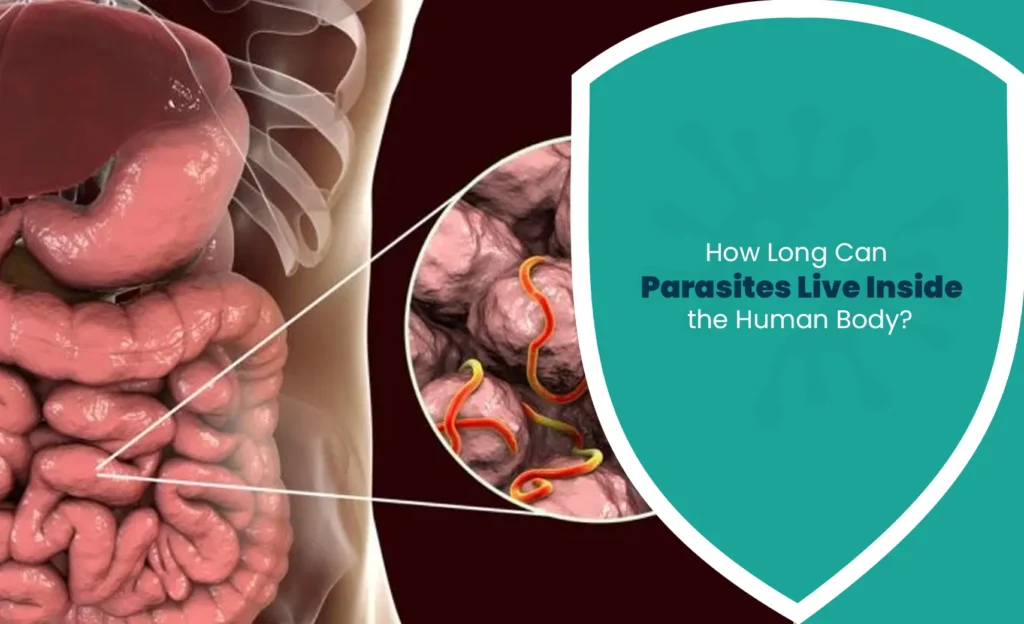
Short answer: it depends. Which is annoying, I know.
Table of Contents
ToggleSome last a few weeks. Some hang around for years. A few can apparently sit in a person for decades without anyone noticing, and that’s the part that gets me.
Most people who type how long parasites live into a search bar are hoping for one clean number. There isn’t one. Sorry.
Wait, what even counts as a parasite
Basically, it’s something that lives in or on you and takes what it needs. Food, blood, warmth. You’re the free hotel.
Some are tiny single-celled things. Others are proper worms, long enough to see. Then there are lice and scabies mites, which sit on the skin and aren’t really the point here, so let’s skip them.
The types of human parasites a doctor runs into depend a lot on where you live and where you’ve been lately. A GP in Manchester sees different stuff than a clinic in rural Bangladesh. Not totally different. But different.
In the US and UK, the more common human parasites tend to be pinworms, giardia, and a few others that come back with people after trips abroad.
Most of it you can’t see happening, which is sort of the whole issue.

The short-stayers
Pinworms first, because so many parents deal with them. The adult worm only lives about six weeks or so. That’s it.
But here’s the catch. You keep swallowing the eggs again. Under fingernails, on bedsheets, on the bathroom door handle, wherever. So six weeks turns into six months, and nobody realizes it’s the same problem looping back round.
Which is why parasite infection duration is so hard to pin down. The worm dies, sure. The infection doesn’t.
Giardia is another one. You pick it up from water, a lake, a stream, or occasionally a dodgy pool. In some people it clears in a few weeks. In others it drags on for months with gas, bloating, cramps, and that general feeling of being off.
I keep saying “some people, other people” because honestly the immune system does a lot of the deciding. Some fight it off quickly. Some really don’t.
The ones that overstay
Roundworm, the Ascaris kind, lives about a year or two inside a person. Hookworm is a bit longer, one to three years usually, though some reports go past that. Whipworm, roughly a year, maybe two.
Then tapeworms. These are the ones everyone pictures. Beef and pork tapeworms can live in the gut for years. Many years. You’ll see numbers like twenty or thirty thrown around online, and that’s rare, but it isn’t made up either.
Actually, hold on. The big number isn’t typical. Most tapeworms get found and treated way before that. But the possibility is there, and I think that’s why people find it so unsettling.
Strongyloides is the one that really surprised me. The larvae can re-infect the same person from the inside, so the cycle just keeps restarting without the person ever being exposed again. Someone who picked it up decades ago, somewhere warm, can still be carrying it. People have been diagnosed forty or fifty years later. I keep thinking about that.
That’s the strange thing about long-term parasite infections. They don’t have to do anything dramatic to stay. They just quietly keep going.
Schistosomes, the flukes from freshwater in parts of Africa and elsewhere, usually live several years, sometimes much longer. And Toxoplasma forms cysts in tissue that basically stay for life, though in most healthy people it never causes trouble at all.
Why the numbers are all over the place
Parasite lifespan depends on the species, obviously. But it also depends on you.
A lot of it comes down to the parasite life cycle. Some need to leave the body and come back through soil or water, so the chain can break. Others loop around inside you and never leave. Those are the ones that last.
Your immune system matters. So does your age, your general health, and whether you’re on steroids or anything else that dampens immunity. Parasite survival in humans is a bit of a tug of war, and it isn’t always a fair one.
And if you keep getting re-exposed, the clock resets. Every time.
So how long parasites survive in one body is part biology, part luck, part hygiene, and part where you went on holiday.
Feeling fine doesn’t mean you’re fine
This bit bugs me.
A persistent parasite infection can sit quietly for years. No drama. No warning. You’re just walking around normally.
When symptoms of parasites do turn up, they’re vague. Bloating, diarrhea that comes and goes, stomach pain, being tired all the time, weight loss you can’t explain, anemia, itching around the anus at night if it’s pinworms, and sometimes skin rashes. Also very ordinary stuff that could be a dozen other things, like IBS, a food intolerance, or plain old stress.
That overlap is the whole problem, really.
Intestinal parasites get mistaken for gut issues constantly. People cut out gluten, then dairy, then coffee, spend a year on it, and only then somebody thinks to run a stool test. Not always the answer. Sometimes it is.
And they don’t all stay in the gut either. Parasites in the human body can end up in the blood, the liver, the lungs, and muscle. Rarely the brain, when pork tapeworm larvae get there, which is a real thing called neurocysticercosis. Rare, but real.
The idea of parasites living in humans for years sounds like a horror film. Most of the time it’s a lot more boring than that. Most parasitic infections are also very treatable once someone actually finds them, which is the good news.
Getting checked, and the treatment bit
If you’ve got symptoms and you’ve traveled, or you drank from a stream, or you eat undercooked meat or fish, or you’ve got small kids in daycare, go and see a doctor. Stool tests are the usual start. Sometimes blood tests too, and for strongyloides a blood test is often needed because stool samples can miss it.
Treatment depends on what it is. There’s no one pill for everything, and that’s where people get it wrong.
Ivermectin-based medicines are one option for certain worm infections. Ivermectol 12 mg is an ivermectin tablet that a doctor may prescribe for something like strongyloidiasis. The dose is worked out by body weight, and a clinician decides how many tablets and whether it needs repeating. It won’t touch everything, though. Tapeworms and giardia need different drugs entirely.
So please don’t order Ivermectol 12 mg online because a forum said it works for everything. It’s a prescription medicine in both the US and UK for a reason. The wrong drug, or the wrong dose, just wastes weeks and lets the actual problem carry on.
Same goes for those “parasite cleanse” supplements all over social media. There’s no good evidence they clear anything. Testing first is boring advice, but it’s the useful kind.
A few boring things that actually help
Wash your hands, especially after the toilet and before food. Cook meat properly. If you’re traveling somewhere with iffy water, use bottled or filtered. Deworm the dog and cat on schedule. Wear shoes on warm, damp soil in places where hookworm is common.
That’s about it. Nothing exciting.
FAQs
- Can a parasite live in me for years without symptoms?
Yes. Some, like strongyloides and tapeworms, can stay quiet for a very long time.
- How do I know if I’ve got one?
You don’t, not for sure. A doctor can order stool or blood tests to find out.
- Can it go away on its own?
Short-lived ones sometimes do, but plenty need proper treatment.
- Can I buy antiparasitic tablets without seeing a doctor?
You shouldn’t. Get tested first, since the right medicine depends on the exact type.
- Can I catch one from my pet?
Sometimes, yes. Roundworm from dogs and cats is the usual example, so keep pets dewormed.