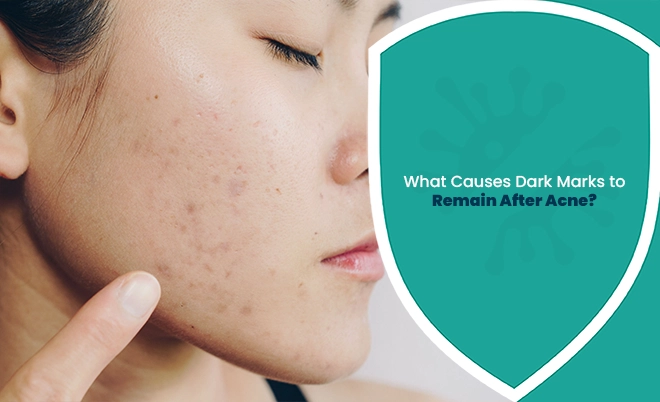
A breakout can disappear in a few days. The mark it leaves behind? That can sit there for weeks, sometimes months, which feels unfair honestly.
Table of Contents
ToggleWhat causes dark marks after a pimple is usually not “dirt” trapped in the skin or proof that acne is still active. It is more often the skin reacting to inflammation. When a spot gets red, swollen, sore, or picked at, the skin can make extra melanin as part of its recovery response.
That leftover colour is often called post-inflammatory hyperpigmentation. It sounds more serious than it usually is. In plain terms, the skin has healed, but the pigment response has not quite settled down yet.
It may look brown, grey-brown, purple, or even darker than the surrounding skin. The colour can vary a lot, especially across different skin tones.
It starts with inflammation, not always the acne itself
One of the main causes of dark marks is the inflammation underneath a blemish. A deep, painful spot tends to create more inflammation than a tiny whitehead, so it has a greater chance of leaving colour behind.
This is why cystic acne, large red bumps, and breakouts that linger often lead to more noticeable dark marks after acne. It is not necessarily because the acne was “worse” in a visible way. Sometimes a small spot can still leave a surprisingly stubborn shadow.
The body sends inflammatory signals to repair the area. Melanin-producing cells can react to those signals by producing extra pigment. Then the pimple goes, but the pigment stays.
That is the annoying bit.
Picking can make the whole thing last longer
Most people pick at a spot sometimes. It is almost automatic. You see it in the mirror, it looks ready, and then things get worse.
Picking, squeezing, or scrubbing at acne can turn a small problem into more inflammation. And more inflammation is often what causes dark marks to become darker or last longer.
It can also break the skin and increase the risk of scarring. A mark that is flat and brown is different from a scar that feels raised, indented, or uneven to touch. They can happen together, though, which makes it confusing.
If there is one habit worth changing, it is this one. Leave the spot alone where possible. Not perfectly. Just more often.
Sunlight quietly makes marks look worse
UV exposure can deepen acne pigmentation, even when the original breakout has already healed. You may not notice it day to day, especially in cloudy UK weather, but sunlight still reaches the skin.
That is partly what causes dark marks to look like they are not fading at all. They may be slowly improving, while new pigment is also being encouraged by sun exposure.
A broad-spectrum sunscreen with SPF 30 or higher can make a real difference. It is not glamorous skincare advice, but it matters more than adding five new serums at once.
Dark marks are generally harder to shift when the skin gets regular sun without protection. Even a short walk, driving near a bright window, or sitting outside can add up.
Some skin tones are more prone to pigment changes
People with medium, olive, brown, and deep skin tones are often more likely to develop visible pigment changes after inflammation. That does not mean their skin is doing something wrong. It is just more reactive in terms of melanin production.
What causes dark marks in these cases is still the inflammatory process, but the pigment response can be stronger and more noticeable. A mild blemish may leave a mark that looks much more obvious than the original acne did.
This is also why harsh treatments can backfire. If a product burns, peels aggressively, or leaves skin irritated, it may trigger more skin discoloration after acne rather than less.
Sometimes “stronger” is simply too much.
Not every leftover mark is actually pigment
This part gets missed a lot. Red, pink, or purple marks after acne may not be dark pigment at all. They can be post-inflammatory erythema, which relates more to blood vessels and lingering redness.
Brown, grey-brown, or darker marks are more likely to be pigment. But skin is not always easy to label from a bathroom mirror.
Knowing the difference helps because what causes dark marks and what causes persistent redness are not the same. Pigment-focused products may be useful for brown marks, while redness can take a different route and sometimes just needs time.
Either way, irritation usually does not help.
Skincare can help, but it can also cause problems
There is a fine line between treating acne and overwhelming the skin. Exfoliating acids, retinoids, benzoyl peroxide, vitamin C, and brightening ingredients can all have a place. Used all at once, though, they can leave the skin dry, sore, and more uneven-looking.
That extra irritation may be what causes dark marks to seem more persistent. It is tempting to keep adding products when you do not see quick results, but skin often responds better to a boring, consistent routine.
Cleanser. Moisturiser. Sunscreen. One treatment at a time.
For acne and post-acne marks, a topical retinoid may be recommended by a clinician because it can help support skin-cell turnover and reduce future clogged pores. Tretimaxx Cream 0.025% contains tretinoin, a prescription retinoid that may be used as part of an acne treatment plan.
It should be introduced carefully. Dryness, flaking, stinging, and temporary irritation can happen, especially early on. A prescriber or pharmacist can advise whether it is appropriate for your skin and current routine.
Time is part of the treatment, unfortunately
There is no tidy answer for how quickly marks fade. Some begin to lighten within a few weeks. Others take several months, especially if the acne keeps returning in the same area.
What causes dark marks to stay around can also be repeated breakouts. A new pimple forms beside an older mark, then another one appears, and suddenly it feels as if nothing is improving. The skin is trying to fade old marks while dealing with new inflammation at the same time.
This is why controlling active acne matters. You cannot fully focus on fading dark marks if fresh breakouts are constantly creating more of them.
Be patient, but do not ignore acne that is painful, widespread, scarring, or affecting your confidence. A dermatologist can help with a treatment plan that makes sense for your skin rather than whatever is trending online.
When it may be worth getting professional advice
If the marks are not flat, if they feel indented or raised, or if they have not improved after several months of gentle care, get them checked. Those may be scars rather than only pigment changes.
It is also worth speaking to a healthcare professional if acne is leaving frequent facial dark spots, particularly when over-the-counter products are making your skin sting or peel.
Tretimaxx Cream 0.025% may be prescribed for suitable patients, but tretinoin is not right for everyone. It is generally avoided during pregnancy, and it can interact poorly with other irritating skincare treatments if they are layered carelessly.
The short version is that what causes dark marks is usually inflammation, extra melanin, sun exposure, and sometimes too much interference from us. Acne heals on its own schedule. The leftover colour often does too.
FAQs
- Why do acne marks turn dark?
Inflammation can trigger extra melanin production after a spot heals.
2. Do dark acne marks fade on their own?
Yes, many fade gradually, but it can take weeks or months.
3. Does sunscreen help post-acne marks?
Yes. Daily sunscreen will helps prevent darkening of the marks.
4. Can squeezing spots cause dark marks?
Yes. Squeezing can inflame the area and potentially make post facial marks worse.
5. Are dark acne marks the same as scars?
No. Dark marks are usually flat colour changes, while scars change skin texture.