Millions of people are affected by parasites all around the world, but most people have trouble distinguishing between different types. They are grouped into three main groups: protozoa, helminths, and ectoparasites. They are all different in shape, habitat, and manner of causing trouble, and each requires its own attitude. With some knowledge of which is which, you’ll know about the issue earlier and act appropriately.
Table of Contents
ToggleThree Families, One Survival Strategy
All parasites live on or in a host and take nourishment at its expense. There are various types of parasites, aside from that common factor. The size and structure of protozoa, helminths, and ectoparasites are the first steps in understanding them. Protozoa, helminths which are known as microscopic worms, and ectoparasites (small bodies that reside on the skin) all under the same group.
Single Cells With Big Consequences
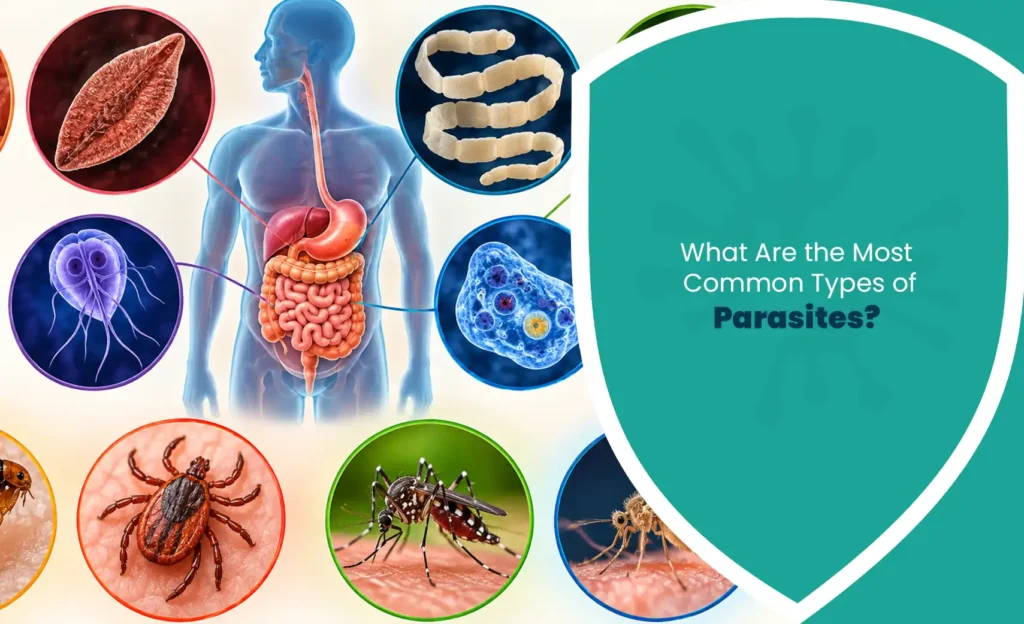
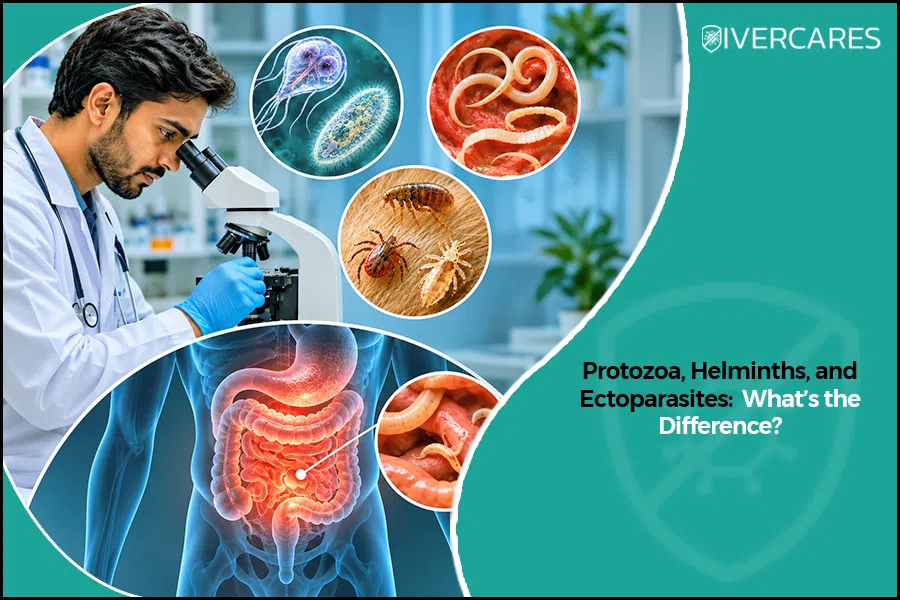
What are protozoa? They are single cells that multiply within days, becoming millions if they get inside the human body. Common protozoan parasites examples are Plasmodium, which causes malaria; Giardia, which causes chronic diarrhea; Entamoeba histolytica, which is responsible for amoebic dysentery and liver abscesses; and Cryptosporidium and Toxoplasma. They are capable of multiplying within you, so even if you are exposed to them in small amounts, you can become very sick.
The Worms Among Us
What are helminths? They are worms that live off other organisms, parasitic worms in humans can be divided into three types: roundworms, tapeworms, and flukes. Roundworms like Ascaris, hookworm, and whipworm inhabit primarily the intestine. A tapeworm is a long, flat worm that is segmented and obtained primarily from undercooked beef, pork, or fish. Liver flukes and blood flukes, which cause the disease schistosomiasis, are included in the flukes. Helminths can’t multiply inside you. They reproduce by laying eggs, which are excreted and develop in soil or water, so the number of worms produced in the adult stage is generally related to the number of infective stages picked up, and there are exceptions like Strongyloides, which can reinfect individuals.
Uninvited Guests on the Skin
What are ectoparasites? They live on the body surface rather than inside it. They are usually the lice, mites, and ticks. Head and body lice are blood-feeders that spread by close contact. Scabies mites burrow into the skin and make it itchy, particularly at night. Ticks attach and feed for hours or days and can transmit bacteria, viruses, and protozoa, including those that cause Lyme disease and babesiosis.
Inside Versus Outside, and Other Contrasts
Endoparasites vs ectoparasites is all about the place. Other parasites are endoparasites, which include protozoa and helminths that reside within the body, gut, blood, liver, or other tissues. Ectoparasites stay outside. The difference between protozoa and helminths is by size and reproduction: protozoa are single-celled and replicate within you, and helminths are multi-cellular and do not typically replicate.
- Protozoa: tiny organisms that multiply inside the host’s body and can lead to fever, diarrhea, or bloodstream infection.
- Helminths: Single-celled organisms that reproduce quickly and multiply by division; cause serious and acute diseases such as diarrhea, dysentery, and septicemia.
- Ectoparasites: reside on skin or in hair, itch, and cause a rash, and sometimes carry other illnesses.
A comparison of protozoa, helminths, and ectoparasites also helps to understand their differences in treatment.
How They Find Their Way to You
How parasites spread varies among the groups. Protozoa and helminths can be spread by contaminated food, water, and soil or via the fecal-oral route, and some are also transmitted by mosquitoes and other insects. Some helminths, like hookworm, penetrate the bare skin directly. Ectoparasites typically spread through close contact with others, sharing bedding, towels, or clothing, or by attaching to a person outside. All protozoa, helminths, and ectoparasites increase your risk of infection if you live in poor hygiene conditions, are overcrowded, travel, or come into contact with animals.

Clues Your Body Gives
The symptoms of parasitic infection depend on each group of parasites, and many are indistinguishable from other diseases. Diarrhea, cramps, fever, chills, and fatigue are some common symptoms of protozoa. Abdominal pain, bloating, loss of weight, anemia, cough, or worms may be seen in feces and can be symptoms. Itching, rash, bites, and skin sores are the common effects of ectoparasites. Parasitic infections in humans can come and go with common diseases, and when they do occur, they can be delayed weeks or months after traveling or coming in contact with the parasite.
The Right Diagnosis
Stool tests, blood smears, antibody tests, skin scrapings, or a simple visual examination may be used to confirm the type of protozoa, helminths, and ectoparasites responsible. Multiple stool tests may be necessary, as many parasites are intermittent.
Matching the Medicine to the Parasite
No drug controls protozoa, helminths, and ectoparasites. Many gut protozoa are treatable with metronidazole or nitazoxanide, worms can be treated with albendazole or praziquantel, and lice or scabies can be treated with ivermectin. If the organism is correctly identified, it will be possible to make a correct choice.
One of the choices in the protozoal group is HCQS 400 mg. It includes the drug hydroxychloroquine sulfate, which is effective against Plasmodium and used to treat malaria caused by sensitive strains. It is used as well in certain autoimmune diseases, like rheumatoid arthritis and lupus. Does not work for worms, lice, mites, or ticks; it only covers one of the corners of protozoa, helminths, and ectoparasites. There is a high level of resistance to this drug class in many areas, so the antimalarial drug will be selected based on the geographical origin of the infection and the species involved.
The dose of HCQS 400 mg varies depending on the reason for taking the medicine and the functioning of your kidneys. It’s generally consumed with food to ease nausea. Side effects are stomach upset, headache, and rash; long-term use can lead to some problems of the retina and heart rhythm changes, and a check-up should be performed regularly. Avoid self-treatment for suspected malaria, as it can escalate rapidly into a life-threatening situation.
Closing the Door on Parasites
The measures taken for the prevention of protozoa, helminths, and ectoparasites are similar, so the steps on how to prevent parasitic infections are easier to remember:
- Wash hands with soap before eating and after using the toilet.
- Use boiled, filtered, or bottled water if you are not sure about water quality.
- Thoroughly wash or peel produce and cook meat and fish.
- Stay in shoes outside and keep away from contaminated soils.
- Apply insect repellent and bed nets and wear long clothing in regions where insects, such as ticks and mosquitoes, are present.
- Do not share towels, combs, clothes, or bedding.
- Maintain the pet’s deworming regimen and clean up after pets.
When to Get Help
If diarrhea persists for over two weeks, if there is a fever after returning from a malaria area, if worms are found in stool, or if itching and rash do not go away with home treatment, seek medical attention. Protozoa, helminths, and ectoparasites are typically curable if diagnosed early, and it is worth it to be tested early in the process.
To Conclude
Protozoa, helminths, ectoparasites vary in size, habitat, and activity; this accounts for the differences in the methods of catching, what they do, and which medicine works. A knowledge of protozoa, helminths, and ectoparasites allows you to take faster, appropriate action to prevent infection and stop infections in an instant. Before beginning treatment such as HCQS 400 mg, get a diagnosis of your infection if you think you might have one.
FAQs
1. What is HCQS 400 mg?
This is used to treat autoimmune diseases and malaria. The dose depends on the patients’ health conditions and medical history.
2. What is a protozoan?
These are eukaryotic organisms which are single celled and microscopic.
3. What are protozoan parasites?
These are Trichomonas vaginalis, Trypanosoma cruzi, Entamoeba histolytica, Giardia duodenalis and Plasmodium falciparum.
4. What are helminths?
These are large and multicellular parasitic worms. They live inside a host organism and connect nutrition from their hosts’ bodies.
5. What are ectoparasites?
They live on or feed from the external surface of the host’s body.