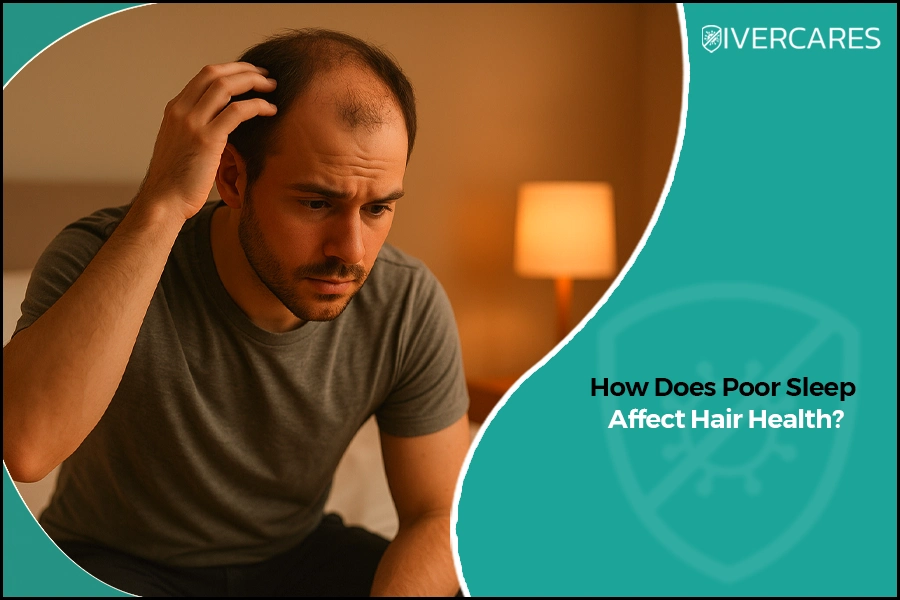
You can spend a fortune on shampoos and serums and still watch your hair thin if your nights are consistently short or broken. Hair health reflects what is happening inside your body, and sleep is one of the quiet foundations that supports it. Hair follicles are among the most metabolically active tissues you have, which means they respond quickly when rest, hormones, or nutrition fall out of balance. This blog is going to identify the link between poor sleep and hair health that can help you protect what you have and support regrowth.
Table of Contents
ToggleWhy Your Follicles Need the Night Shift
Each strand grows in a cycle of growth, transition, and rest, and the growth phase can last two to seven years. Naturally, most of the follicles repair, and the body produces cells. This process happens when you sleep. During deep sleep, your body releases growth hormone. This type of hormone supports tissue to renew cells and repair in your body, including the scalp, and supports hair health. Moreover, at night, blood flow in the skin increases also. This helps to deliver oxygen and nutrients to follicles. This is the core of how sleep affects hair growth: the more consistently you get restorative sleep and hair follicles get the repair window they need, the more stable and productive the growth phase tends to be.
Does Poor Sleep Cause Hair Loss?
Many people ask directly: does poor sleep cause hair loss? The honest answer is that it rarely acts alone, but it is a real contributing factor. Sleep deprivation and hair loss are linked mainly through indirect pathways, including stress hormones, inflammation, and disrupted cell repair. When the body is under strain, it can push a larger share of follicles prematurely into the resting phase. A few months later, those hairs shed in noticeable amounts, a pattern called telogen effluvium. Sleep deprivation effects on hair health often appear with a delay, which is why people struggle to connect last season’s bad nights with this season’s thinning.
The Stress Hormone Connection
Cortisol is central to this story. Short sleep raises evening cortisol levels and keeps the body in a mild state of alert, and chronically high cortisol can shorten the growth phase of hair health and disrupt the follicle’s stem cells. This explains why stress and hair loss so often go hand in hand. Hair shedding due to stress typically begins two to three months after a stressful period and can involve a handful of extra hairs on your pillow, in the shower, or on your brush each day.
Hormones, Inflammation, and the Bigger Picture
Hormones and hair growth are intertwined well beyond cortisol. Sleep loss can disturb thyroid function, insulin sensitivity, and sex hormones, all of which influence the hair cycle. In people with a genetic tendency toward pattern hair loss, hormonal shifts can accelerate thinning. Poor sleep also raises markers of inflammation, and an inflamed scalp environment is less friendly to growing hair. This impacts hair health. This is part of why sleep and hair thinning often appear together in people with long-term sleep problems.
When Sleep Disorders Are the Hidden Culprit
Sleep quality and hair growth are closely related, so it is worth asking whether an underlying condition is involved. Sleep apnea is also connected with hair loss. This causes drops in oxygen level in your follicles again and again at night. Restless legs syndrome and shift work disorder fragment rest in similar ways. Hair loss and fatigue frequently show up together, and while fatigue does not directly cause shedding, the same hidden factors, such as thyroid disease, anaemia, or depression, can cause both. If you snore heavily, wake unrefreshed, or feel exhausted despite adequate time in bed, ask a doctor about testing.

Other Causes of Excessive Hair Shedding
Before blaming sleep alone, it helps to consider the wider list of causes of excessive hair shedding and weak hair health. These include hormonal changes after childbirth or during menopause, thyroid disorders, crash dieting, major illness or surgery, certain medications, autoimmune conditions such as alopecia areata, and genetic pattern baldness. Nutritional deficiencies and hair loss are another important pairing. Low iron, ferritin, zinc, vitamin D, B12, and protein intake are all associated with thinning and poor hair health.
Sleep and Scalp Health
Sleep and scalp health influence one another too. A well-rested body repairs the skin barrier more effectively, while chronic sleep loss can worsen dandruff, seborrhoeic dermatitis, and scalp sensitivity. Friction matters as well. Tossing and turning on a rough pillowcase can cause breakage, particularly in long or fragile hair, which makes silk or satin pillowcases a modest but useful upgrade.
Building Better Sleep Habits for Healthy Hair
The most effective sleep habits for healthy hair are the same ones that improve rest. You have to manage your sleep schedule and hair health. You go to bed at a specific time and wake up at a specific time of 7 to 9 hours of sleep. You have to follow the rule on weekdays as well as weekends, holidays, and leave days….. This helps to manage your body clock to regulate your hormones. For better sleep, you have to make your bedroom dark, cool/warm (as per your body temperature), and quiet. You should avoid or quit caffeine after the afternoon. You have to avoid heavy meals and alcohol before going to bedtime. You quit screen time or use your phone before bedtime. You may adopt breathing exercises or reading to reduce cortisol by improving sleep for healthier hair. Healthy sleep habits for hair help to improve mood, energy, and immunity.
A Topical Solution
Rogaine Men’s 5% Minoxidil Foam is used to treat male pattern hair loss (MPHL) gradual thinning on the crown/top of the scalp. This medication promotes hair growth and regrowth. Rogaine Men’s 5% Minoxidil Foam boosts blood flow that carries essential nutrients and oxygen for hair strength. Its active growth phase gets prolonged by extending the anagen phase.
To use it, apply half a capful to the dry scalp in the thinning area, twice daily, massaging it in gently and washing your hands afterward. Results take time: shedding may increase temporarily in the first few weeks as old hairs make way for new ones, and visible regrowth usually appears after about three to four months of consistent use. Stopping treatment often leads to gradual loss of the gained hair.
The Bottom Line
Poor sleep makes barriers for hair growth. Enough sleep improves hair health. Good sleep helps to manage hormones, repair processes, and reduce stress. These help to improve follicles. You have to protect your scalp by using Rogaine Men’s 5% Minoxidil Foam. It is advised to give your hair the best chance to thrive. You take rest and resolve your nutritional issues. If shedding is sudden or severe, you have to consult with a hair specialist for proper diagnosis.
FAQs
1. What is the connection between lack of sleep and hair growth?
The connection is that poor sleep both causes and results from stress; the two can feed each other in a cycle. Cortisol and hair loss are tightly connected, and sleep is one of the most direct ways to bring cortisol down.
2. How do you manage your hair health?
You have to tie your hair softly before sleeping. You should not sleep with wet hair or tight ponytails or buns. The reason is that these habits pull on the roots and increase the chance of hair loss. You can massage your scalp for a few minutes to relax your mind and improve blood circulation.
3. What are the side effects of Rogaine Men’s 5% Minoxidil Foam?
These are scalp irritation, dryness, and itching, and the foam is flammable until dry.
4. Who cannot use Rogaine Men’s 5% Minoxidil Foam?
Do not use it if your scalp is irritated or sunburned, and consult a healthcare provider if you have heart disease or experience dizziness, chest pain, or a rapid heartbeat. You should keep away this medication from children and pets.
5. What is the role of blood tests in identifying hair issues?
Poor sleep and poor nutrition often travel together, since tired people tend to skip meals, crave sugar, and rely on caffeine. A blood test can identify deficiencies that are straightforward to correct.