Parasites are kind of more common than most people think, and they end up messing with millions of people around the world, quietly almost every year. You can get different kinds of parasites too, from tiny organisms you can’t see to visible worms, and they may enter the human body through dirty food, unclean water, insect bites, or even close contact with someone who already has an infection or contact with animals. This blog is going to share the types of parasites in humans, how they spread, and what signs you should watch for as a big part of catching it early and getting the right care. This blog goes over most of what you need to understand about types of parasitic infections and how to keep yourself safer by adopting medical support such as Iverjohn 6 mg.
Table of Contents
ToggleWhat Are Parasites, and How Do They Affect the Body?
A parasite is basically a living thing that stays on or inside a host. Different types of parasites steal nutrients while harming the host in the process. In people, parasites can range from single-celled protozoa that are invisible to the naked eye to bigger worms that can grow several feet long inside the intestines. Some cause symptoms fast and pretty obvious, while others can hang around for years without much notice, slowly wearing down nutrition and weakening the immune response. Because of that wide spread in behavior, figuring out which parasitic infection is involved is usually the first step toward correct diagnosis and treatment.

Protozoan Parasites
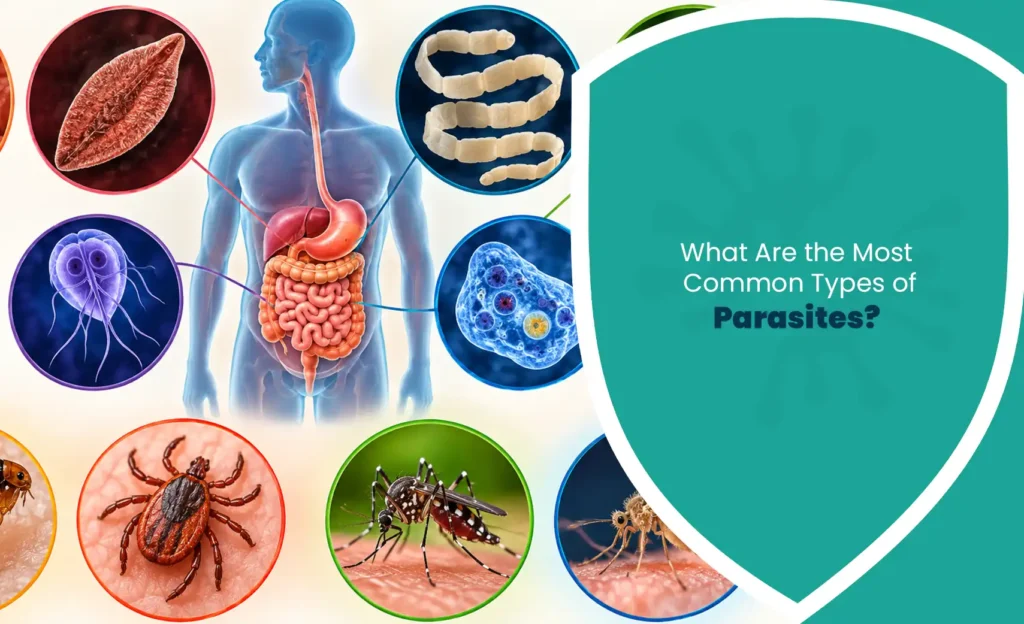
Protozoa are single-celled organisms, and these types of parasites count as some of the most medically important common parasite types. These microscopic organisms can multiply quickly inside the body and may lead to serious illness. Giardia is one of the protozoan parasites people run into a lot, usually picked up from contaminated water, and it often brings strong diarrhea along with bloating and cramping. Entamoeba histolytica causes amoebic dysentery, with bloody diarrhea and stomach pain, and in tough situations it can move on to the liver. Plasmodium is one type of parasite. This spreads when an infected mosquito bites you. Toxoplasma gondii is known as a protozoan parasite. This spreads through poorly cooked meat and when people come into contact with feces of infected cats.
Helminths: The Worm-Like Parasites
Helminths are known as roundworms, tapeworms, and flukes. These are known as various types of parasites.
Ascaris lumbricoides is a big roundworm; these types of parasites can get up to about a foot long, and it spreads through contaminated soil or food, leading to abdominal pain, nausea, and, in heavy infections, intestinal blockage. Hookworms enter via the skin, often when bare feet step in contaminated soil, and then they attach to the intestinal lining, feeding on blood, which over time results in anemia and fatigue. Pinworms are extremely common parasites, especially in children, and they spread easily through homes and schools, causing a lot of itching around the anus, often more noticeable at night. Whipworms tend to bring diarrhea, abdominal pain, and, in severe cases, rectal prolapse.
Tapeworms are flat and segmented, and these types of parasites can grow surprisingly long in the intestines, sometimes several meters. Most commonly they’re acquired by eating undercooked beef, pork, or fish that contains tapeworm larvae. Symptoms may be surprisingly mild (think mild stomach discomfort, weight loss, and nutritional shortages), yet some people feel basically nothing even after months or years of carrying one.
Flukes, also known as trematodes, are flatworms that usually infect the liver, lungs, or intestines. This spreads through poorly cooked fishes, aquatic plants, etc.
Ectoparasites: Parasites Living on the Skin
Lice are tiny insects that infest the scalp, body, or pubic area, causing intense itching along with nits that stick to hair strands. Scabies comes from microscopic mites that tunnel into the skin, laying eggs. These types of parasites are causing severe itching, especially at night, and a notable rash. Bed bugs aren’t exactly “on” the body in the strict sense, but they feed on human blood and cause itchy red bite spots, often in clusters or lines on exposed skin.
Recognizing Parasite Infection Symptoms
Symptoms from a parasite infection can really vary depending on the parasite type, where it lives in the body, and how bad the infection becomes. Still, infections caused by different types of parasites share common signs like ongoing digestive trouble such as diarrhea, constipation, gas, and bloating. You might also see unexplained weight loss, even when appetite stays normal or increases. There’s also chronic tiredness, weakness, skin problems like rashes, itching, or hives, and nutrient gaps that can show up as anemia or vitamin deficiencies. In some cases, people notice visible worms or worm pieces in stool. Some infections also produce more specific signs, like the strong night itching with pinworms or the repeating fever pattern linked with malaria. Since symptoms can overlap with other digestive or general health issues, parasitic infections often remain unrecognized for long stretches of time.
Common Parasite Causes and Transmission Routes
You have to know the real causes of types of parasites straight away; it needs a lot for prevention. Lots of the time contaminated food and water are still at the top in terms of why people get parasitic infections, especially in places where sanitation is weak. Also, eating meat or fish that isn’t cooked enough, including pork, really ramps up the chance of catching tapeworms and some types of flukes. Then there’s soil contact too, like if you’re walking around barefoot where human or animal waste got into the ground, that can trigger hookworm infections. Insect bites are another big one, and mosquitoes especially, since they transmit malaria and several other parasitic illnesses. And yeah, close contact matters, like in households, schools, or childcare, where pinworms and lice can spread pretty easily. Probably the most underestimated piece is hand hygiene, like not washing hands after the bathroom or before eating, which contributes to almost all parasite kinds.
Diagnosing Parasitic Infections
Diagnosing intestinal parasites and other infections caused by various types of parasites usually starts with a stool sample test, because healthcare providers can check for eggs, larvae, or the actual parasites. Blood tests can help spot certain parasites like Plasmodium, or sometimes they show antibody responses from past or current infections. Depending on what’s going on, imaging or even endoscopy might be needed, especially if parasites seem to involve internal organs. Symptoms can be vague, and they can look like other problems too, so healthcare providers often have to do parasite-specific testing when symptoms just won’t quit or when there’s a known exposure, like recent travel to a region where parasites are more common.
Treatment Approaches for Parasitic Infections
Treatments depend on which types of parasites these are, where they’re living in the body, and how intense the infection seems. Antiparasitic medications are the main approach for most confirmed cases, but the exact drug class changes by parasite type. For example, ivermectin sits in a group of antiparasitics that healthcare providers use for some worm-related infections, and dosing is set by the particular parasite, body weight, and how severe it is. So really, getting a proper medical diagnosis first is key, not just guessing. Some meds focus more on protozoan infections, while other options are used for tapeworms compared with roundworms. Iverjohn 6 mg is used for the treatment of onchocerciasis (river blindness), strongyloidiasis, and other parasitic infections. Supportive care also shows up a lot, like rehydration if there’s severe diarrhea and nutritional support if long-term infection caused deficiencies. Self-diagnosing, or self-medicating for suspected parasites, is strongly not advised, since the wrong plan might not clear the parasite, and you could end up taking unnecessary medication risks on top of everything else.
Preventing Parasitic Infections
Prevention is still the best path, because it avoids infection in the first place. Prevention processes are the same for all types of parasites. Thorough hand hygiene, especially before eating and after using the bathroom, cuts transmission risk a lot. You have to cook meat and fish at safe temperatures properly. This helps to kill parasite larves before consuming. You drink clean water or boil water before eating. Clean your shoes from time to time. This helps to reduce the rate of worm infections through the skin. You use a net while sleeping to stop mosquitoes. Health authorities in many regions also recommend regular deworming, especially for children in higher-risk areas.
Summing Up
Various types of parasites are still a major worldwide health issue, and different parasite types can cause anything from mild digestive annoyances to serious life-threatening illness. Now you know the most common human parasites, spotting early infection signals, and understanding the main types of parasites that occur in the human body and how they need to protect themselves and also get medical help sooner when it’s actually needed. If you think you might have a parasitic infection, the safest route is proper diagnostic testing followed by treatment that a clinician recommends, such as Iverjohn 6 mg, since that combination is usually the most reliable way to recover.
FAQs
1. What are the most common types of parasites that infect humans?
The common types of parasites are giardia, plasmodium, roundworms, lice, etc.
2. How do intestinal parasites typically spread?
They spread through drinking contaminated water and eating contaminated food. These also spread through poor cooking methods, eating raw meat or fish, and walking on contaminated soil.
3. What are the warning signs of a parasitic infection?
The warning signs are digestive issues, weight loss, skin itching, skin rashes, chronic fatigue, and deficiency of nutrition in the body.
4. Can parasitic infections go away without treatment?
In the case of mild infection, it cures automatically. In the case of severe, it needs medical observation and antiparasitic medication to cure.
5. How can you prevent parasitic infections?
You need to cook meat and fish properly. You drink mineral water and boiled water. You wear shoes when you walk on soil and sand. You can use a net to protect yourself from mosquitos.