Disease outbreaks can very rapidly go from an isolated local event to an international health emergency when a disease that’s infectious starts to spread through communities and crosses regional and national borders. When disease outbreaks happen, they end up putting a lot of pressure on the healthcare systems and public resources of the nation and globally.
Table of Contents
ToggleIn today’s world, where we are constantly online and connected, even a single outbreak can make headlines within days and draw the world’s attention to it. This becomes more likely when the disease is proving to be difficult to contain and has also been linked to higher mortality rates.
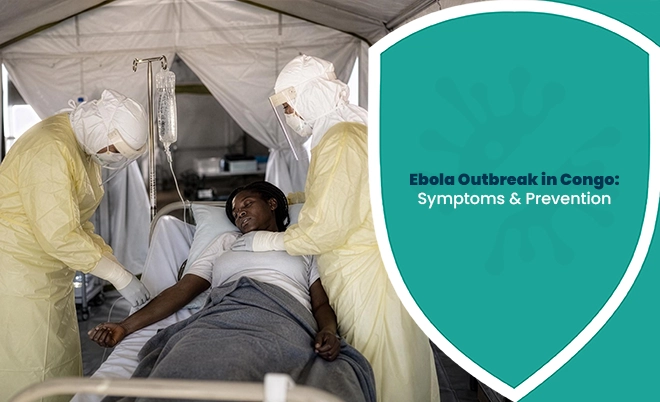
The ongoing Ebola outbreak in the Congo is also gaining interest because it involves the Bundibugyo virus, a strain of Ebola virus disease. It has managed to spread across multiple provinces in the Democratic Republic of the Congo (DRC). Ebola is caused by a virus, which is why it cannot be treated with common antibiotics like amoxicillin since it’s not a bacterial infection. In this article, we’ll get into how the virus spreads, what Ebola symptoms can look like, and the extent of the outbreak at present.
What is a Disease Outbreak?
An outbreak is the appearance of an unexpected number of cases of a particular illness in a community, region or population. Outbreaks can be caused by infectious diseases caused by bacteria, fungi, viruses or parasitic organisms.
An infectious outbreak can remain in the locality or spread to other regions and turn into an epidemic. When an epidemic spreads across multiple countries or continents and manages to affect a substantial amount of people, then it is called a pandemic, which is what we saw with the COVID-19 pandemic.
That is why a disease outbreak doesn’t specify any one kind of illness. Current disease outbreak news usually focuses on infectious diseases that can spread quickly and will have serious consequences. Those infections include Ebola, influenza, measles, cholera, and other infectious diseases.
What Is Happening With the Ebola Outbreak in Congo?
The DRC Ebola outbreak that’s happening at present in the Democratic Republic of the Congo is mainly a Bundibugyo virus disease (BVD). Now, what is BVD, you ask? It’s a rare and possibly fatal strain of the Ebola disease. Think of it just like the Covid-19 pandemic, the virus in itself had several strains that the general public had to protect themselves against.
A number of cases were identified in the Ituri Province, after which the Ebola outbreak was declared in May 2026. Since then, reports of the virus have been made in a number of provinces, including Haut-Uós, Tshopo, North Kivu, South Kivu, and Ituri.
The infection has been spreading rapidly and we can see the situation escalating. According to Reuters, DRC health authorities reported 4,449 confirmed cases and 2,061 deaths as of August 11, 2026, making this one of the most significant Ebola outbreaks ever recorded in the country.
This disease outbreak has also raised some concerns about all kinds of cross-border contamination that has the potential to happen, especially since there have been reported cases of the Bundibugyo virus disease in Uganda. The World Health Organization (WHO) has officially classified the epidemic as a public health emergency that needs international attention and measures. All this while, the health authorities have stayed consistent with their surveillance, contact tracing, testing, and other containment measures.
Outbreak case numbers can fluctuate from one day to the next, so rather than assume an older case count is still correct, readers should check current updates from organizations such as the WHO and CDC.
What are the Ebola symptoms in humans?
When individuals are in the early stages of Ebola, it can prove to be pretty difficult to recognize the Ebola symptoms since the infection can resemble other infections in the early stages.
According to the CDC, some of the most common Ebola symptoms in humans are fever, headache, muscle pain, weakness, diarrhea, vomiting, and bleeding or bruising with no reason. These symptoms do not automatically mean someone has Ebola. Many other infections can cause fever, headache, weakness, vomiting, or diarrhea.
The combination of symptoms with a relevant exposure or travel history raises the possibility of an Ebola infection. Instead of trying to diagnose the illness at home, anyone who may have been exposed to Ebola should speak with a healthcare provider and explain the possible exposure.
How does Ebola Spread?
The most pressing question people have at the moment is how does Ebola spread in the first place. The Bundibugyo virus disease can spread if you come into direct contact with the blood or bodily fluids of an individual who has already been infected by the Ebola virus or someone who has already died from the disease. Another way the infection can be transmitted is through contaminated objects like clothing, bedding, needles, or medical equipment. Along with these factors, the virus can potentially also spread if someone comes in contact with infected animals like bats and nonhuman primates.
As a result, Ebola does not spread like a common respiratory virus like influenza. Identifying cases, isolating potentially infected individuals, tracking contacts, safeguarding healthcare personnel, and avoiding contact with infectious bodily fluids are all major components of public health initiatives.
Because the virus can spread even after death, handling Ebola victims safely is crucial to containing the outbreak.
How is Ebola diagnosed, and is there a treatment for it?
An Ebola diagnosis cannot be confirmed simply by looking at symptoms. Your physician can’t just look at the Ebola symptoms and directly diagnose the condition. They will also be looking at factors like the patient’s symptoms, their recent travel history, if they have potentially made contact with an infected person, if they have had a possible exposure to bodily fluids, or if they have had any contact with a potentially infected animal along with their lab test reports.
If someone is suspected to have the Ebola virus, then it becomes extremely crucial to have the necessary infection-control procedures in check because any kind of unnecessary exposure to other healthcare workers or patients can just potentially lead to further transmission and spread of the virus.
When it comes to the treatment of Ebola, it heavily depends on the specific kind of Ebola virus involved in the equation.
The current disease outbreak in Congo has been caused due to the Bundibugyo virus. The CDC has stated that at present there are no vaccines or specific treatments that have been approved to prevent or treat the Bundibugyo virus disease. This might seem disappointing, but the best course of action we have is to provide early supportive care since that can significantly increase the chances of survival.
Supportive medical care can include monitoring vital functions, maintaining hydration and electrolyte balance, treating complications, and providing other care based on the patient’s condition.
It is important not to confuse this with Ebola disease caused by other Ebola virus species, for which different medical countermeasures may exist.
Should People Outside Congo Be Worried?
News of a major Ebola outbreak can understandably cause concern far beyond the affected region. However, the risk to an individual depends on several factors, including where they live, whether they have traveled to an affected area, and whether they have had contact with someone infected with the virus.
The CDC currently recommends enhanced precautions for travelers to DRC and has specifically identified several provinces affected by the outbreak.
People who have no relevant travel or exposure history are in a very different situation from healthcare workers, household contacts, or others who have direct exposure to an infected person. People who are not directly involved in the field should rely on official travel information and public-health advice rather than just relying and then panicking about alarming headlines and social media claims.
FAQs
1. Is there an Ebola outbreak in Congo?
Yes, at the moment the Democratic Republic of the Congo is experiencing an ongoing outbreak of the Bundibugyo virus, which is a type of Ebola disease.
2. What are the main symptoms of Ebola?
The common symptoms of Ebola are fever, headache, muscle ache, weakness, diarrhea, vomiting, stomach ache, and unexplained bleeding or bruising when the disease gets worse.
3. How does Ebola spread?
Ebola can get transmitted if you make any kind of contact with the blood or any bodily fluids of a person who has been either infected or died from the disease. Objects that have been contaminated or infected animals can also spread the Ebola virus.
4. Can antibiotics treat Ebola?
Not really. Ebola is caused due to a virus, while antibiotics treat bacteria. Therefore, you shouldn’t take antibiotics to treat Ebola unless your healthcare provider has identified another bacterial infection that needs antibiotic treatment.
5. Is there a treatment for Ebola?
The CDC doesn’t have an approved vaccine or treatment for the Bundibugyo virus that is spreading currently. However, engaging in early care can improve an individual’s chances of survival.