Usually it begins with a small clue: a child will scratch their head more than usual. Maybe there is a complaint about scalp itching at bedtime. Or a parent notices specks close to the roots of the hair and wonders if they are dandruff.
Table of Contents
ToggleThen comes the uncomfortable question: where did this come from?
Head lice are common, especially among children, but adults can get them too. They have nothing to do with being dirty, having poor hygiene, or keeping a messy home. In fact, clean hair can still become infested if there is close contact with someone who has live lice.
The confusing part is that these tiny insects do not jump or fly. They crawl. Most spread happens when hair touches hair, which is why school, sleepovers, camps, family gatherings, and playtime can sometimes turn into easy opportunities for transmission.
So, what causes head lice in the first place? Usually, the answer is much less dramatic than people think.
It often starts with simple hair-to-hair contact
The biggest reason someone gets head lice is close contact with another person who already has them.
Imagine two children leaning over the same book, taking a selfie, playing together, or sitting with their heads close during a movie. If an insect crawls from one head to the other, that can be enough. This is why the condition can move through families pretty quickly. If you are wondering how head lice spread, this close-contact route explains most cases.
It is worth clearing up one old idea here. Head lice are not caused by poor personal care. Having lice does not mean someone is unclean. Regular shampooing does not stop an insect from crawling onto the hair. The CDC also notes that personal cleanliness and a clean home or school are not related to getting lice.
That matters because people sometimes feel embarrassed and try to hide the problem. That can actually make things harder, because close contacts may not realise they should check their hair.

They cannot jump, fly, or suddenly appear
There is a strange amount of mythology around these insects. Some people imagine them jumping from one person to another. They do not. They cannot fly either. They are small crawling insects that stay close to the scalp because they need human blood to survive. This makes direct contact the main route of head lice transmission. That is also why head lice spread is mostly a story of close contact rather than dirty surroundings.
Sharing a hat, scarf, brush, pillow, or towel is sometimes mentioned as a major source, but it is not usually the main story. Lice survive best on the human head and do not live for long away from it. Still, recently used personal items can occasionally be involved, so it makes sense not to share combs, brushes, hats, or hair accessories during an active case.
Pets are not the problem either. Dogs and cats do not carry human scalp lice.
So what are the actual head lice causes?
There is really one basic cause: a live louse gets onto someone’s hair and stays there long enough to feed and reproduce. The insect attaches to the hair close to the scalp. A female can lay eggs near the hair root, where the warmth helps them develop.
Those eggs are often called lice eggs or head lice nits, and a head lice infestation can begin with only a few of them. They can look like tiny pale, yellowish, brownish, or whitish dots stuck firmly to individual hairs. That last part is useful.
Dandruff usually flakes away easily. A nit tends to cling to the hair shaft and can be surprisingly difficult to slide off with your fingers. A person may have only a few insects at first. They may not notice anything unusual. Then more eggs hatch, more insects mature, and the problem becomes much easier to spot.
That is one reason an infestation can seem to appear out of nowhere, even though it actually started days or weeks earlier.
The itching can be confusing
An itchy scalp is one of the most familiar signs, but it does not always happen immediately.
The itching comes partly from a reaction to bites and saliva. Some people react strongly. Others barely notice anything at first. That means head lice symptoms can vary, especially early in the process.
Someone may complain about constant scratching. Another person might only have mild irritation around the ears or the back of the neck. In some cases, there may be small red marks caused by scratching.
And yes, it is possible to have lice without feeling particularly itchy.
So if someone in the household has a confirmed case, waiting for everyone to start scratching is not a great way to check.
Why children seem to get them so often
This is mostly about behaviour, not biology. Head lice can move quickly when people spend a lot of time close together.
Young children spend a lot of time close together. They hug, play, sit shoulder-to-shoulder, share spaces and sometimes put their heads together without thinking about it.
That gives crawling insects plenty of chances to move.
Schools are often blamed, but the school itself is not necessarily the source. A child can pick them up during a playdate, at home, during an overnight stay, or anywhere else where close contact happens.
Adults can get them too. Parents often discover an infestation after checking a child’s hair, then realise they have been scratching themselves as well.
What about hats, brushes, and bedding?
This is where things get a little less straightforward
Direct hair contact is the main route. Still, sharing recently used items can occasionally help an insect move between people.
A brush or comb that has just been used by someone with lice could potentially have a live insect on it. A hat or hair accessory may also be involved, although this is less common than direct contact.
Bedding is another one people worry about. Head lice usually stay on the scalp rather than living around the room.
There is no need to turn the entire house upside down. Human head lice are adapted to living on people, not carpets and furniture. They do not survive well for long away from the scalp.
Basic cleaning of recently used personal items is sensible, but spraying the whole house with insecticide is unnecessary and can create its own risks.
The signs are not always obvious
One of the easiest mistakes is assuming that seeing something white in the hair automatically means an infestation.
It could be dandruff. It could be product residue. It could be another bit of debris.
The more useful sign is finding a live crawling insect or eggs firmly attached close to the scalp.
Common signs of head lice can include persistent scratching, a crawling or tickling feeling, irritation around the ears or neck, and visible insects or attached eggs.
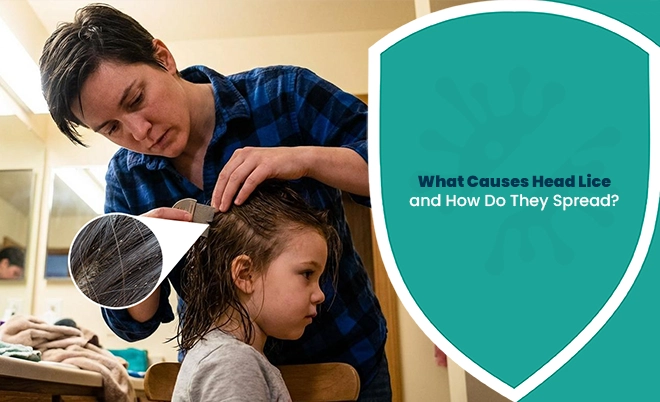
If you are unsure, a fine-toothed detection comb can make the search much easier. Wet hair with conditioner is often easier to comb carefully because the insects move less freely.
The goal is not to panic at the first white speck. Scalp lice are easier to confirm when a live insect is actually found.
It is to actually find evidence.
Can you stop them from spreading?
There is no perfect shield against this problem. You cannot realistically keep every child’s head six inches away from everyone else.
But you can reduce opportunities for spread.
If you know someone has an active infestation, avoiding head-to-head contact until treatment has been completed is sensible. Do not share brushes, combs, hats, scarves, hair bands, or other items that touch the hair.
Regular checks can also help, especially when someone close to you has been diagnosed.
For families wondering how to prevent head lice, early checking is probably more useful than buying products that promise to repel them. There is no need to use medicated lotions on people who do not have live lice just because someone else in the house does.
That is also the practical side of head lice prevention: notice the problem early, check close contacts, and deal with confirmed cases properly. NHS guidance similarly recommends checking household members and using wet combing or suitable treatments when live lice are found.
Treating it is usually less dramatic than people expect
Once live lice have been found, treatment can usually be handled at home.
Wet combing is one option. It involves wetting the hair, applying conditioner, and carefully running a fine detection comb from the roots through the lengths. The process needs to be repeated because eggs can survive and hatch later. NHS guidance commonly recommends repeated wet-combing sessions rather than assuming one session will solve everything.
There are also pharmacy treatments designed to kill the insects. Which product is suitable depends on age, local guidance, pregnancy or breastfeeding status, and other individual factors.
When treating head lice, following the product instructions matters. Applying more product than recommended does not necessarily make treatment work better.
And there is an important point that gets missed: treating one person while another household member still has live lice can lead to another round of infestation.
Check everyone who has close contact.
Treat people who actually have live lice according to the recommended method, rather than automatically treating the whole household.
Where does ivermectin fit in?
Ivejuv 12 mg contains ivermectin, a medicine that is used for certain parasitic infections. Oral ivermectin has also been studied and used in some situations involving lice, but it is not something people should simply take on their own whenever they find an insect in the hair.
For head lice, treatment choices depend on the individual situation, and local recommendations can differ. Some topical products and wet-combing approaches are commonly used.
Ivejuv 12 mg should therefore only be considered for lice when a qualified healthcare professional recommends ivermectin and gives appropriate dosing instructions. It is not a general-purpose prevention tablet, and taking it without medical advice is not a good idea.
Why does it sometimes come back?
This is probably the most frustrating part.
Someone treats the problem, checks the hair, feels relieved, and then a week or two later the scratching starts again.
Sometimes the original treatment did not kill all the eggs. Sometimes newly hatched insects were missed. Sometimes another person in the household had live lice and passed them back.
Resistance to certain products can also make treatment less straightforward in some areas.
So recurrence does not automatically mean the treatment was useless. It may simply mean that the life cycle was not completely interrupted.
Following the treatment schedule, checking the hair again, and making sure close household contacts are assessed can make a big difference.
A few things you really do not need to worry about
You do not need to blame your home.
You do not need to throw away every pillow.
You do not need to shave someone’s head.
And you definitely do not need to feel ashamed.
Lice are parasites that need human hair and blood. They do not care whether someone showers twice a day or once a day. They do not care whether the house is spotless.
The useful response is much more boring: check the hair, confirm live lice, treat appropriately, and reduce close contact while the infestation is being managed.
When should you speak with a professional?
Most uncomplicated cases can be managed with advice from a pharmacist or healthcare provider, depending on where you live.
It is worth asking for professional help if treatment has been used correctly but live insects are still present, if the scalp has become very irritated or infected from scratching, or if you are unsure whether what you are seeing is actually lice.
Extra care is also needed for very young children and for people who are pregnant, breastfeeding, or taking other medicines.
The main thing is not to keep trying random products one after another. Head lice can be stubborn when the cycle is not broken.
Correct identification comes first.
FAQs
- Can head lice jump from one person to another?
No. They crawl and are mainly passed through close hair-to-hair contact.
- Can poor hygiene cause an infestation?
No. Clean hair and a clean home do not protect someone from catching lice.
- How long can lice live away from the scalp?
They depend on a human host and generally do not survive for long away from the scalp.
- Should everyone in the family be treated?
Only people with confirmed live lice generally need treatment, but close household members should be checked.
- Can ivermectin treat lice?
Oral ivermectin may be used in selected situations but it should only be taken for this purpose when recommended by a healthcare professional.