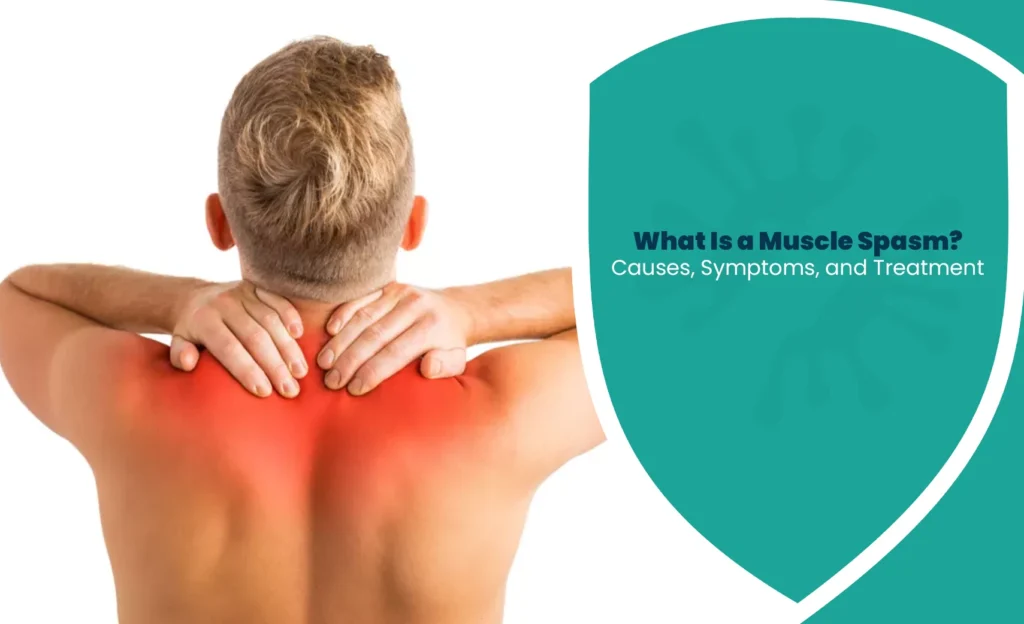
Load or weight lifting increases the external moment in the lumbo-sacral joint and the load on passive tissues through common activity in daily life and sports practice. However, it is widely known as a spasm of the erector spinae muscles. Spasms are random and unpredictable EMG discharge signals in intensity and/or duration time. Muscle spasms can range from mild to severe. In mild cases, it might feel like your muscle is jumping around on its own. In severe cases, it might feel like your entire muscle stiffens up into a tight ball.
Table of Contents
ToggleWhat Is a Muscle Spasm?
A muscle spasm is a sudden, involuntary, uninhibited muscle contraction that occurs at the same time in one or more muscles. A spasm is a muscle contraction when there is no voluntary muscle movement and can range from a minor muscle twitch to a very severe and painful spasm, which is visible.
Muscle spasms can occur in any muscle but are most likely to happen in the following:
- Calves and legs
- Back and neck
- Feet and toes
- Hands and arms
- Abdominal muscles
Spasms may last from a few seconds to a few minutes, and occasionally the muscle may be tender or sore for hours or days after the spasm.
Difference Between Muscle Cramps and Muscle Spasms
Cramp and spasm are often confused and used as synonyms, but there is a difference between muscle cramps and muscle spasms, and it is important to understand. Muscle spasm is defined as any muscle contraction that is not voluntary; a muscle cramp is a specific type of muscle spasm, which is usually more severe and prolonged and leads to an obviously hardened and knotted muscle. The one thing to remember is that all cramps are spasms but not all spasms are cramps. Certain spasms may be more severe and last longer than cramps.
What Causes Muscle Spasms?
Muscles are more likely to spasm when dehydrated or when these electrolyte levels get low (usually because of excessive sweating, vomiting, or insufficient fluid intake).
Heavy or extended use of the muscles, particularly during hot weather, may lead to muscle fatigue and muscle spasms. This is a common cause for cramps that occur during or after activity in athletes and manual work people.
An abnormal signal to the muscles due to a pinched nerve in the back can result in the muscles spasming without control, commonly in the back or legs.
Prolonged static postures, particularly poor postures in the back and neck, may lead to muscle groups becoming sprained and/or spastic.
In some medical conditions like multiple sclerosis, spinal cord injuries, cerebral palsy, and some neurological diseases, the abnormal nerve-muscle interactions can result in chronic muscle spasticity and periodic instead of continuous muscle contractions.
Some medicines such as diuretics may have side effects that make them more likely to cause spasms and lose electrolytes.
A deficiency in magnesium, calcium, or potassium (usually associated with food intake, health conditions, or pregnancy) is frequently associated with higher spasm frequency.
Why Do Muscle Spasms Happen?
A muscle spasm occurs when nerves and muscle fibers don’t communicate properly at a physiological level. Your nervous system usually sends signals to your muscles to tighten or to relax. If this signaling is disturbed, caused by dehydration, fatigue, an irritated nerve, or mineral imbalance. As a result, the muscle fibers can involuntarily contract and not relax on their own, causing a spasm.
Symptoms of Muscle Spasms
The signs and symptoms of muscle spasms may be different and can depend on the severity and location of the spasm but commonly manifest as
The sudden involuntary muscle tightening or contraction.
Hardening/knotting of the muscle that can be seen and felt.
Pain that is sharp or aching in the affected area
Muscle contractions before or after the spasm
Limited motion in the involved leg/arm
Soreness or pain that persists after the spasm has gone away.
If the muscle weakness in the affected area is severe or chronic,
Now the question is how long do muscle spasms last? Many people want to know what the duration of muscle spasm is. Most acute muscle spasms last for just a few seconds to approximately 15 minutes. But the discomfort, or pain, in the muscle may last for a few hours to a few days after, particularly if the muscle spasm was severe.
Muscle Spasms in Legs at Night
Leg muscle spasms at night are a very common symptom, especially for older adults, pregnant women, and athletes. These spasms usually happen in the calf muscle and are rather strong and painful, sometimes enough to awaken you from sleep. The cause is sometimes not easy to understand, but the following may play a role:
Dehydration during sleep
Sitting or being inactive for extended periods throughout the day
Poor circulation
Fertility issues, particularly mineral deficiency (mainly magnesium and potassium)
When the nerves are compressed due to the spinal problems.
If leg cramps occur often at night, talk to a healthcare provider; they may be a sign of a circulatory or neurological problem.
How to Treat Muscle Spasms
Treatment of muscle spasms can be divided into two categories: immediate treatment and medical treatment for recurring or severe muscle spasms.
Gentle stretching of the affected muscle may help break the spasm and promote relaxation of the muscle.
Gently pressing on the muscle and massaging helps promote blood circulation and reduce stiffness.
Cold packs relieve pain and inflammation after a spasm, and heat relaxes tight muscles.
If dehydration is a factor, it can be helped by drinking water or an electrolyte solution.
Baclofen Dura 10 mg relaxes muscles that are tightened, reduces abnormal nerve signals to muscles, and can greatly improve comfort, mobility, and quality of life for people who have chronic spasms. As with all pharmaceutical drugs, Baclofen Dura 10 mg should be taken only as recommended by a health professional, who will determine the dosage based on the individual’s unique medical history, type of symptoms, and severity. Withdrawal from baclofen can be problematic and is often not recommended. Baclofen should be weaned slowly over a period of time under medical supervision.
How to Stop Muscle Spasms Naturally
For those who want to know how to prevent muscle spasms naturally, there are a number of lifestyle and home remedies to help minimize the incidence and intensity of muscle spasms:
Drink plenty of water all day, particularly during workouts and when it is hot.
Regularly stretching, especially before and after exercise.
Do proper warming up before exercise to prepare muscles for exercise.
Take breaks to move around as needed to prevent sitting for extended periods of time
Use comfortable shoes to minimize work on leg muscles
Sleep in the correct position, by not putting yourself in an awkward position, to prevent nighttime spasms.
Best Treatment for Muscle Spasms at Home
When muscle spasms are mild and happen occasionally, the following are usually the best home remedies for muscle spasms:
Passive range of motion and/or massage of the involved muscle
Putting on a warm compress to loosen tight muscles
Hydration with water and/or electrolyte drinks
Elevating and resting affected limb if necessary
Taking a hot bath to soothe muscles all over the body
Muscle spasms can be treated in several ways.
Remedies for Muscle Spasms: When to See a healthcare provider
You experience frequent intense spasms.
They are accompanied by a great swelling, redness or weakness
Home remedies do not work for spasms.
If you think there may be a neurological or spinal problem causing the spasms.
Spasms are occurring regularly and interfere with sleep and activities.
Final Thoughts
Almost everyone has had a muscle spasm (the sudden, involuntary tightening of a muscle). At some time, it is caused by dehydration, overuse, poor circulation, or other medical conditions. You may keep yourself hydrated or do exercise to reduce muscle issues. You may take Baclofen Dura 10 mg if you are suffering from nerve-related muscle spasms. This medicine may help to improve your quality of life. It is recommended to consult with a healthcare professional before taking Baclofen Dura 10 mg.
FAQs
1. What causes muscle spasms?
A lack of calcium, potassium, and magnesium increases muscle spasms. Sometimes, dehydration disrupts electrolyte balance, which causes muscle spasms.
2. What are the signs of muscle spasms?
Dehydration and fatigue are the signs of common muscle spasms. Sometimes, spinal cord-related issues and neurological issues create challenges in muscles.
3. Does stress raise the risk of muscle spasms?
Yes. Muscle spasms are created because of hypertension, anxiety, and stress. It affects the back, neck, and shoulders.
4. Is it normal to have muscle spasms every day?
No. It does not happen daily. If you have any nerve issue, chronic neurological issue, or mineral deficiency, then it happens.
5. Can Baclofen dura 10 mg be taken long-term for muscle spasms?
It is not long-term medicine. If your healthcare provider recommends this medicine for the long term, then you take it.