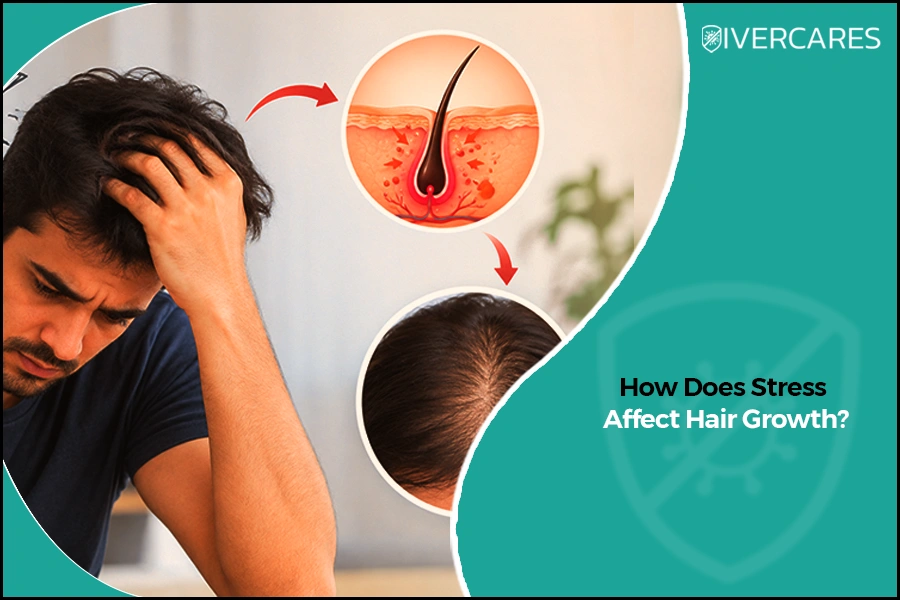
I lost a ton of hair after my dad died. Not all at once. It was more like… One day I’d be brushing, and suddenly there’d be a handful on the floor. Then another. Then I’d notice my part was wider.
Table of Contents
ToggleI thought I was going bald. Or that something was wrong with my scalp. But it wasn’t. It was stress, grief, grief, and then the kind of exhaustion that comes from not sleeping for weeks.
That’s when I started digging into how stress affects hair growth. Turns out, it’s not just in your head. Literally.
The hair cycle isn’t just about shampoo
Most people think hair grows slowly and steadily. Like a plant. But it’s not. Your hair goes through phases: growing, resting, falling out, and then starting again.
Right now, most of your hair is in the “growth” phase, about 85%. The rest are resting. And then they fall out. Normal. You lose 50 to 100 hairs a day. That’s fine.
But when stress hits hard, it can push a lot of those resting hairs into the shedding phase at once.
It’s called telogen effluvium. Sounds fancy. It basically means stress messes up the cycle.
And suddenly you’re losing way more than usual. Sometimes a third of your hair in a few weeks. It’s shocking. You don’t see it coming.
What actually happens during stress?
Your body goes into fight-or-flight mode. Cortisol spikes. Heart races. Blood pressure jumps.
Now, this isn’t meant for long-term survival. It’s for emergencies. But if you’re stressed every day about work, money, family, or anxiety, it never turns off.
And your hair follicles? They’re sensitive to this. When cortisol stays high, it disrupts the normal rhythm of growth.
Some studies show that chronic stress and hair loss go hand in hand. Especially if emotional stress and hair health are already fragile.
You might not even notice it until it’s too late. Then you look in the mirror and think: “Did I do something wrong?”
No. You didn’t. Your body was just trying to survive.
Why does stress affect hair growth so much?
Because hair is energy-intensive. Growing hair takes time and resources. So when your body is under pressure, it says: “We’ve got bigger problems. Let’s pause the hair.”
It’s not punishment. It’s biology.
Think of it like a budget. If you’re saving for a house, you cut back on eating out. Same idea. Your body says, “Let’s stop growing hair for now. Focus on staying alive.”
So yes, does stress affect hair growth? Absolutely. And not just a little bit.
It can slow down regrowth. Make thinning worse. Even trigger new patches of loss in people who’ve never had it before.
Signs of stress-related hair loss
They’re subtle at first.
You might notice more hair on your pillow. Or in the shower drain. Or when you run your fingers through your scalp.
Maybe your ponytail feels thinner. Or your hairline looks different
Some people say their hair feels “softer,” like it’s losing volume. Others swear they’ve seen bald spots appear overnight.
But here’s the thing: it usually starts 2-3 months after a big stress event. So if you were laid off in March, the shedding might peak in May.
And it doesn’t always stay. Most people grow their hair back within 6 to 9 months if the stress stops.
But if the stress keeps going? The cycle can repeat. And hair loss becomes a pattern.
Poor sleep and hair loss
Sleep matters. More than you think.
When you’re tired, cortisol stays high. Your body doesn’t repair itself properly. Hormonal changes and hair health go sideways.
I know someone who lost hair after working night shifts for six months straight. She didn’t think it was related. Then she went back to regular hours, and her hair started coming back.
Same with anxiety and hair thinning. The constant worry, the racing thoughts, and the feeling of being on edge keep your system revved. And your hair pays the price.
Even small things count. A bad night’s sleep. A stressful commute. A heated argument. All add up.
Can hair grow back after stress?
Yes. Usually.
If you reduce stress for healthy hair, and give your body time, your hair will likely come back.
The key is consistency. Stop the triggers. Get better sleep. Eat well. Move your body. Talk to someone.
It might take a few months. But it does happen.
I’ve seen it. Friends, family, even strangers online. People who lost half their hair and grew it all back. Not because of a miracle product. Because they finally rested.
Managing stress for healthier hair
It sounds obvious, but most people don’t do it.
You don’t need a spa weekend. Just small steps.
Walk outside. Even five minutes. Breathe. Look at trees. Watch clouds.
Talk to someone. Write in a journal. Don’t bottle it up.
Cut back on caffeine. Limit screen time before bed. Try meditation or breathing exercises. Doesn’t have to be perfect. Just start.
And if you’re struggling, talk to a therapist. It’s not weakness. It’s care.
Hair regrowth after stress isn’t magic. It’s patience, support, and giving your body what it needs.
The emotional side no one talks about
Losing hair makes you feel ugly. Unwanted. Out of control.
You might avoid photos. Skip parties. Pull your hair back too tight, hoping to hide it.
But here’s the truth: it’s not about beauty. It’s about survival.
And it’s okay to be upset. To cry. To feel angry.
But please don’t blame yourself. Stress affecting hair growth isn’t a failure. It’s a signal.
A sign your body is overwhelmed.
You’re not broken. You’re human.
FAQs
- Does stress affect hair growth?
Yes, it can disrupt the hair cycle and cause temporary hair loss.
- How long does stress-related hair loss last?
Usually 6-9 months, if the stress is reduced.
- Can hair grow back after stress?
Yes, most people see regrowth once stress levels drop.
- What helps reduce stress for hair growth?
Better sleep, exercise, talking to someone and reducing caffeine.
- Is hair loss from stress permanent?
No, it’s usually temporary and reversible with time and care.