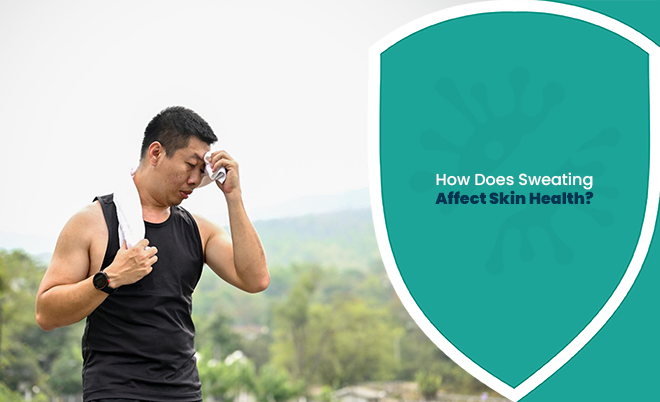
I used to think sweat was just a nuisance. Something you wipe off and forget about.
Table of Contents
ToggleThen my back started breaking out every summer. Same shirt, same shower routine, I was just walking to work in more heat. That got me curious, so I went digging.
This isn’t an expert lecture. It’s more me working it out as I go, and I’ll probably contradict myself once or twice.
So what is sweat anyway?
Mostly water. Some salt. Tiny amounts of urea and lactate and a few other things.
Your body makes it to cool you down. That’s the whole job. It isn’t trying to help or hurt your skin; the skin just happens to be what gets wet.
People type “sweating affect skin health” into search bars all the time, and I get why. It feels like it should have a simple answer. It doesn’t really.
Is any of it actually good
A little, yeah.
Sweat has a natural antimicrobial peptide in it called dermcidin, which helps keep some germs in check on the surface. Not a miracle. But it’s there. And a proper sweat gets blood moving, so skin looks flushed and kind of awake for a while. Although after a run my face looks like a boiled tomato, so I wouldn’t call that glowing.
The whole sweating affect skin health debate gets framed as good versus bad, and I don’t think that’s right. The sweat is mostly fine. What happens after is where it goes sideways.
The sitting around part
Here’s what I keep coming back to. It’s not the sweat. It’s sweat that stays.
Salt dries on skin. Moisture gets trapped under tight clothes, a bra strap, a waistband, a helmet, or wherever. Skin that stays damp for hours goes soft and weak, a bit like fingertips in the bath.
That’s when the effects of sweating on skin start showing. Redness, stinging, that raw, rubbed feeling in the folds. Skin irritation from sweat usually eases once you cool off and rinse, but not always, and not if you put the same damp shirt back on.
Which people do. I’ve done it.
Pores and pimples
Okay, acne. Everybody asks about this one.
Sweat doesn’t directly cause pimples, as far as I can tell. But it mixes with oil, dead skin, sunscreen, and makeup, all of it. Then a hat or a sports bra presses it in. That’s basically clogged pores from sweating, and it’s behind a lot of those little bumps along the hairline or across the back.
Is that the same as sweat and acne? Sort of. Not exactly. Some people get actual acne and some get tiny bumps that look like it but aren’t. I’ve mixed the two up myself, more than once.
Bacteria like it warm and wet
Skin is covered in bacteria. Normal. Mostly harmless.
But warm and damp is their favorite setting. The whole skin bacteria and sweat thing is why gym clothes smell worse after a day in a bag. Sweat itself barely smells. It’s the bacteria breaking it down.
Some of those same bugs can get involved in folliculitis, which is just inflamed hair follicles. Small red bumps, a bit sore. Shaving and tight clothes don’t help.
The fungus bit
Yeast and fungi live on skin too. Also normal. Until conditions tip.
Hot, humid, sweaty, tight clothing, that’s pretty much the dream setup for them. Ringworm, athlete’s foot, jock itch, and tinea versicolor (the pale or darker patches on the chest and back). Fungal infections from sweating aren’t rare, especially in warm places or if you train a lot.
Mild ones sometimes clear with an over-the-counter antifungal cream. Stubborn or widespread ones are a different story. A doctor might prescribe an oral antifungal, and the Itaspor 100 mg capsule is one example of that kind of medicine. It contains itraconazole. But that’s a call for a doctor, usually after looking at the skin, sometimes after a scraping or swab. It also interacts with quite a few other medicines, which is another reason not to grab it just because a friend once had a rash. And don’t guess at doses or how long to take anything.
I’m not a doctor. Just don’t self-prescribe the strong stuff.
Heat, itch, prickly stuff
Heat and skin irritation usually turn up together with sweat, so it’s hard to blame just one.
And the itch. Itchy skin after sweating is super common, some people feel it within minutes of starting a workout. Could be salt, could be heat, could be a mild reaction. Sometimes it’s cholinergic urticaria, small hives triggered by body temperature going up. If it keeps happening, mention it to a doctor.
Then there’s prickly heat. Tiny red or clear bumps, stingy, usually on the chest, neck, or in skin folds. Sweat ducts get blocked and the sweat leaks under the skin. Babies get it a lot, adults do too. Some people call it sweat rash, and it usually settles when you cool down and keep the area dry.
Most sweat-related skin problems are mild. A few aren’t, so keep an eye on anything that spreads, oozes, or hangs around.
When you sweat a lot
Some people just sweat more. Way more.
Excessive sweating, hyperhidrosis (if it’s the medical version), means skin stays wet longer, so everything above gets a bit more likely. Cracking between the toes, soggy skin, infections. If it’s soaking through clothes when you’re not hot or active, that’s worth a doctor visit. There are real treatments. Stronger antiperspirants, for one.
And I think sweaty skin gets blamed for stuff it didn’t do. Sometimes it’s laundry detergent. Sometimes fabric. Sometimes plain friction.
Weather changes things
Humid weather and skin don’t really get along. Sweat doesn’t evaporate well when the air’s already wet, so it just sits there. Florida in August, or a muggy week in London during a heatwave, is the same story.
Skin problems caused by heat tend to pile up in summer. Prickly heat, eczema flare-ups, fungal stuff, sunburn on top of everything.
Moisture and skin health are a balance, honestly. Too dry and the barrier cracks. Too wet and it breaks down. Skin wants a middle spot, which is annoying because the middle spot moves around all day. The whole sweating-affects-skin-health picture shifts with climate too, which I didn’t really think about until I spent a week somewhere humid.
What I actually do now
Nothing fancy.
Shower soon after. Not instantly, but not hours later either. Lukewarm water, a gentle cleanser, and no scrubbing like you’re angry at yourself. That’s basically skin hygiene after sweating, and it’s most of the battle.
Change out of damp clothes. Dry properly, especially between toes, under the breasts, groin, and armpits. Pat, don’t rub.
Loose cotton or moisture-wicking fabric helps. Wash gym stuff after every wear. Not “next week.”
From preventing sweat-related skin issues, some people use a light powder in the folds or an antiperspirant on spots that get rashes. Not just armpits, apparently. Worth a try.
No shower nearby? A quick rinse or a clean wipe still counts. Keeping skin clean after sweating when you’re out and about isn’t always doable. Do what you can.
If I had to sum up sweating’s effect on skin health in one line, it’d be: The lingering is what hurts, not the sweat. Though I said that already.
Still not sure I’ve nailed it
Sweat and skin are a funny pair. One protects, the other gets irritated, and they’re always touching.
Sweating and skin health isn’t a clean story. Long term, sweating affect skin health, and questions mostly come down to habits more than the sweat itself.
Anyway. Sweating affect skin health… still thinking about it, probably. If something’s itchy, spreading, or painful, get it looked at. Don’t tough it out.
FAQs
- Does sweating affect skin health in a good way?
A little, sweat has some natural germ-fighting stuff. But skin that stays damp usually causes more trouble than it’s worth.
- Should I shower right after a workout?
Sooner is better, ideally not hours later.
- Is the Itaspor 100 mg capsule used for fungal skin infections?
It can be prescribed for certain fungal infections, but only a doctor should decide if it’s right for you.
- Can sweat cause pimples?
Not directly, but it can mix with oil and dirt and block pores.
- When should I see a doctor?
If a rash spreads, hurts, or oozes, or if heavy sweating happens for no clear reason.