
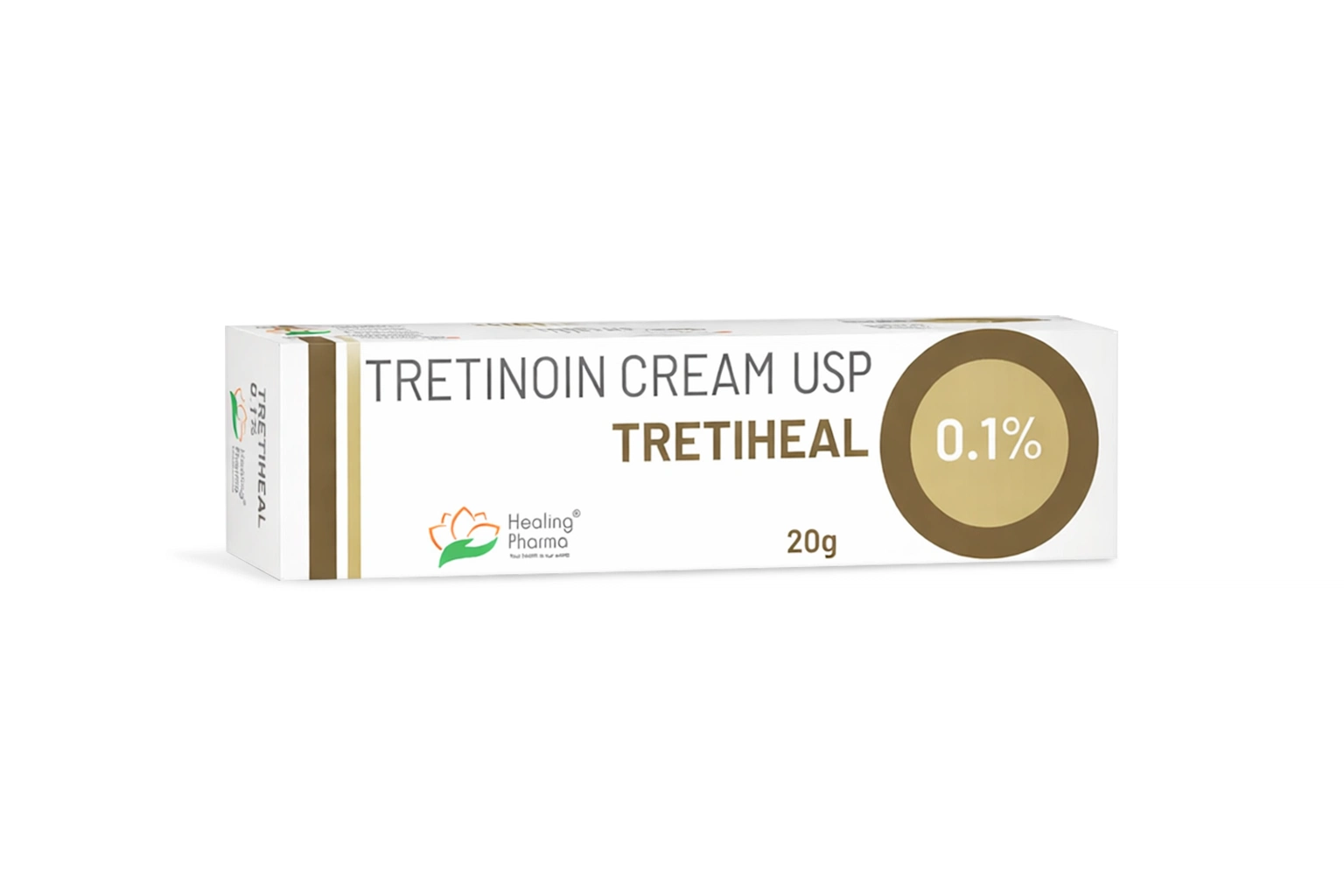
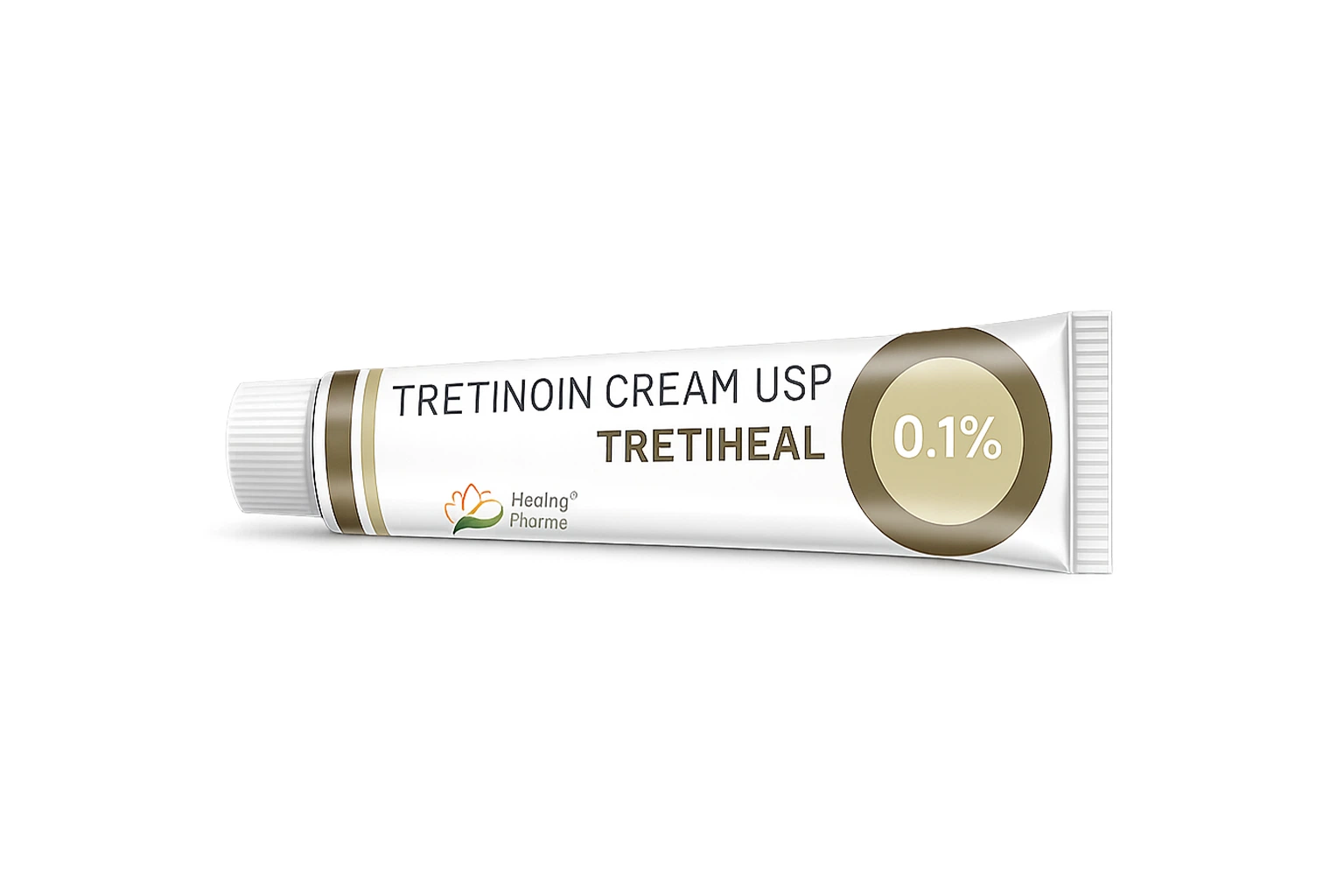
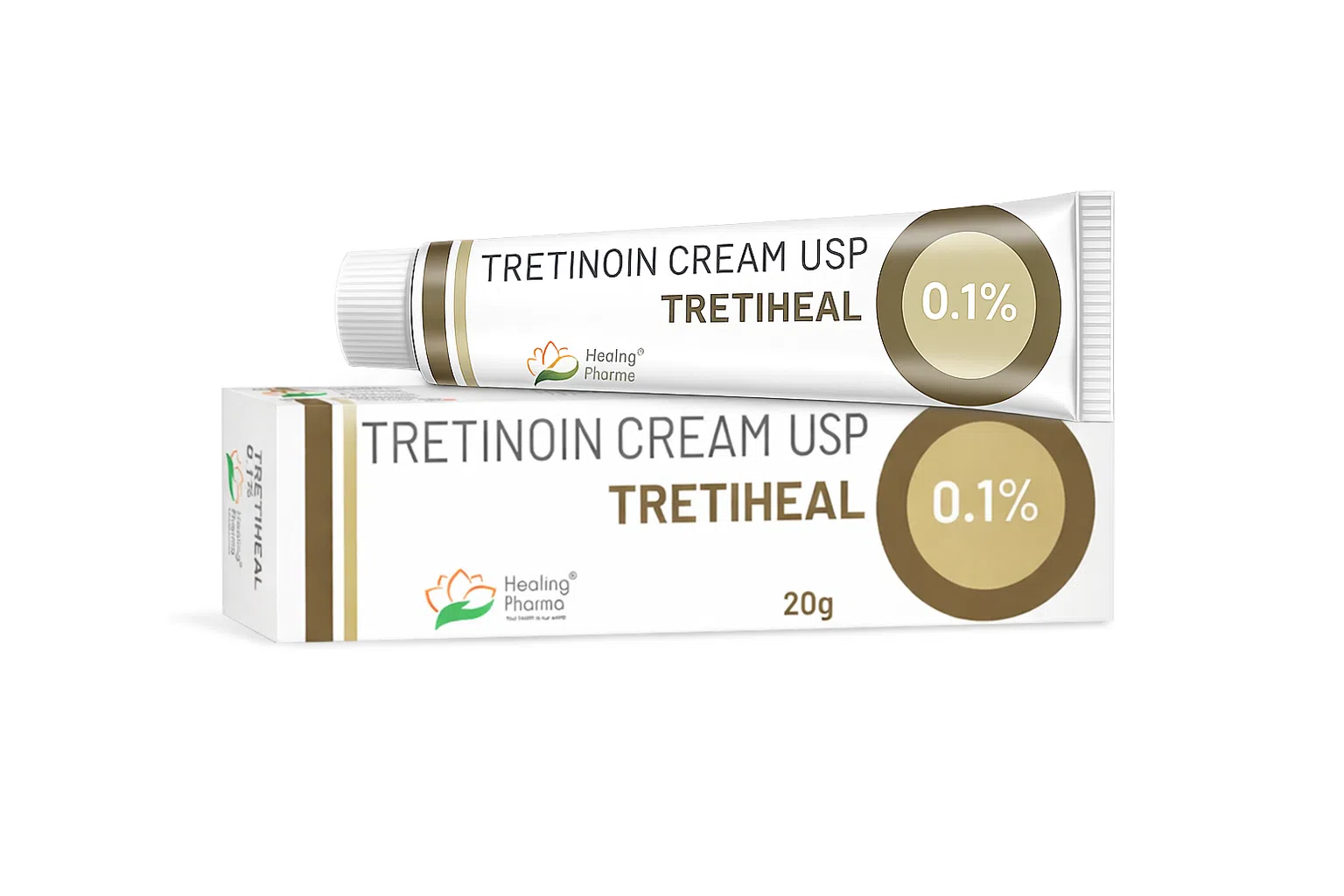

Tretinoin Cream 0.1% Tretiheal is mainly used for managing acne vulgaris. It is a common skin condition. This cream belongs to the class of topical retinoids, which are derived from vitamin A. It is also used for managing blackheads and whiteheads. It supports healing sun-damaged skin and helps smoothen rough facial skin. Furthermore, it reduces fine wrinkles and assists in managing acute promyelocytic leukemia.
Key Features
| About | |
|---|---|
| Drug Class | Topical Retinoid / Vitamin A derivative |
| Subclass | Follicular keratinisation modifier / Anti-acne and anti-aging agent |
| Active ingredient | Tretinoin 0.1% w/w |
| Tretinoin Cream 0.1% Tretiheal | |
|---|---|
| Composition | Active ingredients: Tretinoin 0.1% w/w
Inactive ingredients:
|
| Packaging Type | Tube |
| Pack Size | 20 mg |
| Dosage | Once a day |
| Active ingredient | Tretinoin 0.1% w/w |
| Shelf Life | 36 months |
| Usages |
|
How does Tretinoin Cream 0.1% Tretiheal work?
Tretinoin Cream 0.1% Tretiheal binds to specific nuclear receptors in cells of the skin. Then, it increases the skin renewal cycle to reduce dirt, oil, and plugs. This cream manages acne vulgaris, which occurs when the hair follicles get clogged with dead skin cells and oil. This blocks enzymes that break down existing collagen in the skin. Furthermore, regular application of this cream can help incur acne issues.
Usage
- Tretinoin Cream 0.1% Tretiheal manages acne vulgaris.
- It heals damaged skin due to prolonged exposure to the sun.
- It helps enhance the texture of the facial skin, making it feel smoother.
- It is also used to manage a specific type of blood cancer.
Dosage
- Apply a thin layer of the cream once daily at bedtime.
- Keep skin clean and dry before application.
- Avoid contact with eyes, mouth, and burn areas.
- Wash your hands before and after applying the cream.
- Remember, acne may appear to worsen during the initial weeks of use. This cream works on lesions forming beneath the skin surface.
- Always consult your healthcare provider for personalized advice regarding its use.
Side effects
A. Common side effects are
- Skin redness
- Xeroderma and skin scaling
- Burning and stinging
- Sun sensitivity
- Initial breakouts
B. Serious or severe side effects are
- Unbearable burning
- Crusting
- Swelling
- Blistering on the skin
- Temporary hyperpigmentation or hypopigmentation.
- Allergic reactions
Interactions
A. Drug-disease interactions
- Applying Tretinoin Cream 0.1% Tretiheal on eczematous skin can potentially cause severe irritation.
- The cream should be used cautiously on sunburned skin, as it may lead to further irritation.
B. Drug-food interactions
- If you have an allergy to any food or drink, do not consume it while using this cream. However, it is important to adopt a balanced diet while using this cream.
- There’s no specific interaction known between this cream and alcohol. It is recommended to consult with your healthcare provider before applying.
C. Drug-drug interactions
Tretinoin Cream 0.1% Tretiheal interacts with benzoyl peroxide, salicylic acid, sulfur, resorcinol, alcohol-based products, astringent products, and other topical retinoids. This potentially leads to excessive skin irritation.
Pharmacokinetics
A. Absorption
- Bioavailability: < 0.3%
- Site of action: epidermis and dermis layers of the skin, where local target receptors reside.
B. Distribution
- Plasma levels: Virtually unchanged.
- Protein binding: Heavily
C. Metabolism
- Local and hepatic: Isotretinoin metabolizes in the skin and the liver.
- Action of Biotransformation via cytochrome P450 (CYP) enzymes
D. Excretion
- Routes: Via both renal (urine) and biliary/fecal (stool).
Precautions
- Tretinoin Cream 0.1% Tretiheal is not recommended for pregnant women or breastfeeding women.
- Liver, kidney, and heart interactions are rare. But if you have any issue, consult your healthcare provider before applying.
- If you are allergic to vitamin A derivatives or fish proteins, use this cream with caution
- Older patients should apply this cream under medical supervision to reduce the risk of side effects.
Conclusion
Tretinoin Cream 0.1% Tretiheal helps treat acne by clearing skin pores and preventing spots or pimples from appearing. It is recommended to adopt a low-glycemic diet to reduce oil production. You need to practice regular skin hygiene.
Zoe –
Helped improve my skin condition over time. Good results with patience.