
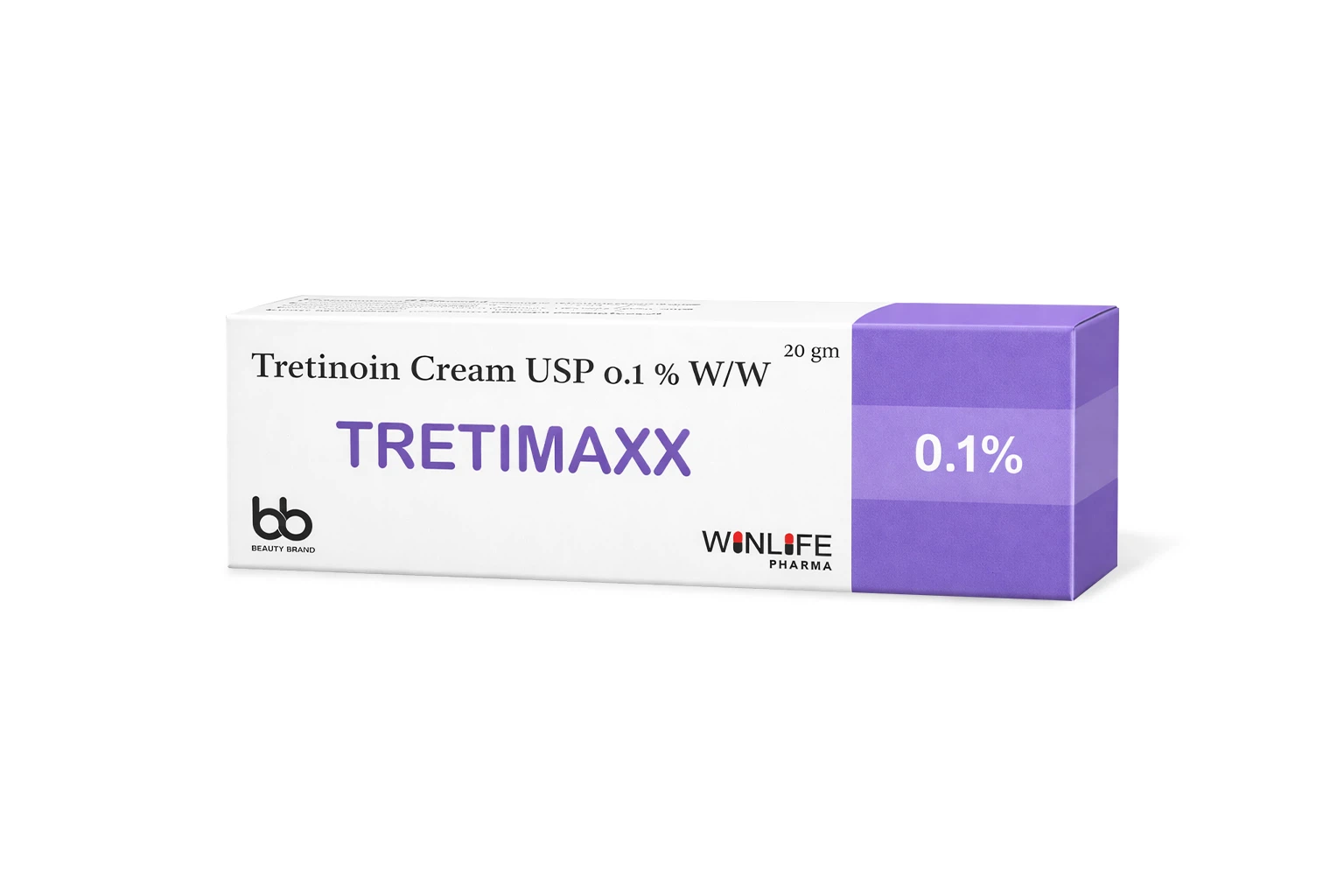
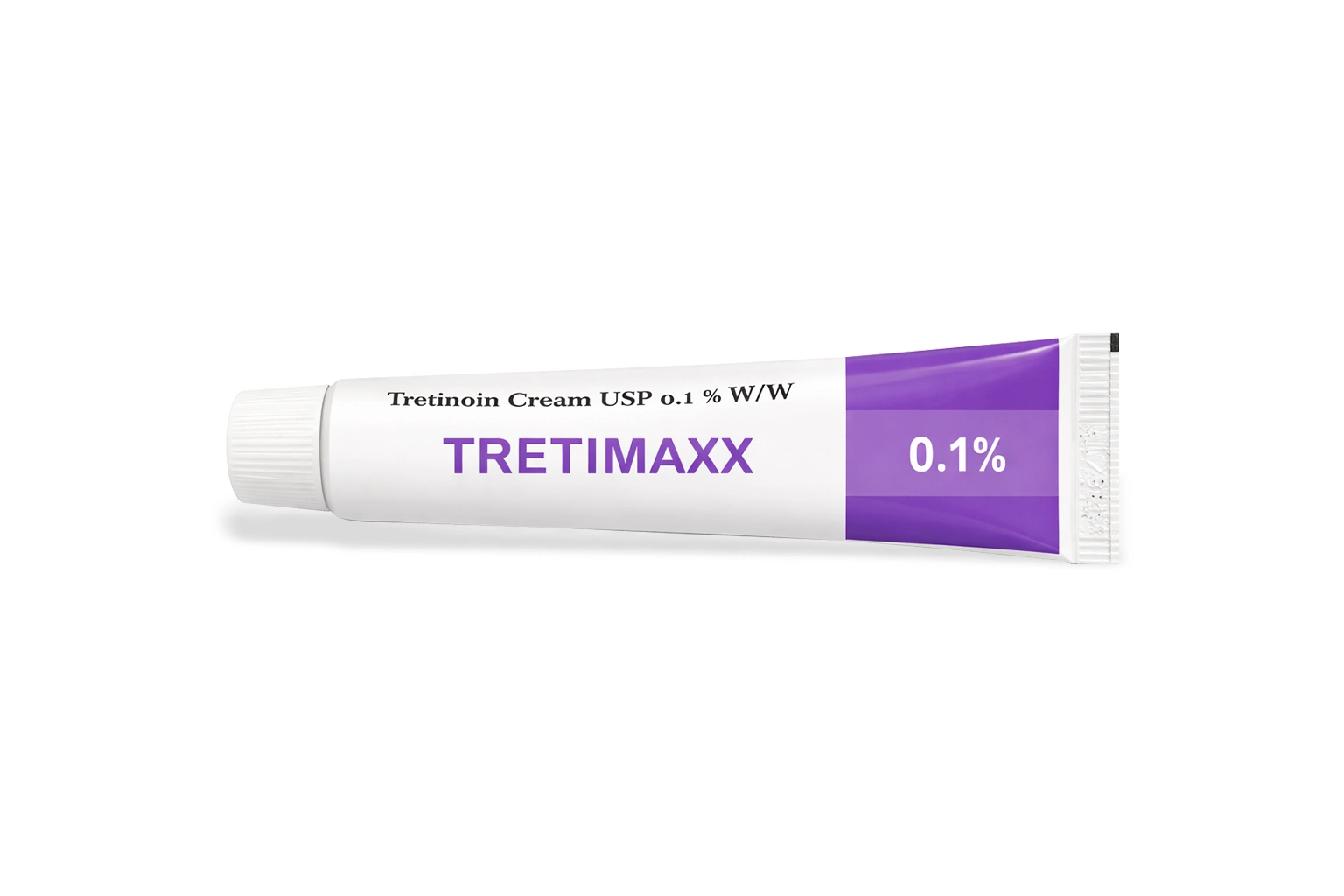
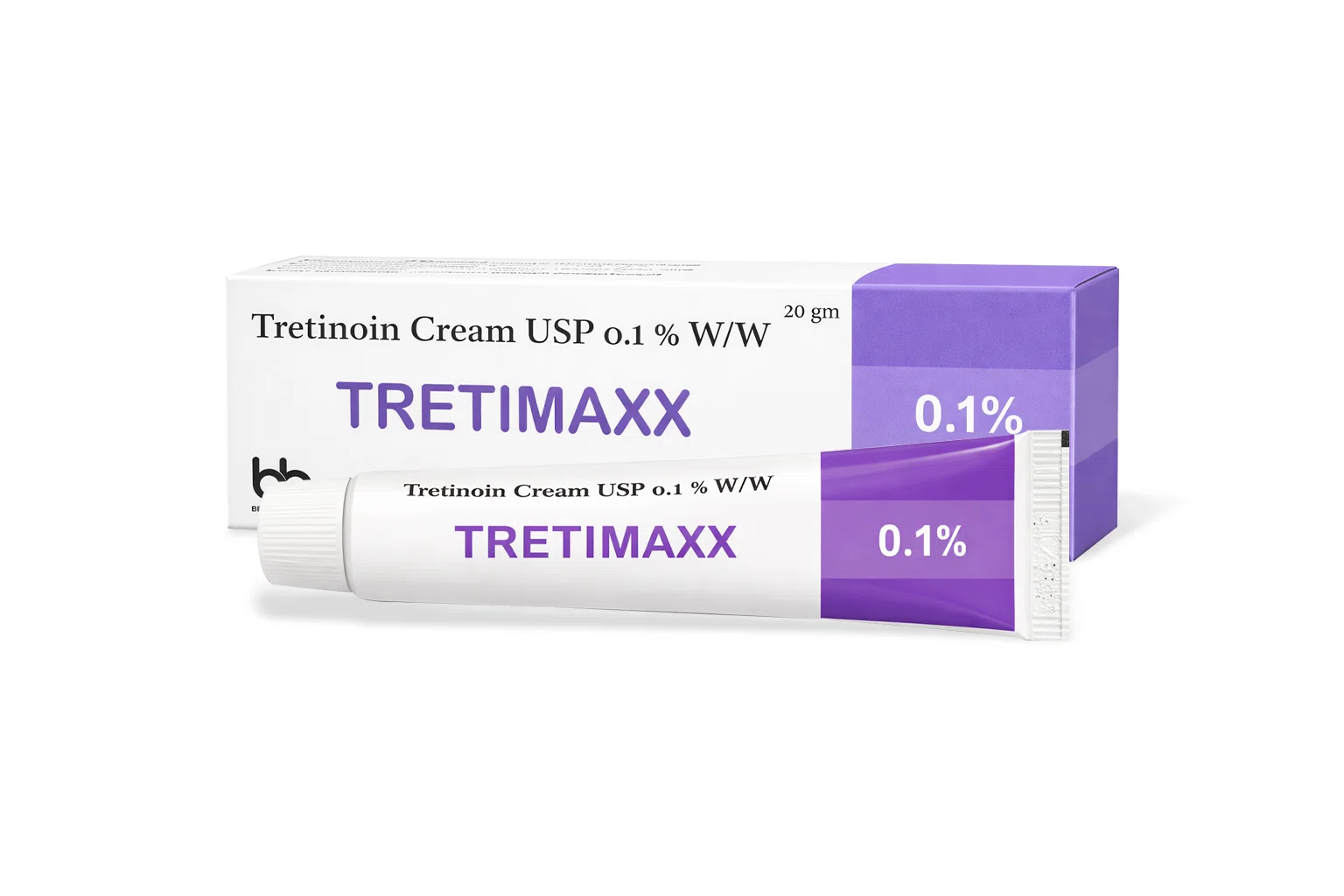

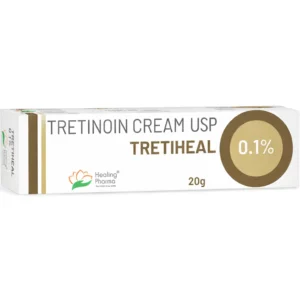
Tretimaxx Cream 0.1% is the highest concentration of topical tretinoin, a retinoid. This cream is recommended for treating severe acne and significant photoaging, such as pronounced sun damage and deep wrinkles. Its active ingredient, tretinoin, works by accelerating the level of skin cell turnover. This process reduces inflammation, unclogs pores, and prevents the formation of new acne sores effectively.
Key Features
| About |
|---|
| Drug Class: Retinoid (Vitamin A derivative) |
| Subclass: Topical acne agent / Keratolytic |
| Active ingredient: Tretinoin |
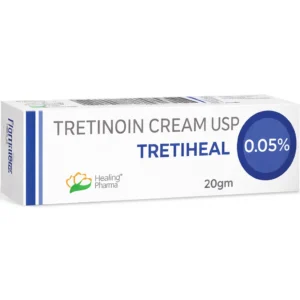
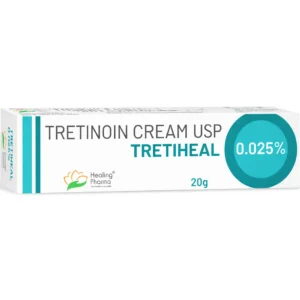
| Tretimaxx Cream 0.1% | |
|---|---|
| Composition | Active ingredient: Tretinoin Inactive ingredients:
|
| Packaging Type | Tube |
| Pack Size | 20 gm |
| Dosage | Apply once daily in the evening/night. |
| Active ingredients | Tretinoin |
| Shelf Life | 3 years |
| Usages | To treat dark spots, acne and pimples |
How does Tretimaxx Cream 0.1% work?
Tretimaxx Cream 0.1% binds to nuclear retinoic acid receptors in skin cells. Thus, it increases the life cycle of skin cells. As a result, new cells show on the surface of the skin faster. It stops dead cells inside pores. This also prevents blackheads and pimples. It stimulates skin’s deep layers to create collagen. Thus, fine wrinkles become reduced.
Usage
- Tretimaxx Cream 0.1% is used to reduce oil production in the skin.
- It reduces severe or stubborn acne.
- It improves skin texture.
- This reduces fine lines and wrinkles.
- This helps to cure dark spots.
Dosage
- Primary dose: Apply a thin layer once daily at night/evening as directed by a healthcare provider.
- Specific dose: Consult with your dermatologist to use it more than one time in a day or for a long time.
- Missed dose: If you miss applying at night/evening, do not apply the next day in the daytime.
- Double dose: Do not apply 2 doses at the same time or frequently to meet the missed dose.
Side effects
- Common side effects are:
- Persistent or worsening irritation
- Blistering
- Crusting
- Swelling
- Excessive discoloration
- Temporary change in skin pigmentation
- Serious side effects are the following:
- Cracking, fissuring, or raw, shedding skin
- Hives, severe itching, or sudden rashes at the skin surface.
Interactions
- If you are using Tretimaxx Cream 0.1%, then avoid those products that contain benzoyl peroxide, salicylic acid, sulfur, and resorcinol.
- Do not use drying and alcoholic cosmetics or mix this cream with these types of cosmetics with this cream. It may cause rashes or other allergic reactions.
- If you have an allergy to tretinoin, you should avoid this cream or consult with your healthcare provider before applying.
- This cream interacts with thiazide diuretics (such as hydrochlorothiazide) or certain antibiotics (such as doxycycline and ciprofloxacin).
Pharmacokinetics
- Absorption
- Approx. 1.1% to 2% of the dose.
- Bioavailability is <0.3% of the topically applied dose.
- Near endogenous baseline levels.
- Distribution
- Protein binding is >95% of circulating tretinoin
- Penetrate the stratum corneum
Bind to cellular retinoic acid receptors within keratinocytes.
- Metabolism
- Local enzymatic catabolism through oxidation and glucuronidation.
- Absorbed in the liver by cytochrome P450 enzymes
- Elimination routes
- Through urine and bile
Precautions
- If you’re pregnant/breastfeeding: There have not been enough research studies yet to evaluate tretinoin’s safety during pregnancy. If you’re pregnant or plan to be a mother, discuss the potential harms and benefits with your healthcare provider before applying. It’s not yet clear whether tretinoin can pass through breast milk, and so it should be avoided.
- Don’t apply on wet skin: Wait 20 – 30 minutes before applying Tretimaxx Cream 0.1%. You should make sure that your skin is completely dry.
- Level of sun exposure: Do not apply in the daytime or come out in sunlight after applying Tretimaxx Cream 0.1%. You should tell a healthcare provider if your job requires you to spend a lot of time in the sun.
- Medications you’re taking: Ensure you list all the medications/supplements you are currently taking along with anything you apply to your skin. This will help the healthcare provider identify any possible interactions with tretinoin.
- Makeup or chemical treatment: Do not apply makeup while you are using Tretimaxx Cream 0.1%. You do not apply hair color or take hair treatment or facial treatment while using this cream.
Conclusion
Tretimaxx Cream 0.1% is a topical retinoid. It is used for treating acne and other skin issues. It is a fast-absorbing cream and clinically proven. You can use this cream regularly as advised by a healthcare provider. This cream is used for long-term skin rejuvenation and smooth skin. Your skin will be spotless and clearer.
Hannah –
This is a strong cream, but it worked well for my stubborn acne.