
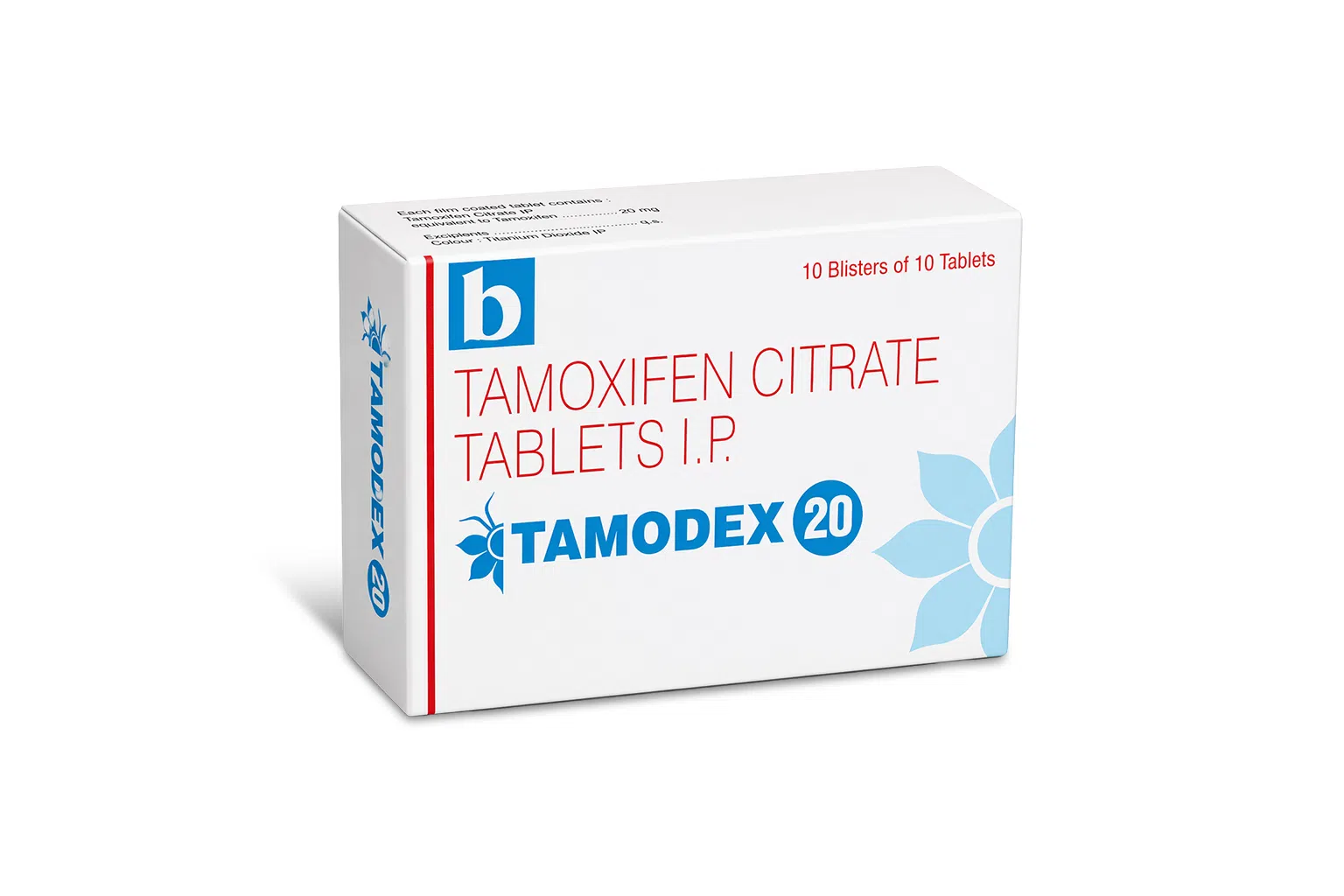
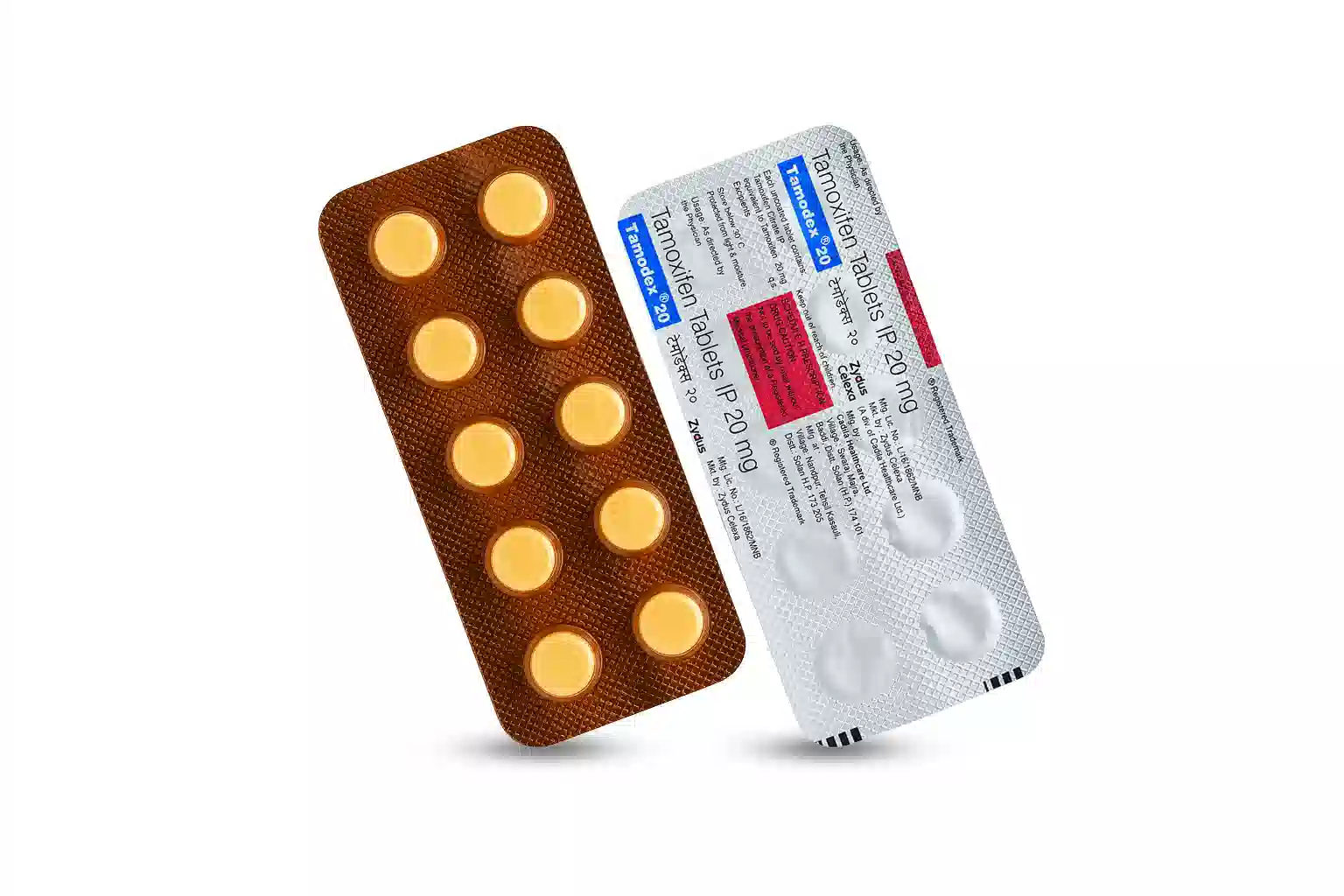


Tamodex 20 mg is an oral tablet that is taken by mouth and contains tamoxifen citrate. Tamoxifen citrate is a Selective Estrogen Receptor Modulator (SERM) with one of the longest and most thoroughly documented clinical records in oncology. It doesn’t directly kill cancer cells but instead stops estrogen from sending signals to cells, which is what many types of breast cancer need to stay alive and spread.
Tamodex 20 mg is recommended for a wide range of breast cancer-related reasons, from use as extra treatment after surgery to lowering the risk of getting cancer in women who haven’t had it yet but have a high chance of doing so.
Key Features
| About Tamodex 20 mg | |
|---|---|
| Drug Class | Selective Estrogen Receptor Modulators (SERMs) |
| Subclass | Anti-estrogens |
| Product Details | |
|---|---|
| Composition | Active Ingredients:
Inactive Ingredients:
|
| Formulation | Tablet |
| Route of administration | Oral |
| Packaging | Blister Pack |
| Pack size | 10*10 |
| Dosage | 20 mg |
| Used For | Breast cancer |
| Shelf Life | 2 to 3 years from the date of manufacturing |
| Storage | Store in a cool, dry place away from sunlight at a room temperature that ranges between 77°F and 86°F. Keep out of reach of children and pets. |
How Does Tamodex 20 mg Work?
At the heart of Tamodex 20 mg’s mechanism is a biological competition that looks very simple. Its main ingredient, tamoxifen citrate, has a structure that is similar to estrogen enough to bind to estrogen receptors. However, once it is bound, it does not trigger them like estrogen does. This substance instead takes over the receptor and puts it in a position that stops estrogen from helping breast cancer cells grow. This stops the hormone that causes estrogen receptor-positive breast cancer for a long time and in a way that is clinically useful.
This is what makes tamoxifen different from both chemotherapy and estrogen inhibitors. Chemotherapy attacks any fast-dividing cells, but Tamodex works very precisely at the receptor level, like a surgeon. Aromatase inhibitors stop the body from making estrogen. Tamodex 20 mg, on the other hand, works where estrogen meets the cell. This means it can help women before and after menopause because it doesn’t depend on getting rid of estrogen from the body.
Uses
An individual may have to take Tamodex 20 mg in the following situations:
- To treat metastatic breast cancer in both men and women.
- To reduce the chances of getting the cancer again if those individuals have already had a surgery for it.
- For women who have had radiation and surgery to save their breasts to lower their risk of getting invasive breast cancer later on.
- Recommended for women who are at risk of developing breast cancer.
Dosage
Any individual should speak with their healthcare provider before starting to take Tamodex 20 mg, but here are a couple guidelines that can be kept in mind:
- Individuals are supposed to take Tamodex once a day and in the same time frame every day.
- The Tamodex 20 mg tablet should be swallowed whole with a glass of water.
- Make sure that you are not chewing, crushing, or splitting the tablet.
- If you end up missing a dose, make sure that you take it as soon as you remember, but if it’s too late, then skip the dose.
- Do not stop taking Tamodex 20 mg suddenly without speaking to your healthcare provider about it.
Side Effects
Some common side effects of Tamodex 20 mg include:
- Headaches
- Dizziness
- Hot flushes or night sweats
- Nausea
- Vomiting
- Weight changes
- Constipation or diarrhea
- Irregular periods
- Fatigue
- Mood swings
Uncommon but serious side effects for which you should get in touch with your healthcare provider:
- Endometrial cancer or other uterine tumors
- Stroke
- Visual conditions like cataract or retinopathy
- Thrombocytopenia, i.e., a severely low number of blood platelets
- Stroke
- Steven-Johnson syndrome
- Endometriosis
- Uterine fibroids
- Pancreatitis
- Liver fibrosis
Interactions
CYP2D6 Inhibitors
Medications that are CYP2D6 inhibitors, like antidepressants, can block the liver enzymes that break down tamoxifen and reduce its efficacy.
Coumarin Blood Thinners
Tamodex 20 mg has a major interaction with coumarin blood thinners like warfarin and can increase their blood-thinning effect.
Cytotoxic Chemotherapy
The chance of thromboembolic events may be greatly increased when Tamodex is used at the same time as chemotherapy drugs.
CYP3A4 Inducers (e.g., Rifampin)
Rifampin and other strong CYP3A4 inducers have been shown to greatly lower the amount of tamoxifen in the blood, which can reduce the effectiveness of Tamodex 20 mg.
Anastrozole
Taking anastrozole with tamoxifen together can decrease the efficacy of anastrozole and will not improve either of their effectiveness. Rather than taking them at the same time, patients are suggested to finish one course and then start another.
Precautions & Safety Warnings
- People who are known to be allergic to Tamoxifen Citrate or any of the tablet’s inactive ingredients should not take Tamodex 20 mg.
- Pregnant women should not use tamoxifen. Childbearing women must utilize effective non-hormonal contraception during therapy and for two months afterward.
- Complete blood counts, platelet counts, and liver function tests should be done on a regular basis during treatment. People who already have hyperlipidemia should have their plasma triglycerides and cholesterol checked regularly.
- Tamoxifen increases thromboembolic risk. Before starting therapy, women with thromboembolic disease should be properly examined and educated about the risks and advantages.
- Women whose uterus is still intact should be told that taking tamoxifen increases the chance of uterine cancer to a higher level.
- Tamodex is not recommended for people younger than 18, but girls ages 2 to 10 with McCune-Albright Syndrome and early puberty who are under the care of an expert may be able to use it.
Conclusion
What makes Tamodex 20 mg stand out is not just one property; it’s the combination of its targeted receptor-level mechanism, the fact that it can be used for a lot of different breast cancer-related conditions, and the large amount of clinical evidence that has been gathered over decades of widespread use. It doesn’t offer a guaranty, but it does offer something almost as valuable: a tool that is well known, rigorously tested, and always works to improve the patient’s chances.
dylan parker –
Has helped me a lot in manaigng my post-chemo symptoms, helped reduce my hair loss