Our neighbor’s daughter spent most of last winter scratching her wrists. Mostly at night. Her mum blamed the washing powder first, then the cat, then a sofa she’d bought secondhand.
Table of Contents
ToggleNone of the above. It was scabies. Nobody had even thought of it, and it took about three weeks for anyone to say the word.
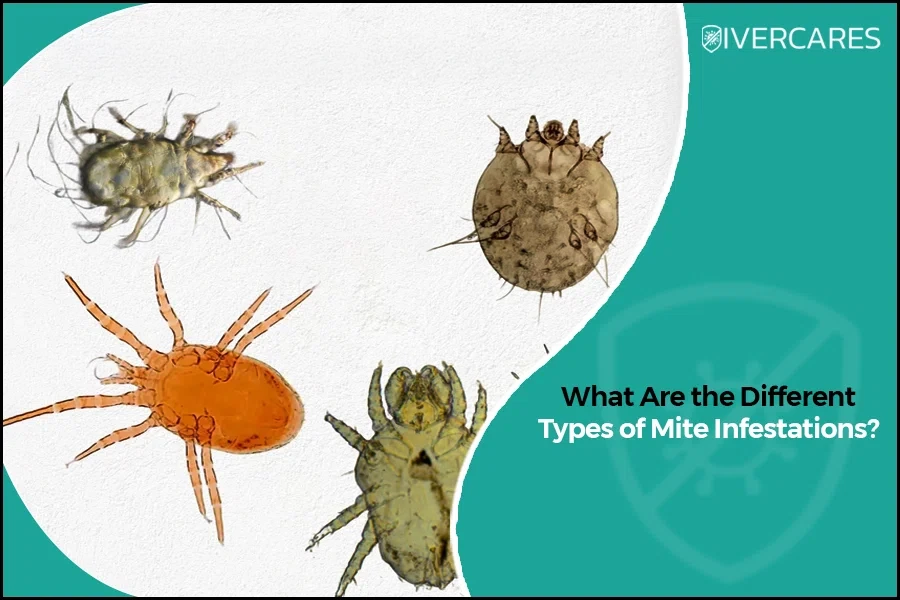
So I started reading. It turns out “mite” covers a huge, odd range of creatures that do very different things to people. Some bite. Some burrow. Some just sit in your pillow and make you sneeze.
This is me reading around, so please don’t treat it as a diagnosis.
Wait, what actually is a mite?
A tiny arachnid. Same broad family as spiders and ticks, only far smaller. Some you can barely see, and some you can’t see at all without a microscope.
There are tens of thousands of species. Most couldn’t care less about you. They live in soil, on plants, in stored flour, and in bees (poor bees).
The common mite species that actually bother people are a much shorter list. Five or six, depending on how you count.
Most mite infestations are also a lot less dramatic than the internet makes them sound. Though not all of them. Scabies is properly miserable.
Scabies first, because it’s the big one
The scabies mites burrow into the top layer of your skin and lay eggs there. Your body reacts, and that reaction is the itch.
Which is why it’s slow. The first time round, the itching can take two to six weeks to start. If you’ve had it before, a couple of days. So whoever “just started itching” has usually had it a while.
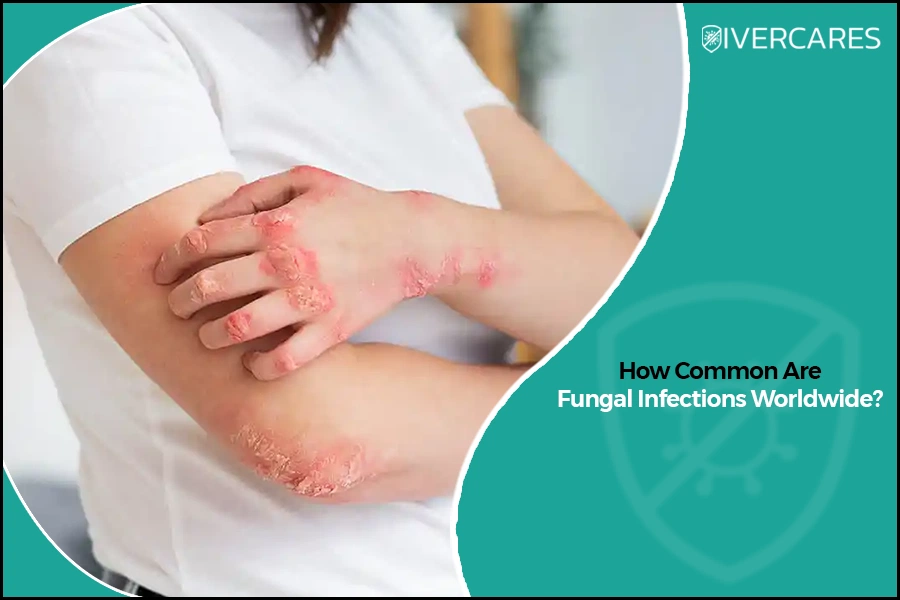
The classic signs are itching that’s worse at night, tiny bumps, and sometimes thin wavy lines. Between the fingers, wrists, elbows, and waistband. In babies, it can show up on the palms, soles, and head.
It passes on through long skin-to-skin contact. Households, partners, nurseries, care homes. It isn’t about being dirty, and it isn’t from the dog.
The mite infestation symptoms can look like eczema, an allergic rash, or ordinary bug bites, which is why it gets missed so often.
There’s also a heavier version called crusted scabies. Thick, flaky patches, mostly in older people or anyone with a weakened immune system. Much more contagious. That one needs medical care quickly.
The ones from the pigeon on the roof
Bird mites live on birds. Pigeons, starlings, sparrows, chickens. When the chicks leave or a nest is abandoned, the mites go looking for a new meal. Sometimes that means a window frame or an air vent and then your bedroom.
They can bite people, but they can’t really live on us. They’re lost, basically. The mite bites are small, red, and itchy, often in clusters on whatever skin is exposed. They tend to fade once the source is gone.
Rodent mites are a similar story. So are chiggers in the US, which come from long grass and leave itchy welts around the waistband and ankles. They don’t burrow into you, whatever the internet says.
So with these mite infestations, it’s the nest or the rodents you have to deal with, not your skin. Call a pest controller if it’s a big one.
Dust is different
Dust mites are in nearly every home on the planet. They eat the skin flakes we shed, so beds, sofas, and carpets are their favorite spots. They don’t bite, and they don’t burrow.
What people react to are the droppings and body fragments. So it’s less an infestation and more an allergy. These aren’t really mite infestations in the usual sense, even though people call them that.
Mite allergies show up as sneezing, a blocked nose, itchy, watery eyes, and a cough. For some people, it means asthma or eczema flare-ups. Often worse at night or first thing.
You can’t get rid of them completely. You can turn the numbers down, though. Hot washes for bedding every week (around 60°C/140°F is often advised), allergen-proof mattress covers, a HEPA vacuum, and keeping humidity under about 50%.
How much that helps is honestly debated. Some people swear by it, and some of the research is lukewarm. I’d skip the miracle sprays.

The ones already living on your face
Skin mites sound like something from a horror film, but Demodex is basically normal. Two species, tiny, living in hair follicles and oil glands, especially around the nose, cheeks, and eyelashes. Most adults have them.
They’re the closest thing we have to human mites that live on us full time. Mostly harmless.
Sometimes there are a lot of them, and that gets linked to eyelid inflammation, itchy or crusty lashes, and some rosacea-type redness. Whether they cause it or just turn up for the party is still argued about, I think.
An eye doctor can check your lashes under a microscope. Treatment is usually lid hygiene. In the US, there’s also a prescription eye drop, Lotilaner, approved in 2023 for Demodex lid problems. Don’t dab neat tea tree oil near your eyes, though. It stings, and it isn’t automatically harmless.
So how do you tell them apart?
Often you can’t, just by looking.
Mite symptoms overlap with each other, and with fleas, bedbugs, eczema, dry winter skin, and even stress rashes. Bed bug bites tend to appear in lines on exposed skin. Flea bites cluster around the ankles. Scabies likes the gaps between fingers. But you’d need to look closely, and a clinician would do it better than you.
That’s why mite-related skin problems get passed around so many people before anyone gets it right. Mite infestations get mistaken for allergies, and the other way round.
A more useful question than “what does this spot look like” is about mite exposure. Is anyone else at home itching? Have you stayed somewhere new, or had a pigeon nest near the bedroom, or spent time in long grass? Has someone close to you had a rash?
The pattern helps more than the photo.
Treatment depends on who the culprit is
Mite treatment options aren’t one-size-fits-all. Different types of mites, different fixes, and that’s the bit people get wrong. Treating mite infestations with the wrong thing just costs you weeks.
Scabies needs proper treatment. In the US and UK, the usual first choice is permethrin 5% cream. It’s normally applied from the neck down and left on for 8 to 12 hours, then repeated a week later. In the UK, malathion lotion is an alternative. Everyone in the household, plus close contacts, gets treated at the same time, even if they aren’t itching. Bedding, towels, and clothes go in a hot wash (50°C/122°F or above) or get sealed in a bag for a few days.
The itch can carry on for two to four weeks after the mites have died, which is infuriating. It doesn’t automatically mean the treatment failed. Retreating over and over mostly just irritates your skin.
Then there’s the tablet route. You might see Austro 12 mg mentioned online. That’s a brand of ivermectin tablet made in India. Ivermectin can be used for scabies, usually when creams haven’t worked, when someone can’t use them, or in outbreaks in care homes. The dose is repeated after a week or two.
Which brings me to something worth saying plainly. Austro 12 mg isn’t something to order online on a hunch. The dose depends on body weight, so a 12 mg tablet doesn’t suit everyone. It isn’t right for everybody anyway (pregnancy, very small children, other medicines). And it does nothing for allergies, nests, or Demodex lid problems. In the US or UK, you’d more likely be given generic ivermectin by a clinician who has checked all that. Whatever you’re prescribed, follow the prescription, not a forum.
For comfort in the meantime, a cool compress and a good moisturizer help. Ask a pharmacist before taking an antihistamine at night. For dust allergy, it’s usually nasal sprays or antihistamines. For lid problems, it’s the eye clinic.
When it’s time to stop googling
If an itch has lasted more than a week or two, especially if it’s worse at night, see your GP, doctor, or pharmacist. Do it sooner if other people at home are scratching too. In the UK, a pharmacist is a decent first stop.
Don’t wait if the skin is weeping, very sore, or crusted, if there’s a fever, if it’s a baby, or if your immune system is weakened. Wheezing that you’ve put down to allergies needs checking too.
If you suspect mite infestations at home and several people are itching, it’s worth treating everyone at the same time. Doing it one person at a time just passes it back and forth.
Back next door
Her daughter got treated. The whole family did the laundry marathon, and the sofa got blamed one last time for good measure. Her mum says the washing was the worst part. Four loads. Then four more.
The itch hung around for a few weeks afterwards. That nearly sent them back to the doctor until someone explained it’s normal.
Honestly, I’d have panicked too.
FAQs
1. Can mite infestations go away on their own?
Some fade once the source, like a bird’s nest, is gone. Scabies won’t, and it needs treatment.
2. Can you see mites?
Mostly no. Scabies mites are well under a millimeter, so you usually see the rash instead.
3. Do pets give you scabies?
Not the human kind. Animal mites can cause a short itchy rash, but they don’t set up home on you.
4. How long does the itching last after treatment?
Often two to four weeks, even when the treatment has worked.
5. Is ivermectin right for every type of mite problem?
No. For some conditions like scabies, it’s a prescription medicine, and won’t help with allergies or nests.