
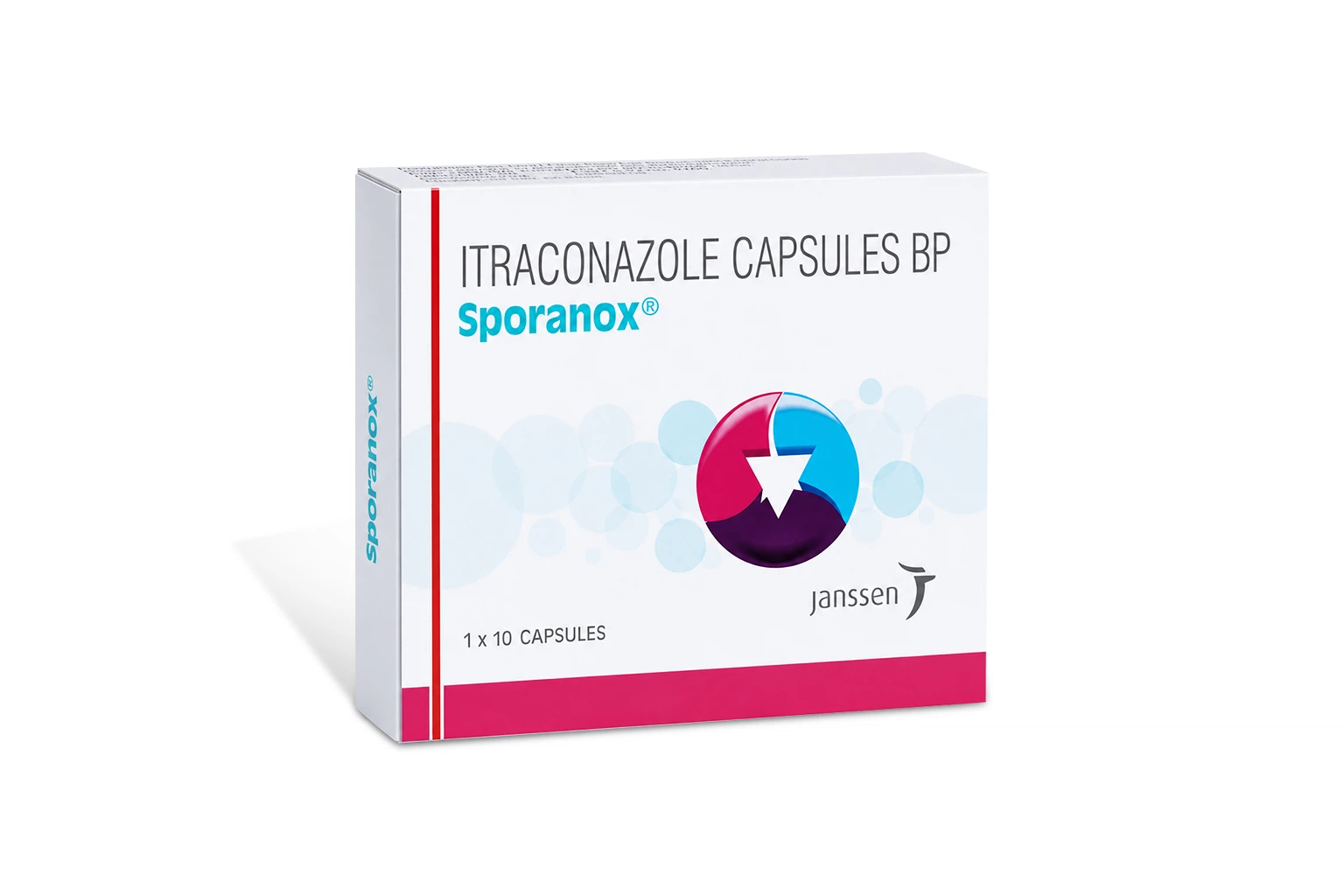
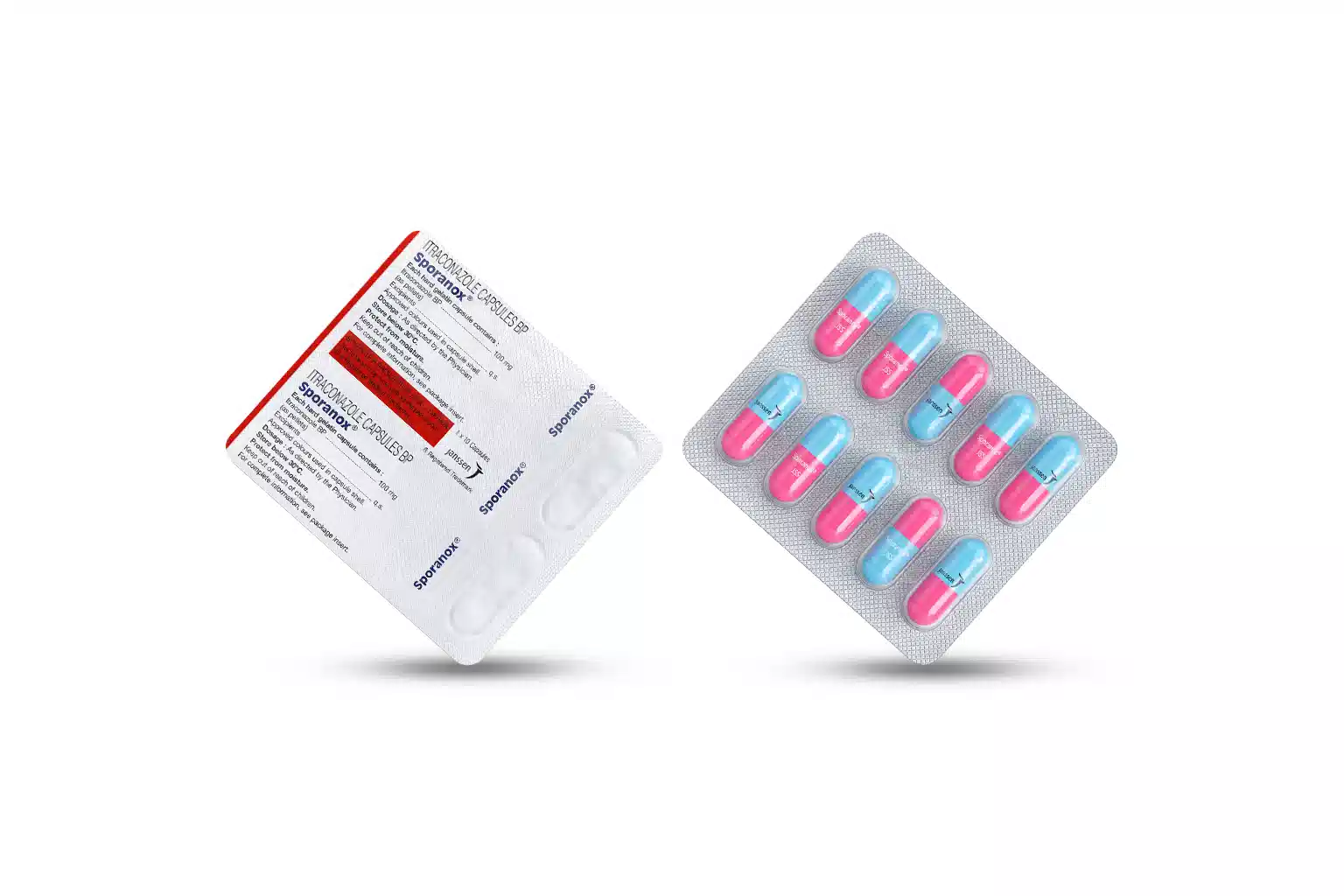
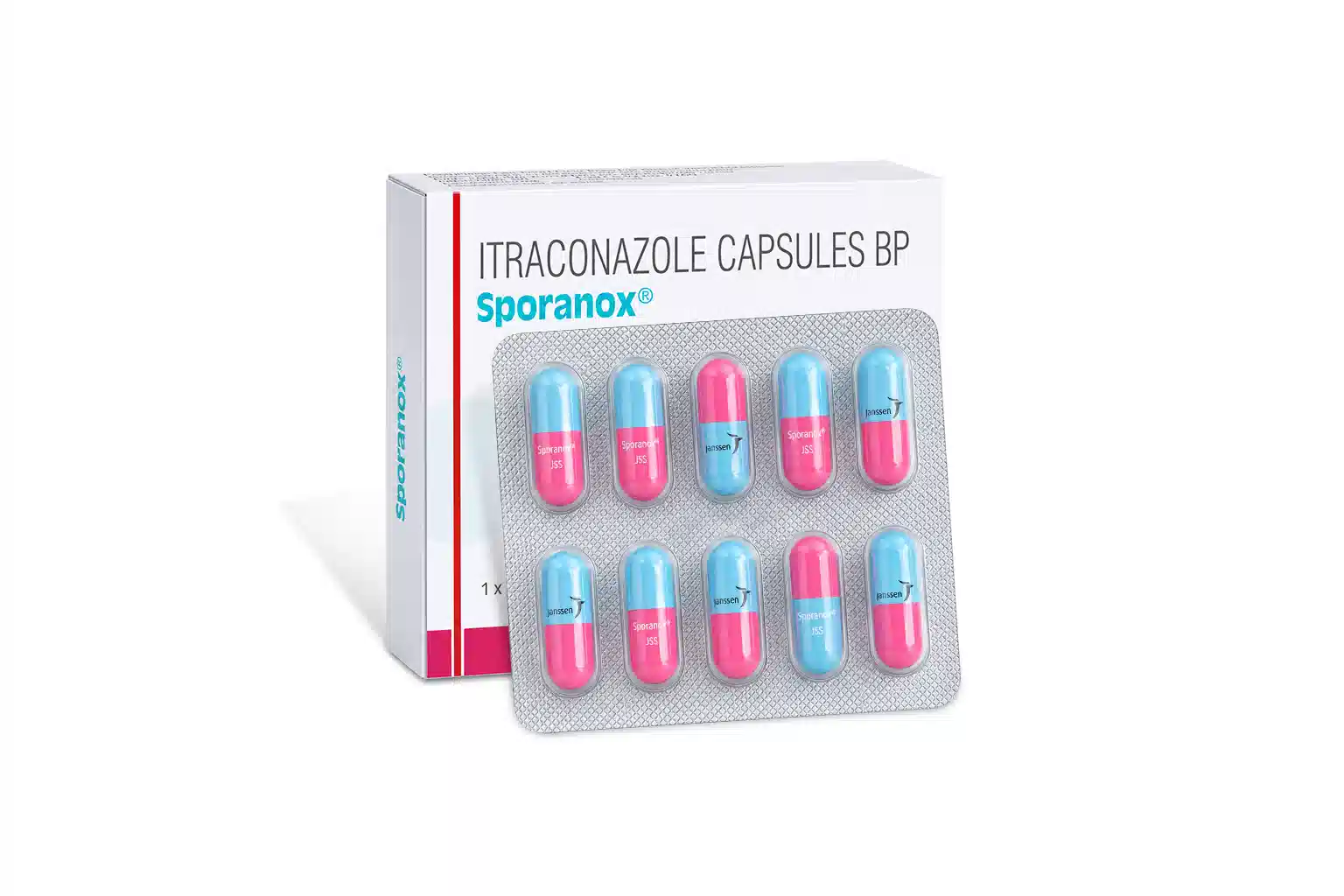

Sporanox Itraconazole 100 mg is indicated for the following fungal infections: Pulmonary aspergillosis; Esophageal candidiasis; Chronic pulmonary histoplasmosis; Cutaneous and lymphatic sporotrichosis; Paracoccidioidomycosis; Chromoblastomycosis (formerly chromomycosis); Blastomycosis; etc. 100 mg of Itraconazole is present in the tablet. It can be taken with or without food.
KEY FEATURES
<
| About Sporanox Itraconazole 100 mg |
|---|
| Drug class: Triazole Antifungal |
| Chemical class: Azole |
| Product details | |
|---|---|
| Active Ingredient | Itraconazole |
| Inactive Ingredients |
|
| Dosage Form | Capsules |
| Route of administration | Oral |
| Packaging | Blister Pack |
| Pack size | 10*10 |
| Strength | 100 mg |
| Used for | Fungal infections |
| Manufacturer | Janssen Pharmaceuticals |
| Shelf life | 24 months after the manufacturing date |
| Storage Instructions | Store at room temperature between 68℉ to 77℉ away from sunlight and moisture |
MECHANISM OF ACTION
The following is the mechanism:
- Blocks Ergosterol: Itraconazole binds to the fungal cytochrome P450 enzyme 14-alpha-demethylase. This binding blocks the conversion of lanosterol to ergosterol.
- Depletes cell membrane: Since there is no conversion to ergosterol there is reduction in ergosterol levels and thus there is damage to the cell membrane.
- Alters cell function: This interferes with membrane-bound enzymes and stops fungal growth or replication.
USES
Sporanox Itraconazole 100 mg is used for:
- Ringworm and jock itch
- Nail fungus
- Oral and Esophageal Thrush
- Pityriasis versicolor
It is also used for some other fungal infections.
DOSAGE
Sporanox should be administered at a dose of 100-400 mg/day. Daily dosage recommendations vary according to the infection treated. For a missed dose, take it as soon as you remember. If it’s time for the next dose, skip the missed dose.
SIDE EFFECTS
Some of the possible side effects seen with Sporanox 100 mg are:
- Abdominal pain
- Nausea
- Headache
- Cough
- Fluid in the lungs
- Menstrual disorders
- Erectile dysfunction (rare)
- Hair loss
- Unpleasant taste
- Chest pain
- Altered voice
- Muscle pain
INTERACTIONS
Drugs that may interact with Sporanox Itraconazole 100 mg are:
- Alpha blockers like Tamsulosin, Alfusozin
- Antibacterials like Ciprofloxacin, Erythromycin, Clarithromycin, Rifampicin, etc.
- Anticonvulsants like Carbamazepine, Phenobarbital and Phenytoin.
- Calcium channel blockers like Diltiazem, Felodipine, Verapamil, etc.
- Cardiovascular drugs
- Immunosuppressants like Budesonide, Cyclosporine, Dexamethasone, etc.
- SSRIs, antidepressants like Vardenafil, Dutasteride, Sildenafil, Tadalafil, etc.
- Lipid regulating drugs like Atorvastatin, Lovastatin, Simvastatin.
- Antivirals like Indinavir, Ritonavir, Saquinavir, etc.
PRECAUTIONS & WARNINGS
- Sporanox should not be administered by patients with ventricular dysfunction such as Congestive Heart Failure.
- Coadministration of CYP3A4 substrates with Sporanox is contraindicated.
- Sporanox has been associated with rare cases of serious hepatotoxicity, including liver failure and death, so use with caution.
- Caution should be exercised when the drug is administered in patients with hepatic insufficiency.
- Do not use the medication if you have a history of heart failure.
- Avoid combining Itraconazole with certain cholesterol drugs like Simvastatin.
- Do not use Itraconazole if you are pregnant or planning to get pregnant.
CONCLUSION
Itraconazole 100 mg (Sporanox) is a broad spectrum triazole antifungal which inhibits the synthesis of fungal ergosterol and has proven to be effective in a wide variety of systemic and superficial fungal infections including aspergillosis, candidiasis, histoplasmosis and dermatophyte infections. As with any antifungal medication, treatment should be individualized based on the type of infection, the patient’s medical history and concurrent medications and should only be taken under medical supervision.
luke hughes –
My doctor prescribed this and it worked as expected. I had a good experience overall.