
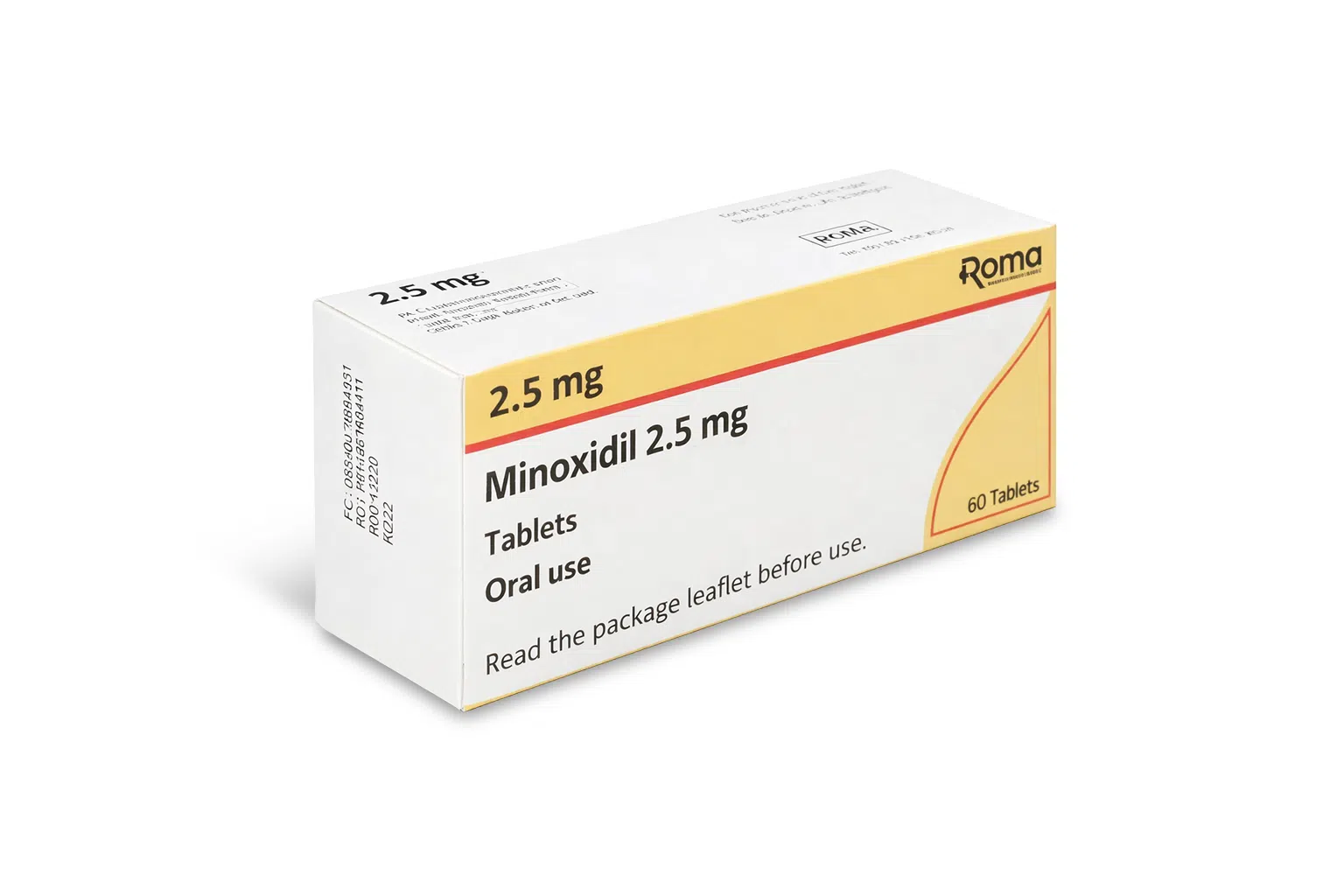
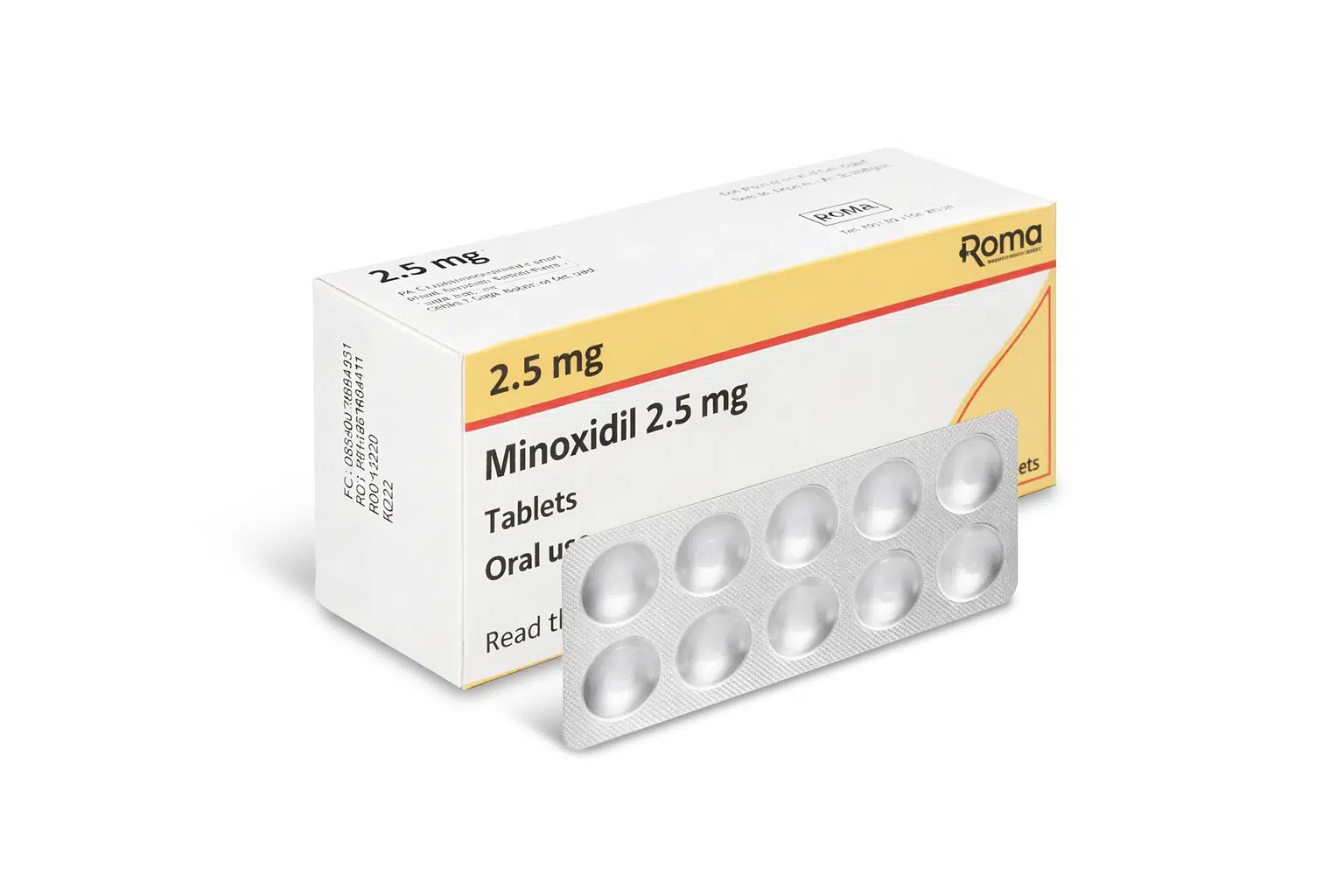

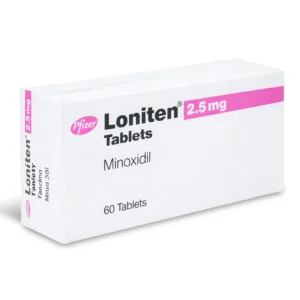
Minoxidil 2.5 mg tablets contain the active ingredient Minoxidil, which is a powerful vasodilator. It’s mostly prescribed for high blood pressure that’s not responding well to other drugs, but it’s also used off-label at small doses to help with hair growth. This is a powerful drug, which has to be carefully monitored by doctors for its effects on the cardiovascular system.
Key Features
| About Minoxidil 2.5 mg |
|---|
| Drug Class: Vasodilator |
| Subclass: Antihypertensive agent |
| Product Details | |
|---|---|
| Composition | Active Ingredient: Minoxidil |
| Packaging Type | Tablet |
| Pack Size | 60 tablets |
| Dosage | 2.5 mg |
| Manufacturer | Roma Pharmaceuticals Limited |
| Shelf Life | 2 to 4 years from the date of manufacture |
| Usages | Treatment of severe hypertension, Off-label use for androgenetic alopecia (hair loss) |
How does Minoxidil 2.5 mg work?
Minoxidil works by dilating and relaxing the blood vessels. Peripheral vasodilation reduces the peripheral resistance against which the heart pumps, thereby lowering both systolic and diastolic blood pressure. For hair growth, minoxidil is converted by an enzyme in the hair follicle into minoxidil sulfate, which is believed to stimulate hair follicles, promote growth, and increase hair shaft diameter.
Usage
- Supports hair growth and thickness
- Low-dose oral minoxidil is used in clinical practice for androgenetic alopecia (male) and female pattern hair loss
- May be prescribed for hair growth support when topical minoxidil has been ineffective or is not well-tolerated
- Should only be used under strict medical supervision for either indication
Dosage
Take the capsule as directed by a healthcare provider. The usual dose (low-dose oral minoxidil) is once or twice a day after meals. It usually takes a few weeks of regular use before noticeable effects are seen. Do not exceed the recommended amount.
Side effects
Minoxidil 2.5 mg is generally well tolerated. But some may have:
- Mild stomach upset
- Nausea
- Headache (rare)
If any abnormal symptoms persist, consult a physician.
Interactions
- Significant interaction with guanethidine: Can result in profound orthostatic hypotension (sudden drop in blood pressure upon standing)
- May interact with other antihypertensive agents, potentially causing additive blood pressure-lowering effects
- Inform your doctor if you are taking other supplements or prescription medicines.
Pharmacokinetics
- Absorption: Absorbed at < 90% from the gastrointestinal tract
- Peak plasma levels: Reached within the first hour after oral administration
- Plasma half-life: Approximately 4.2 hours
- Metabolism: Primarily metabolized by conjugation with glucuronic acid
- Excretion: Mainly eliminated in the urine
- Protein binding: Does not bind to plasma proteins
- Renal clearance: Corresponds to the glomerular filtration rate
- Onset of action: Blood pressure reduction typically begins within 30 minutes to 2 hours
Precautions
- Intended for adult males and females only.
- Consult physician prior to use, especially if you have pre-existing medical conditions.
- Not recommended for use during pregnancy.
- Keep out of reach of children.
- Do not use as a substitute for a balanced diet.
Conclusion
Minoxidil 2.5 mg is a potent drug with a predominant role in the treatment of severe and resistant hypertension by effectively lowering blood pressure through vasodilation. It has also attracted attention for its use as a low-dose treatment for hair loss, off-label. Because it has very strong effects, it needs to be taken only under close medical supervision and is almost always given together with other drugs to control its important side effects, especially holding fluid and raising the heart rate.
FAQs
2) What is the use of Minoxidil 2.5 mg tablets?
3) Why is Minoxidil usually prescribed with other drugs?
4) Can I start Minoxidil 2.5 mg for my hair loss?
- What if I get side effects while using minoxidil 2.5 mg?

emily perry –
My dermatologist recommended the tablets to me and honestly you have to be very consistent with it to see the results