

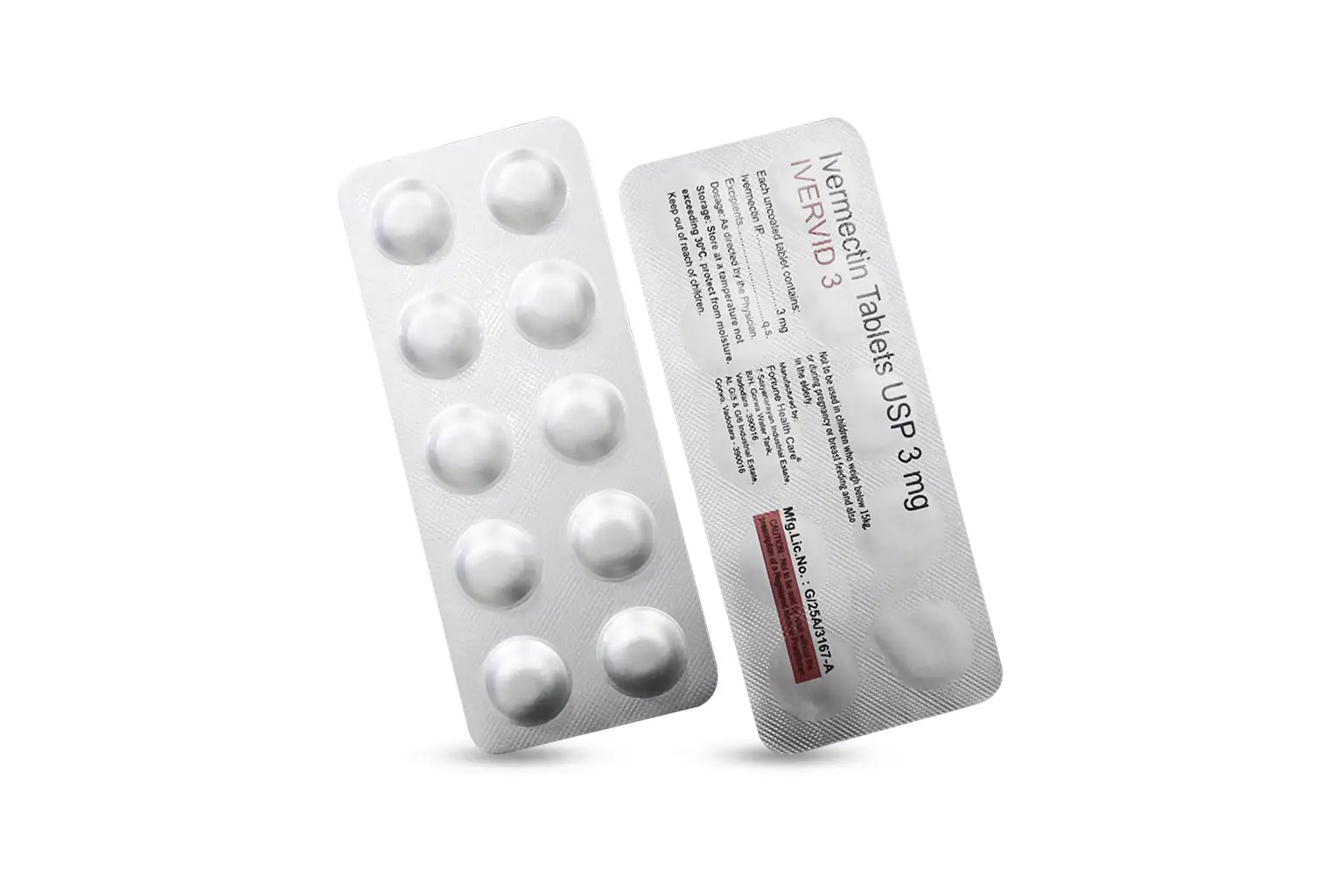
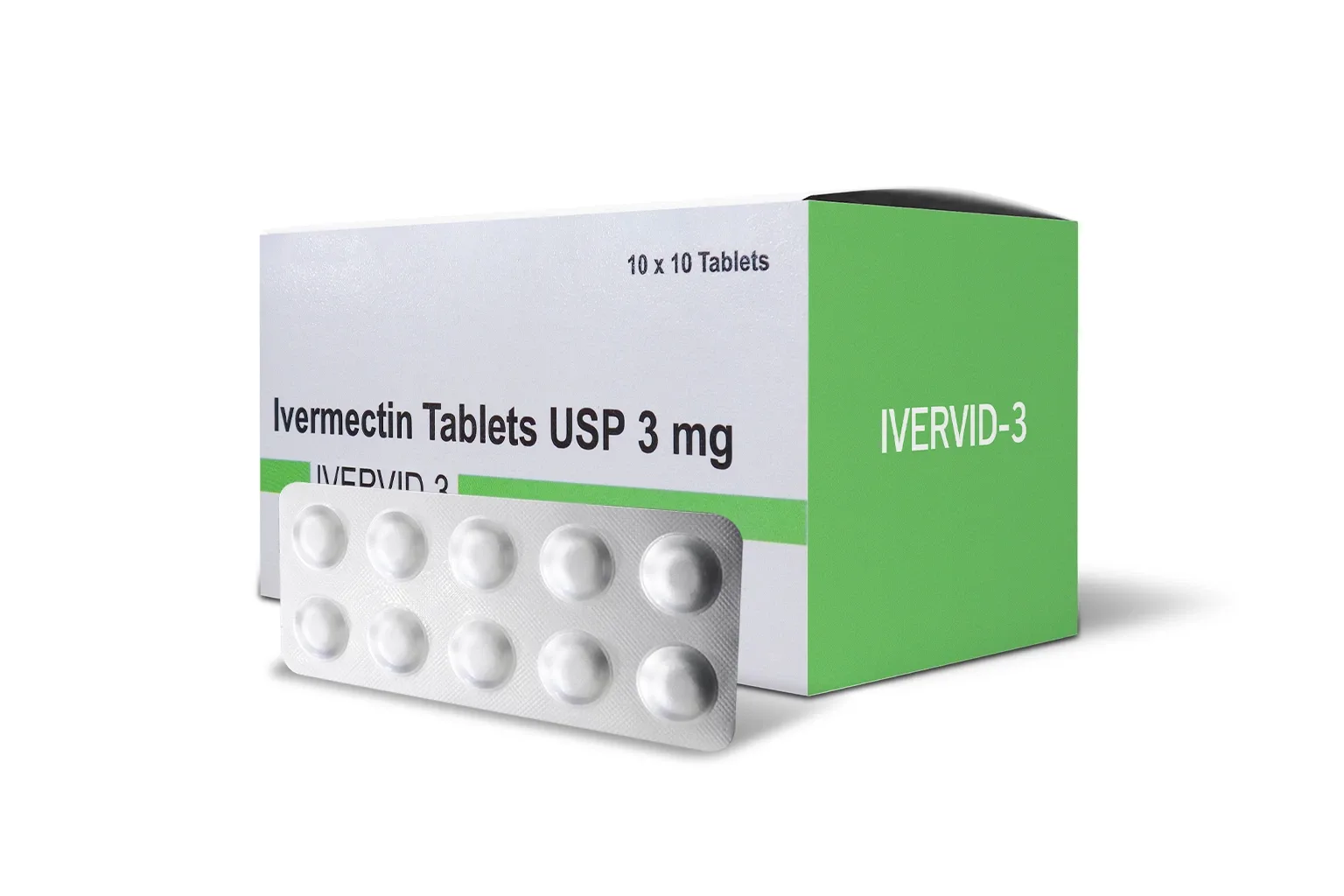

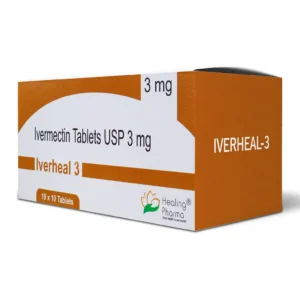
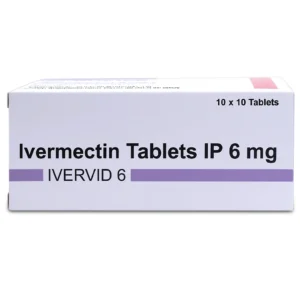
Ivervid 3mg is an anthelmintic medication containing Ivermectin as the active ingredient. Ivermectin binds to glutamate-gated chloride channels in the nerve and muscle cells of the parasite that results into paralysis and ultimately death of a parasite. It is used to treat parasitic infections caused by roundworms, threadworms, hookworms, whipworms, pinworms, and scabies-a skin infestation.
Key Features
| About Ivervid 3 mg |
|---|
| Drug Class: Antiparasitic Agents |
| Subclass: Anthelmintics, specifically Macrocyclic lactones |
| Product Details | |
|---|---|
| Composition | Active ingredient: Ivermectin Inactive ingredients: • Microcrystalline cellulose • Magnesium Stearate • Titanium dioxide • Hydroxypropyl cellulose • Hydroxypropyl methylcellulose (HPMC) |
| Packaging Type | Blister |
| Pack Size | 10*10 |
| Dosage | 3 mg |
| Therapeutic class | Antiparasitic agent |
| Action Class | Ectoparasiticides |
| Chemical class | Macrocyclic lactone |
| Manufacturer | Kachhela Medex |
| Shelf Life | 2-3 years from the date of manufacturing |
| Usages | Treats parasitic infections (e.g., strongyloidiasis, onchocerciasis, scabies) |
| Country of Origin | India |
| Storage | Store at room temperature (15-25°C) away from moisture and direct sunlight. |
How does Ivervid 3mg work?
- Ivermectin binds to glutamate-gated chloride ion channels in parasite nerve and muscle cells, increasing chloride ion permeability that leads to hyperpolarization and paralysis and ultimately leads to the death of the parasite.
- Increased Permeability: The binding increases cell membrane permeability to chloride ions, causing the cell to take in chloride ions.
- Hyperpolarization: The heightened influx of chloride ions hyperpolarizes the cell membrane, making it challenging for the parasite’s nerves and muscles to function.
- Paralysis and Death: The parasite’s failure to operate adequately causes paralysis and eventually death.
Usage of Ivervid 3mg
- Treatment of Strongyloidiasis (intestinal roundworm infection).
- It is also used to treat Onchocerciasis (river blindness).
- Scabies skin infestation.
- Lymphatic filariasis (combination with other drugs).
- Head lice and other ectoparasitic infections.
Dosage of Ivervid 3mg
- Single oral dose of 150-200 mcg/kg body weight (e.g., 1 tablet of 3 mg for 25-35 kg weight) taken on an empty stomach with water.
- Strongyloidiasis: 200 mcg/kg single dose.
- Onchocerciasis: 150 mcg/kg single dose (repeat every 6-12 months).
- Scabies: 200 mcg/kg single dose (repeat in 1-2 weeks).
Strength of Medication
Side Effects of Ivervid 3mg
- Nausea,
- Vomiting
- Diarrhea
- Dizziness
- Headache
- Mild skin rash
- Abdominal pain
- Constipation
- Fever
- Lymph node swelling
Interactions
- Blood thinners: Ivermectin can enhance the risk of bleeding when co-administered with blood thinners like warfarin.
- Certain antibiotics: Ivermectin can interact with some antibiotics like azithromycin or clarithromycin, perhaps heightening the risk of adverse effects.
- Anticonvulsants: Ivermectin can interact with anticonvulsants like valproic acid, perhaps altering its effectiveness or heightening the risk of adverse effects.
- Other drugs: Ivermectin has the potential to interact with other drugs, such as some antifungals, antivirals, and anti-anxiety drugs.
- CYP3A4 inhibitors (e.g., ketoconazole, itraconazole, erythromycin) increase ivermectin levels.
- Barbiturates and benzodiazepines additive CNS depressant effects.
Pharmacokinetics
- Absorption: Well absorbed within 30-60 minutes following oral administration.
- Distribution: Widely distributed to tissues (including fat and liver).
- Metabolism: Minimal hepatic metabolism via CYP3A4.
- Elimination: Primarily fecal is approx. (80-90%) With minimal renal excretion.
- Half-life: 12–36 hours (single dose).
Pharmacokinetic Factors Influencing Ivermectin
- Food: Some food may influence the absorption of ivermectin and may enhance its bioavailability for example high-fat food, grape juice, alcohol and caffeine.
- Age: The pharmacokinetics of ivermectin can be influenced by age.
- Liver function: Ivermectin is widely metabolized by the liver, therefore liver impairment may influence its pharmacokinetics.
- Other health conditions: Some health states, like renal disease, can influence the elimination of ivermectin.
Precautions
- Inform your doctor or healthcare professional prior about your medical conditions like heart, kidney or Liver condition.
- Ivervid 3mg may interact with other medications, including warfarin, barbiturates, benzodiazepines, and anti-seizure drugs.
- Avoid alcohol while taking Ivervid 3mg tablet.
Conclusion
Ivervid 3 mg is an effective medication against various parasitic infections like onchocerciasis, strongyloidiasis, scabies, and lice. This belongs to the class of Anthelmintics. The drug acts by paralyzing and killing parasites through glutamate-gated chloride ion channel agonism. Proper dosage and precautions are necessary to minimize the side effects and ensure safety.
Zoe Martinez –
Always delivers.