
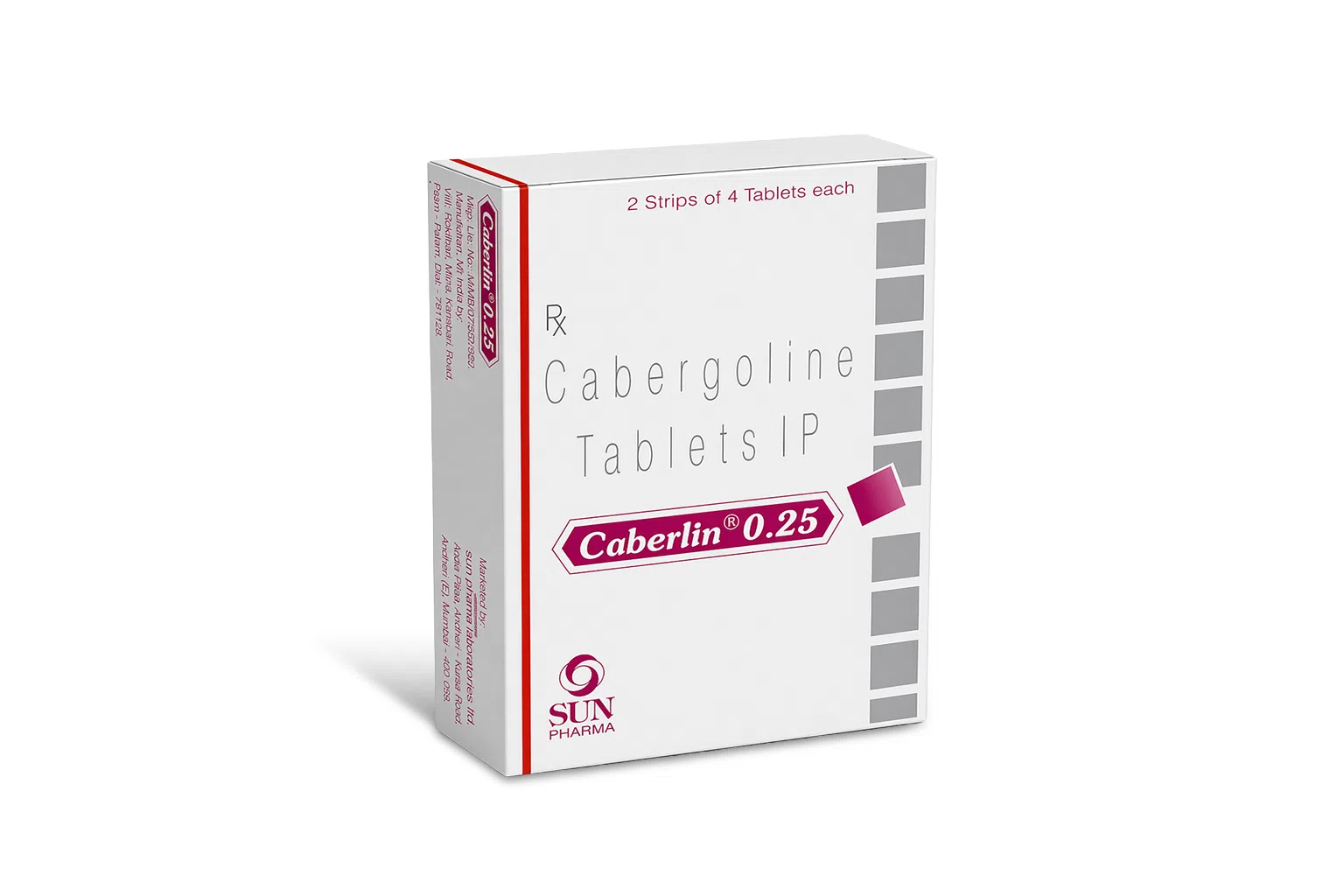
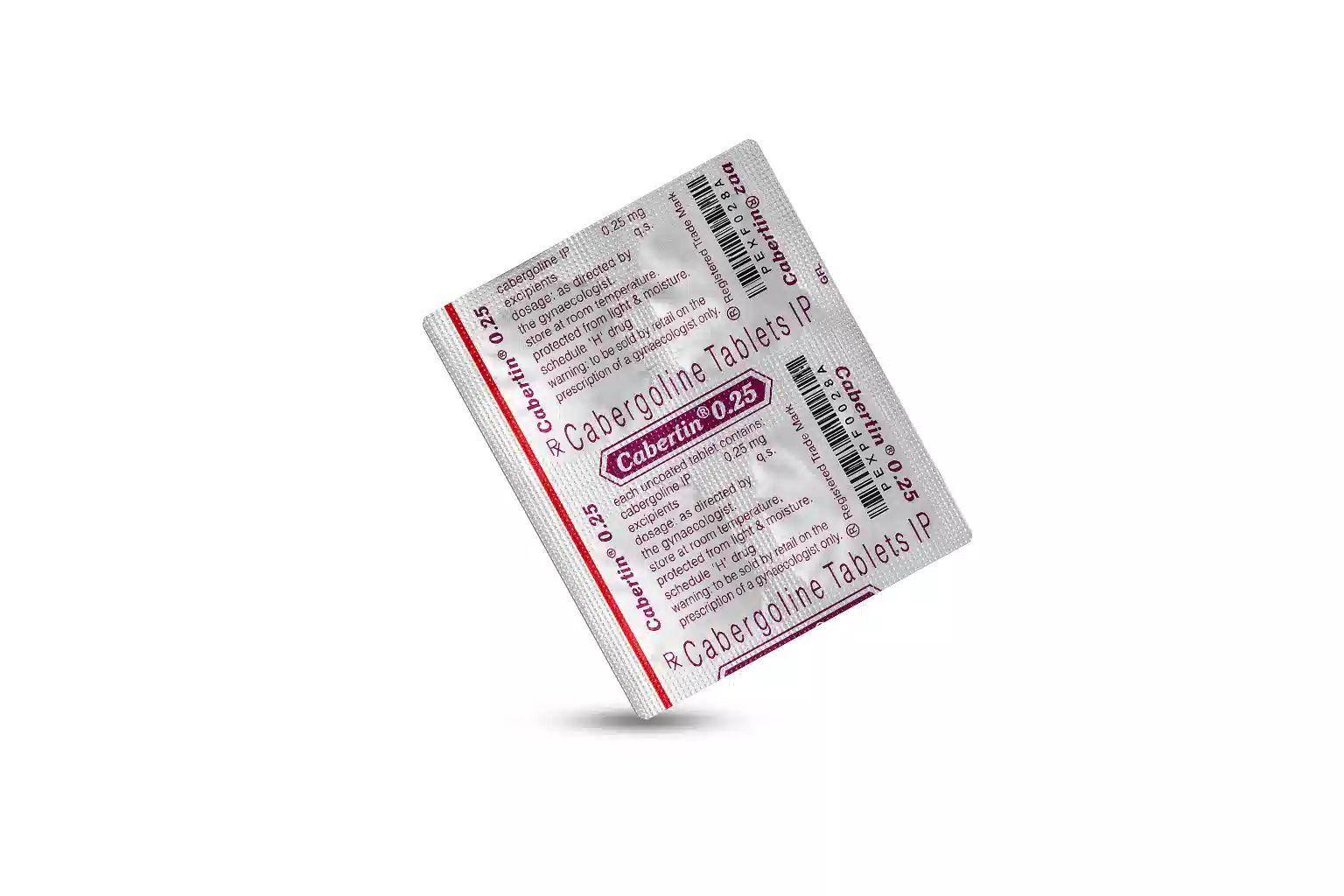
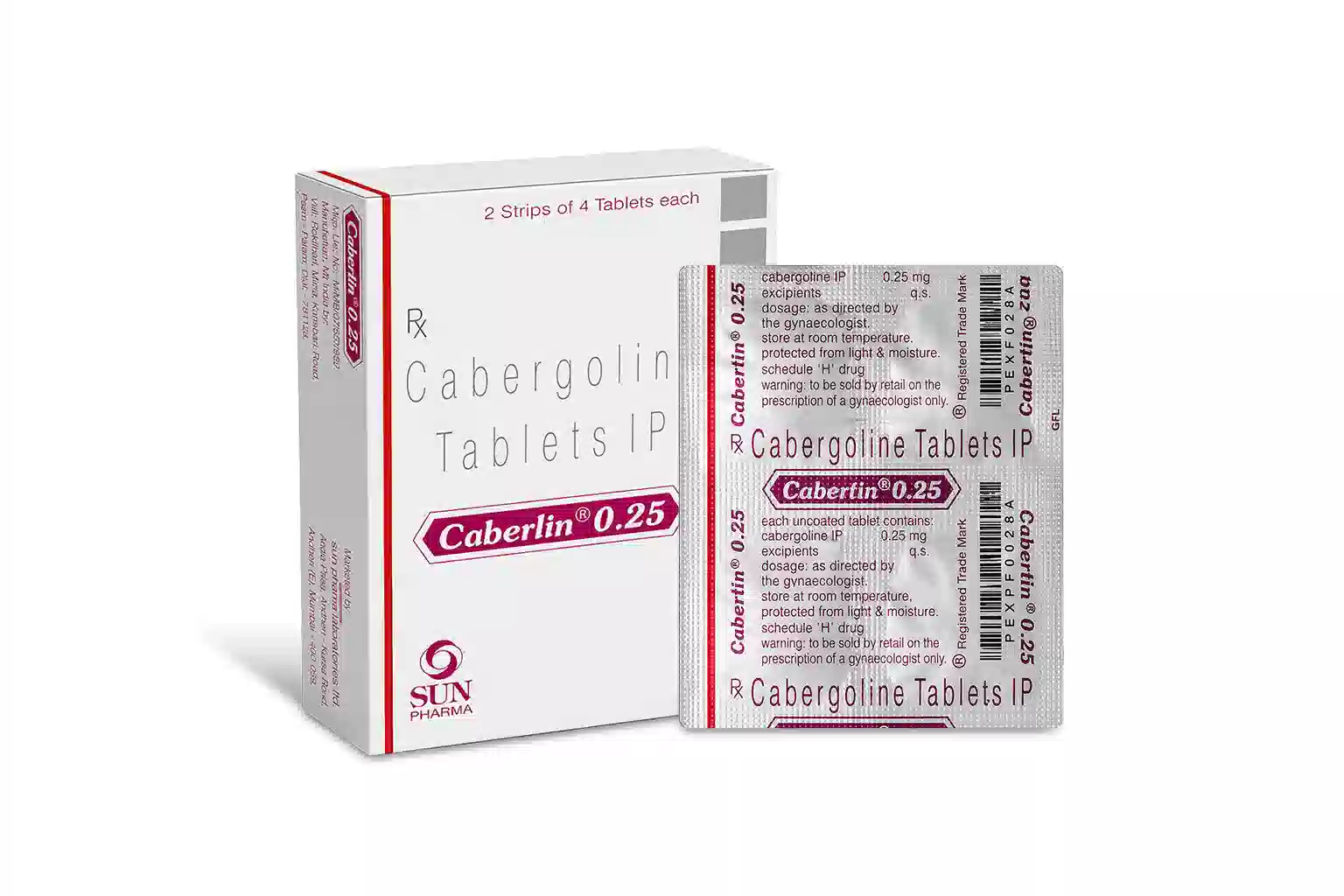

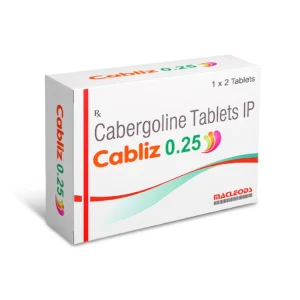
Caberlin 0.25 mg tablets contain cabergoline, a medicine commonly used to lower high prolactin levels in the blood. High prolactin can contribute to symptoms such as irregular or absent periods, unwanted breast-milk production, infertility, reduced sexual desire and erectile difficulties, depending on the underlying cause.
Key Features
| About Caberlin 0.25 Mg |
|---|
| Drug Class: Dopamine agonist |
| Subclass: Prolactin Inhibitor |
| Product Details | |
|---|---|
| Composition | Active ingredient: Cabergoline Inactive ingredients:
|
| Packaging Type | Strips pack |
| Pack Size | 2 strips of 4 tablets each |
| Dosage | 0.25 mg |
| Shelf Life | 24 to 36 months (2 to 3 years) from its date of manufacture. |
| Usages |
|
How do Caberlin 0.25 mg tablets work?
- Cabergoline acts in a similar way to dopamine, a natural chemical messenger in the brain. Dopamine normally helps control the release of prolactin from the pituitary gland.
- By stimulating dopamine receptors Caberlin 0.25 mg tablets reduce prolactin production. As prolactin levels return towards the normal range, hormone-related symptoms may improve. The response is usually monitored through blood tests and, in some cases, scans or specialist review.
Usage
Caberlin 0.25 Mg Tablets is used for:
- High prolactin levels caused by certain pituitary conditions or medicines
- Menstrual irregularities linked with raised prolactin
- Milk secretion not related to breastfeeding
- Fertility problems associated with hyperprolactinemia
- Reduced libido or erectile problems related to raised prolactin
- Prolactin-secreting pituitary tumors, where appropriate
It is not intended for self-treatment of fertility concerns, breast discharge, or menstrual changes. These symptoms need medical assessment to identify the cause.
Dosage
- Take Caberlin 0.25 mg tablets only in the dose and schedule prescribed by your doctor. It is often started at a low dose, sometimes taken once or twice weekly, and adjusted gradually if needed.
- Swallow the tablet with water. Taking food may help to reduce nausea or an upset stomach. Do not increase, skip repeatedly or stop the medicine without medical advice, even if symptoms begin to improve.
- If you miss a dose, ask your doctor or pharmacist what to do. Do not take two doses together unless specifically instructed.
Side effects
Caberlin 0.25 mg tablets can cause side effects, although not everyone experiences them. The more common effects are often mild and may lessen as the body adjusts.
Common side effects may include:
- Nausea, indigestion, abdominal discomfort, or constipation
- Headache
- Dizziness, especially when standing up quickly
- Tiredness or sleepiness
- Low blood pressure
- Nasal congestion
Seek medical advice promptly if you develop fainting, chest pain, breathlessness, persistent cough, swelling of the legs, severe stomach pain, unusual changes in mood or behaviour or severe headache with visual disturbance. These symptoms require assessment, particularly during long-term treatment.
Interactions
Tell your doctor about all prescription medicines, over-the-counter products and herbal supplements before starting Caberlin 0.25 mg tablets.
Clinically relevant interactions can include:
- Antipsychotic medicines and certain anti-sickness medicines, such as metoclopramide, which may reduce cabergoline’s effect
- Macrolide antibiotics, including erythromycin or clarithromycin, which may increase cabergoline exposure
- Blood-pressure medicines, as the combination may increase the chance of dizziness or low blood pressure
- Other dopamine-acting medicines, which may need dose review or closer monitoring
Avoid alcohol if it worsens dizziness or drowsiness.
Pharmacokinetics
Cabergoline pharmacokinetics describe how a 0.25 mg oral dose is absorbed, distributed, processed, and cleared by the body. It features rapid oral absorption (peak in 2 to 3 hours), high tissue binding, extensive liver metabolism, a long elimination half-life (about 63–69 hours) and primarily fecal excretion.
Precautions
Caberlin 0.25 Mg Tablets may not be suitable for everyone. Inform your doctor if you have or have had:
- Heart valve disease, heart failure, or other serious heart conditions
- Lung disease, kidney problems, or a history of fibrosis
- Liver impairment
- Low blood pressure or frequent fainting
- Mental-health conditions, including psychosis or impulse-control problems
- Pregnancy, plans to conceive or breastfeeding
Cabergoline can cause dizziness or sudden sleepiness in some people. Avoid driving, cycling, operating machinery, or doing tasks requiring alertness until you know how it affects you. Women who may become pregnant should discuss contraception and pregnancy planning with their prescriber. Regular follow-up is important especially when treatment is continued for a long period.
Conclusion
Caberlin 0.25 mg tablets are used to manage elevated prolactin levels under medical supervision. Cabergoline can be prescribed and monitored to help with prolactin-related symptoms and to help with hormonal balance. They are regularly checked on their health and blood tests to ensure that the treatment is safe and effective.


Oliver –
This medicine worked well for my condition. I noticed improvement within a few weeks.