
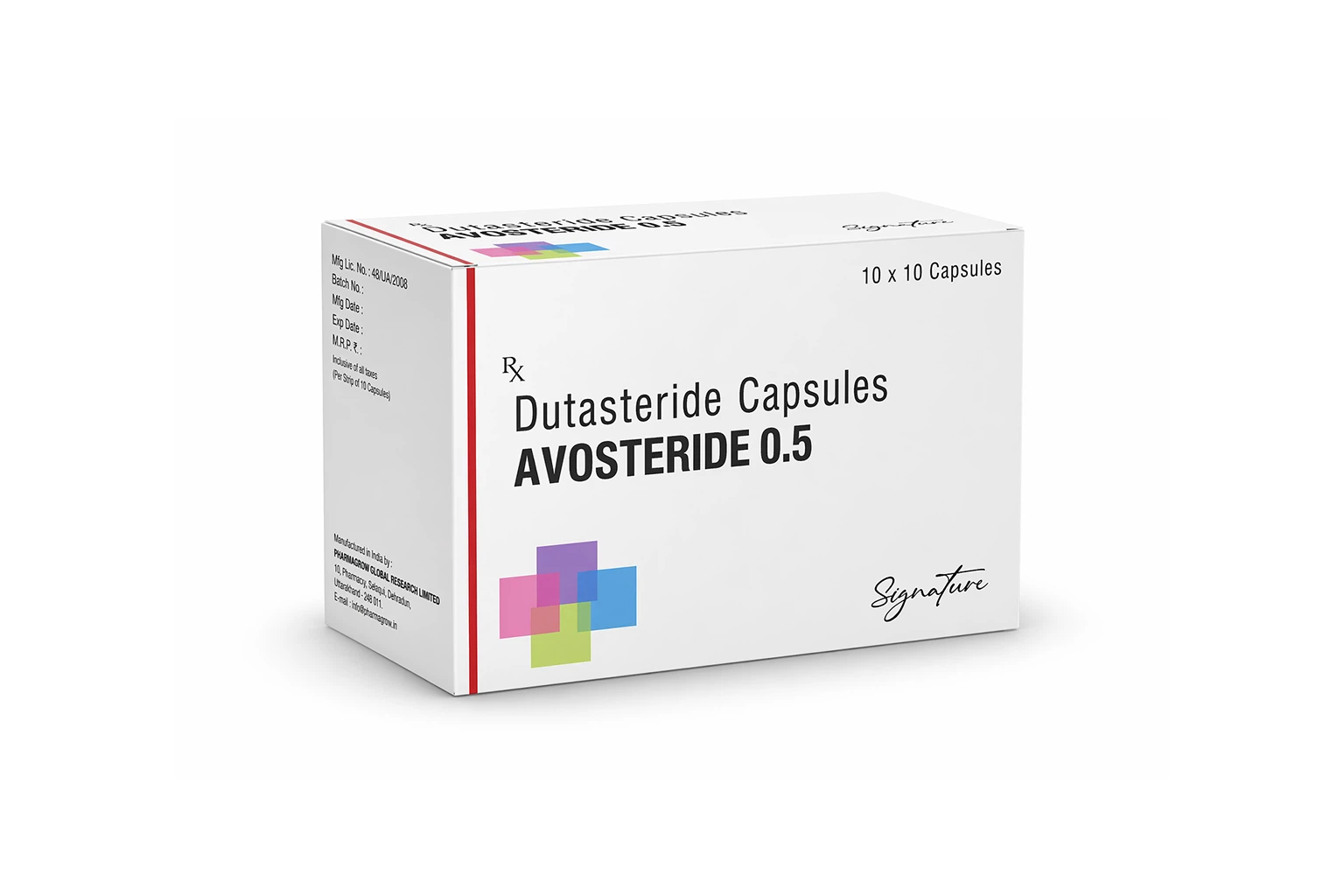
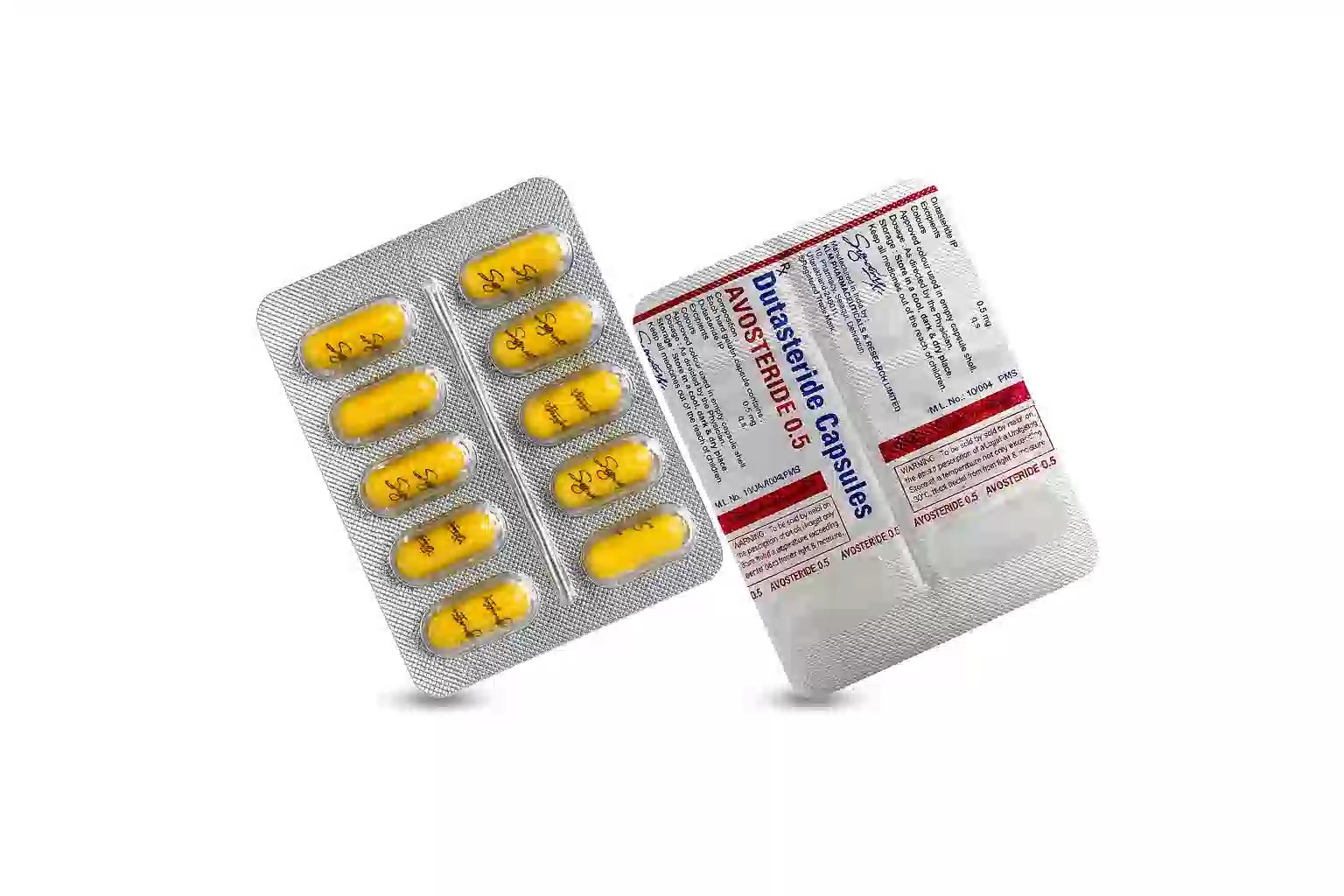
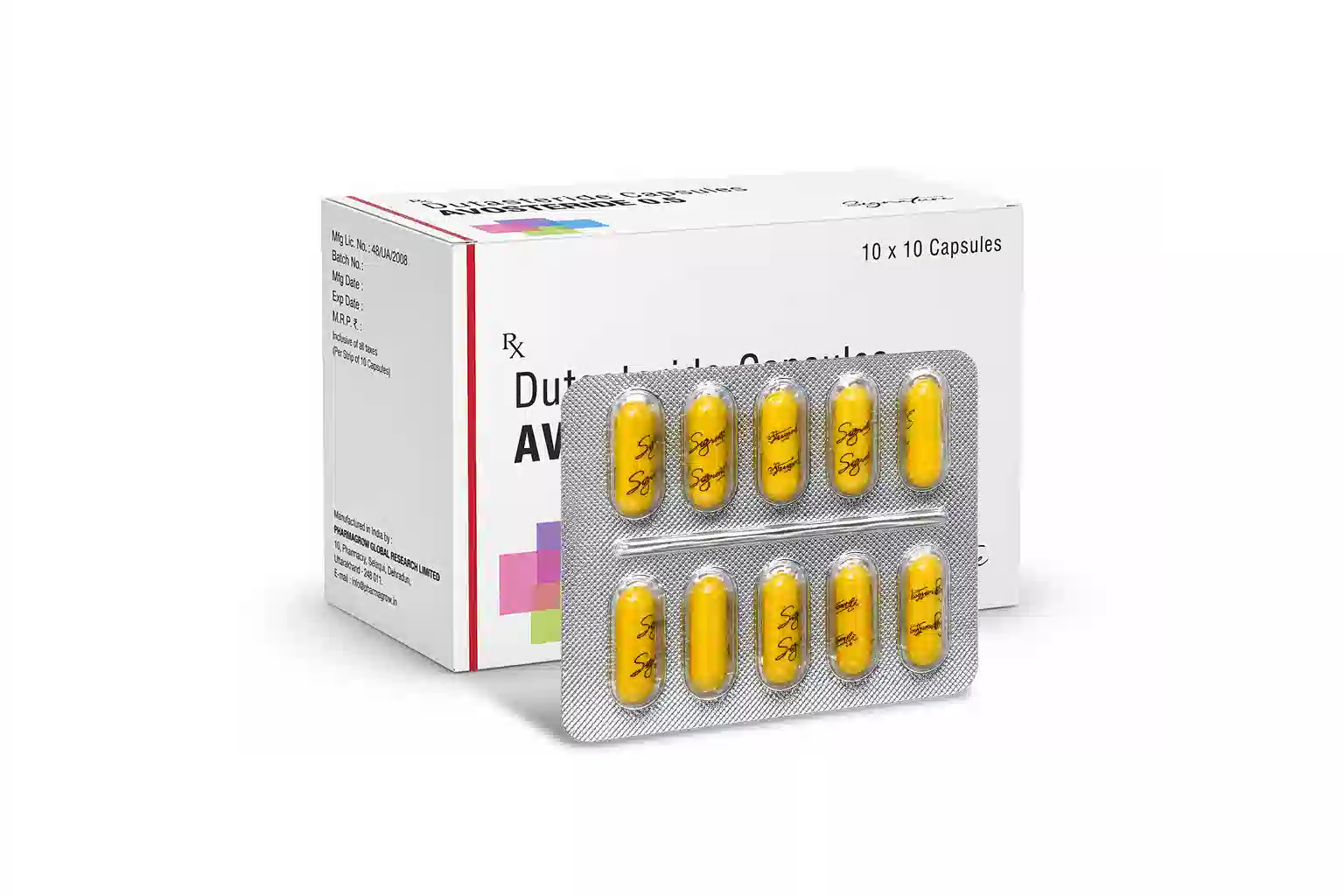

Avosteride 0.5 mg is a medicine containing dutasteride a drug commonly used in the management of male pattern hair loss. It works by lowering levels of dihydrotestosterone (DHT) a hormone that can gradually shrink genetically sensitive hair follicles.
For some men, reducing DHT may help slow further hair thinning and support improvement in scalp-hair coverage over time. Results vary, and continued use is usually needed to maintain any benefit.
Key Features
| About (Avosteride 0.5 mg) |
|---|
| Drug Class: 5-alpha-reductase inhibitor |
| Subclass: Dual type I and type II 5-alpha-reductase inhibitor |
| Product Details | |
|---|---|
| Composition | Active ingredient: Dutasteride |
| Packaging Type | Blister strips |
| Pack Size | 10*10 |
| Dosage | 0.5 |
| Shelf Life | Store in a cool, dry place away from direct sunlight and out of children’s reach. |
| Usages | Male pattern hair loss or androgenetic alopecia in adult men |
How does Avosteride 0.5 mg work?
Testosterone can be converted into DHT by an enzyme called 5-alpha-reductase. DHT is a normal hormone but in men with androgenetic alopecia, hair follicles on the scalp may be unusually sensitive to it.
Avosteride 0.5 mg blocks both type I and type II forms of this enzyme. This lowers DHT levels in the blood and scalp. Reducing the amount of DHT that can act on susceptible follicles may slow down the process of follicle miniaturization. Over several months, some users may notice reduced shedding, better hair density or thicker-looking existing hair.
It does not create new follicles, and it may not restore hair in areas where follicles have been inactive for a long time. Response depends on factors such as age, duration of hair loss, family history and consistent use.
Usages
Avosteride 0.5 mg is used for adult men with androgenetic alopecia, also known as male pattern baldness. It is often considered when hair loss is progressive or when a clinician believes DHT reduction may be helpful.
The medicine should be used under medical supervision. A dermatologist may assess the pattern of hair loss before prescribing it, ince sudden shedding, patchy hair loss, scalp inflammation, thyroid disease, nutritional deficiency and other conditions need different treatment approaches.
Dosage
The commonly used dose is one Avosteride 0.5 mg capsule once daily with or without food. Swallow the capsule whole with water.
- Take it at roughly the same time each day to support regular use.
- Do not chew, crush, or open the capsule.
- Do not take an extra dose if one is missed take the next dose at the normal time.
- Do not change the dose or stop treatment without speaking to the prescriber.
Hair-related results are not immediate. A clinical review is often appropriate after several months of regular use to determine whether treatment is helping and remains suitable.
Side effects
Like other medicines that alter DHT levels Avosteride 0.5 mg can cause side effects in some people. Many users do not experience significant problems but it is important to be aware of potential effects.
Commonly reported side effects can include:
- Reduced sexual desire
- Difficulty achieving or maintaining an erection
- Changes in ejaculation volume
- Breast tenderness or breast enlargement
- Testicular discomfort
- Reduced semen volume
Less commonly some people may experience mood changes, including low mood. Seek prompt medical advice for swelling of the face or throat, rash, breathing difficulty or persistent sexual or psychological symptoms.
Interactions
Tell the prescribing doctor about all medicines, supplements and herbal products being used. Medicines that strongly inhibit the liver enzyme CYP3A4 may increase dutasteride exposure.
Clinically relevant interaction concerns may include:
- Certain antifungal medicines, such as ketoconazole or itraconazole
- Some antibiotics, including clarithromycin
- Certain antiviral medicines used for HIV or hepatitis C
- Other medicines that affect hormone balance or prostate treatment
Avosteride 0.5 mg may also lower prostate-specific antigen (PSA) readings. If you are undergoing PSA testing or prostate evaluation, inform the doctor that you are taking dutasteride so results can be interpreted correctly.
Pharmacokinetics
Following oral administration dutasteride is absorbed into systemic circulation and extensively metabolized in the liver. It has an absolute bioavailability of about 60%. It has a long half-life of roughly 3 to 5 weeks. Less than 0.1% of the drug is excreted unchanged in the urine.
This long persistence is one reason why users should discuss discontinuation, family-planning concerns and adverse effects with a healthcare professional. It also means that improvement in hair loss, as well as reversal of certain effects after stopping, may not be immediate.
Precautions
Avosteride 0.5 mg is not appropriate for everyone. Consider the following precautions before use:
- It should be used only by adult men and only with a valid prescription.
- Women who are pregnant or may become pregnant should not handle leaking or broken capsules, as dutasteride can be absorbed through the skin and may affect the development of a male fetus.
- Patients with liver disease should inform their doctor before starting treatment.
- Discuss any history of depression, sexual dysfunction, infertility concerns or breast disease with the prescriber.
- Do not donate blood while taking dutasteride and for at least six months after the last dose as donated blood could be given to a pregnant recipient.
- Keep capsules intact and stored out of reach of children.
Conclusion
Avosteride 0.5 mg is a dutasteride-based treatment that may help manage male pattern hair loss by lowering DHT, the hormone linked with follicle miniaturization. It is best used as part of a dermatologist-led hair-loss plan, with realistic expectations and regular follow-up. Evidence-based, patient-focused medical writing should distinguish supported uses and safety considerations rather than promise guaranteed cosmetic outcomes.
Jack –
Good alternative option. Helped improve my condition over time.