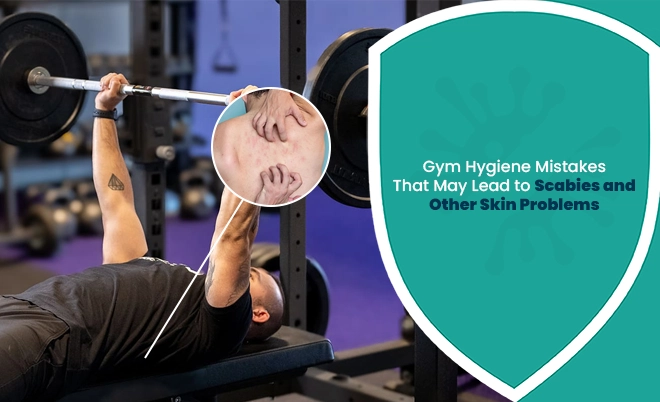
Exercising is important for maintaining overall health and wellbeing. It helps improve cardiovascular health, strengthens muscles, boosts mental health and enhances your immune system. So here’s a thing not enough people talk about – the gym is kind of disgusting. Not in a “never go again” way, but in a very real, very easy-to-ignore way that can genuinely mess up your skin. And I don’t mean a little breakout. I mean full-on infections, rashes, and yeah, in some cases, scabies.
Table of Contents
ToggleMost people know they should wipe down equipment. Most people don’t actually do it properly, or at all. And that gap between knowing and doing is exactly where gym hygiene mistakes live – and where a lot of skin problems quietly begin.
Can You Actually Get Scabies from the Gym?
The short answer is yes, though it’s not super common. The longer, messier answer is: “Can you get scabies from the gym?”- absolutely, under the right conditions. Scabies is caused by tiny mites that burrow into your skin, and they spread through prolonged skin-to-skin contact mostly. But they can also survive on surfaces for a short while – towels, yoga mats, padded benches. If someone with an active scabies infestation used a piece of equipment and you’re using it right after, skin contact with that surface isn’t zero risk. It’s not high risk, but it’s not zero either.
Most people don’t even consider scabies from gym equipment as a possibility. They think it’s a hygiene issue that only affects certain populations or situations. But community gyms – especially ones with high turnover and mediocre cleaning routines can absolutely be a vector. Especially if someone doesn’t know they have it yet (the incubation period is long) and they’re showing up and sweating on shared gear every day.
The Towel Problem
This one kind of bothers me because it seems so obvious but people genuinely mess it up. Using your towel to wipe your face and then draping it over a bench, then using it again later – that’s one of the classic gym hygiene mistakes people don’t even register as a mistake.
Your towel picks up whatever’s on the equipment surface. Then you press it to your face. Any bacteria, fungal spores, or skin debris from other users – it all goes along for the ride. Bacterial skin infections from gym equipment often start exactly like this, not from direct contact but from indirect transfer through things like towels, straps, or shared accessories.
Ringworm is probably the most common one. Fungal infections from gyms are genuinely underreported because most people treat them at home and don’t think to connect it to the gym. But ringworm thrives in warm, damp environments. A gym is basically a petri dish with barbells

Skipping Showers After a Workout?
Life gets busy. Sometimes you’re running to pick up kids or jump into a meeting and the shower happens two hours after you’ve left the gym. Fine, it happens. But making this a habit is one of those gym hygiene mistakes that seems small until it isn’t.
When you sweat, your skin’s pH shifts. The combination of sweat, skin cells, and whatever you picked up from equipment creates a pretty hospitable environment for bacteria. Common gym skin problems like folliculitis often come from sweat sitting on skin too long, trapping bacteria near hair follicles. It sounds minor. It’s itchy and stubborn and can spread if you keep picking at it, which everyone does.
Showering within 30-60 minutes of leaving the gym makes a real difference. Not a “maybe helpful” difference – an actual, measurable difference in skin health for people who work out regularly.
Bare Feet are a Bad Idea
The number of people who walk around gym locker rooms and pool areas barefoot is honestly shocking. Plantar warts, athlete’s foot, and occasionally ringworm – these are all things you can pick up from wet locker room floors. Gym cleanliness tips always include “wear flip flops in shared showers” and people read it and still don’t do it.
An athlete’s foot isn’t just uncomfortable. If you’re scratching between your toes and then touching other parts of your body (or other people, or shared surfaces) the fungal infection can spread. That’s how gym skin infections quietly compound – one thing leads to another and suddenly you’ve got something on your groin or underarms that definitely did not start there.
Sharing Gear – Even With Friends
People share water bottles, share straps, sometimes share gloves or wraps for lifting. Among friends it feels fine. Hygiene-wise, it’s not always fine. This falls squarely under gym hygiene mistakes because the familiarity lowers your guard. You wouldn’t use a stranger’s wrist wraps but you’ll use your training partner’s without thinking twice.
Skin conditions like impetigo and some fungal issues can transfer through shared gear that contacts sweaty skin. It’s not guaranteed but the risk is real. And honestly how to prevent skin infections at the gym starts with not sharing things that touch your body directly, even casually.
Equipment Wiping – The Half-Hearted Wipe Down
Okay so most gyms provide spray and paper towels. Most people give the bench a cursory half-wipe and call it done. That’s another entry in the list of gym hygiene mistakes that matters more than people realise.
The thing is, gym staff can’t sanitise every surface between every user. It’s just not possible. The responsibility genuinely falls on the individual. A proper wipe means covering the whole surface, letting the disinfectant sit for a few seconds (not immediately wiping it off – the dwell time matters for it to actually kill pathogens), and doing it before and after use if you want to be thorough.
Scabies from gym equipment is unlikely with consistent proper sanitation. Same with most bacterial skin infections from gym equipment. Most of the gym-related skin problems that dermatologists see are preventable – and they see a lot of them. Some of the medications that can be used for the treatment of scabies or any related skin infection can be Ivermectol 12 mg, Iversian 12 mg,Amoxyheal CV 1000 mg, Doxycycline 100 mg.
The Mat Situation
Yoga mats and gym floor mats deserve their own mention because people often treat them like they’re of lower risk. They’re not. You’re lying on them, pressing your face near them, exposing large surface areas of skin to whatever’s living there. “How to prevent skin infections at the gym?” has to include cleaning your personal yoga mat regularly and avoiding gym-provided mats when possible or at minimum using a towel barrier.
Fungal spores, bacteria, sweat residue – mats hold onto all of it. And because mats don’t look visibly dirty most of the time, people don’t clean them. Out of sight, out of mind, until you’ve got a rash across your shoulder blades.
Open Cuts and Skin Breaks – This One’s Actually Serious
If you’ve got an open cut, a popped blister, or any break in the skin and you’re grabbing shared equipment, you’re creating a direct entry point for bacteria. Staphylococcus aureus is common in gym environments and can cause anything from minor skin infections to more serious issues if it gets into an open wound. MRSA – the antibiotic-resistant version – has been documented in gym settings. This isn’t meant to be alarmist but it’s a real risk people casually ignore.
Cover open wounds before training, or honestly consider skipping the session. Common gym skin problems like staph infections can escalate fast, especially if your immune system is already under stress from heavy training loads.
Gym Cleanliness Tips That Actually Matter
Below are some of the tips that can help you maintain gym cleanliness:
- Shower soon after training.
- Use your own towel and don’t drape it on equipment.
- Wipe down surfaces properly – not just a swipe, an actual wipe with dwell time.
- Wear footwear in wet areas.
- Don’t share personal gear.
- Clean your mat if you have one.
- Cover broken skin.
- Check your skin regularly for unusual rashes, especially after trying new equipment or a new gym.
These aren’t complicated. They’re just easy to skip when you’re tired after a session.
Final Thoughts
Gym skin infections are common and most people don’t realise how many dermatology visits in the US and UK are related to gym environments. Fungal infections from gyms, minor bacterial issues, and even the occasional parasitic infection-they all trace back to the same root: shared warm, moist environments with inconsistent hygiene habits.
The good news is that gym hygiene mistakes are fixable. They’re not complicated to address. The tricky part is building consistent habits when you’re tired, distracted, or just not thinking about skin health at all in the context of a workout.
FAQs
1. Can you really get scabies from the gym?
Scabies mites can survive briefly on surfaces like mats and towels, so the risk exists but is relatively low with normal hygiene.
2. What are the most common gym skin infections?
Ringworm, athlete’s foot, folliculitis, and impetigo are among the most frequently seen gym-related skin infections.
3. How do I stop getting skin rashes after working out?
Shower promptly after training, wear clean workout clothes each session, and wipe down equipment before and after use.
4. Is it safe to use gym-provided towels?
Generally fine if the gym launders them properly, but bringing your own is always the safer option.
5. How often should I clean my gym bag?
At least once a week – gym bags collect sweat, bacteria, and fungal spores and are a commonly overlooked source of skin reinfection.