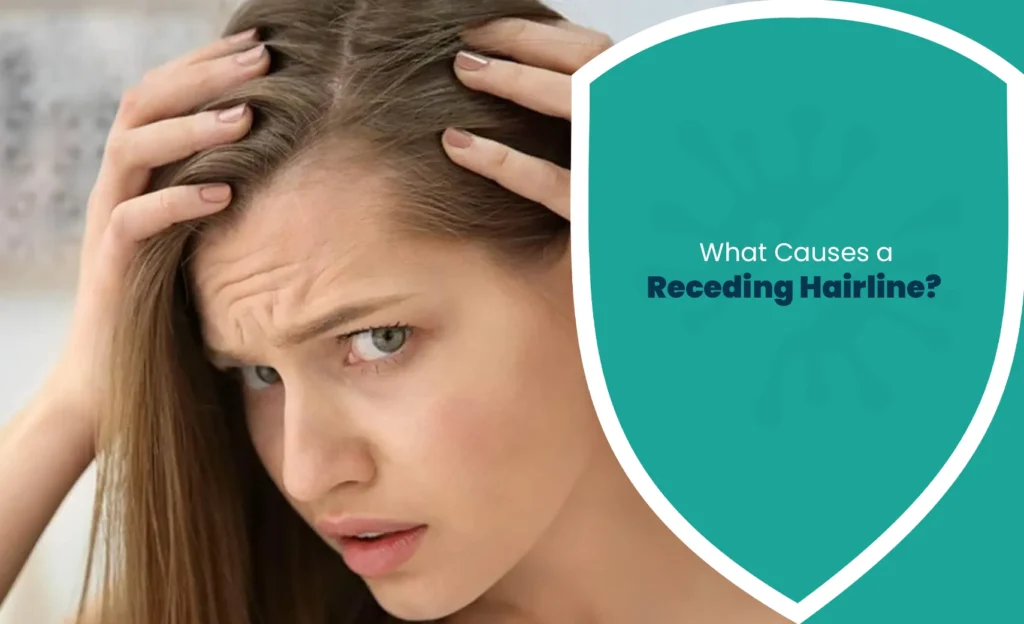
Okay so. Receding hairline. Everyone throws that phrase around like it means one single thing, but it doesn’t, not really.
Table of Contents
ToggleI started looking into this because a friend kept texting me photos of his forehead asking, “Does this look bigger to you?” and honestly, sometimes yes, sometimes I think he’s just paranoid. But the more I read, the more I realized the causes of receding hairline stuff are kind of scattered all over the place. Genetics, hormones, stress, and even how you tie your hair back. It’s not one villain.
Also, side note, I went down a bit of a rabbit hole on forums for this. Reddit threads full of 22-year-olds panicking over photos taken at the wrong angle under bad lighting, older guys casually saying, “Yeah, it happened; you get used to it,” and a weird amount of arguing about whether certain shampoos actually do anything. Spoiler, most don’t do much on their own.

The Genetics Thing Everyone Blames First
Most people jump straight to genetics, and honestly, they’re not wrong, it’s usually the biggest piece. This is where you hear terms like male pattern hair loss and androgenetic alopecia thrown around a lot, and yeah, that’s basically the clinical way of saying “your family tree did this to you.”
If your dad went bald early, or even your mom’s side (people forget that part), there’s a real chance you’re looking at hairline recession earlier than you’d like. Doesn’t mean it’s guaranteed. Just means the odds shift. Funny enough, a receding hairline in men tends to follow a pretty predictable path once it starts, temples first, mostly.
I used to think it only came from the father’s side. Turns out that’s not really true either genes from both sides play into it. Confusing, I know.
Hormones Doing Their Thing Quietly
DHT, dihydrotestosterone, if we’re being formal about it, is the hormone that gets blamed the most. It shrinks hair follicles slowly, over years, until they stop producing hair the way they used to.
This is why the whole thing shows up gradually for most guys. Not overnight. You don’t wake up, and suddenly it’s gone. It creeps. Which honestly makes it worse in a way, because you don’t notice until someone else points it out or you catch a weird angle in a mirror.
Some guys are just more sensitive to DHT than others, even with similar testosterone levels. That’s the part that feels unfair, not gonna lie.
What It Actually Looks Like Early On
Signs of a receding hairline aren’t always obvious at first. Sometimes it’s just your forehead looking slightly taller in photos. Sometimes it’s the little peaks near your temples getting sharper, and more defined, in a way they weren’t before.
Hair loss at the temples is often one of the first things people notice, actually before the crown, before anywhere else. Thinning temples show up quietly, kind of sneaky.
An early receding hairline can honestly be mistaken for just a “mature hairline,” which is a real thing too, so it’s confusing. Not every step back at 19 or 20 means you’re heading toward baldness. Sometimes it just settles a bit and stops.
Stress, Sleep, All That Boring Stuff
Okay, this part is less dramatic but still matters. Chronic stress messes with hair cycles. Not in the same dramatic way genetics does, but it adds up.
Poor sleep, bad diet, and smoking none of these single-handedly cause this, but they can speed things along if the genetic switch is already flipped. Kind of like pouring gas on something that was already smoldering.
I read somewhere that thinning hairline patterns can also worsen with iron deficiency or thyroid issues, which honestly nobody thinks to check until way later. Hairline thinning isn’t always about hormones and genes alone, sometimes it’s just your body being weird about nutrients.
Age Is Just… There, existing
Age plays a part, obviously, but it’s not the whole story. Hairline receding with age happens to basically everyone eventually, some more visibly than others. The frontal hair loss pattern especially tends to show up more as men hit their thirties and forties, though plenty of guys notice it way sooner.
Early hair loss in your twenties feels different, though. Scarier, maybe. Because it’s unexpected and everyone around you still has a full head of hair and you’re standing there like, wait, is this happening to me already?
Does Styling and Hair Products Actually Do Anything?
Tight hairstyles, constant heat styling, and harsh chemical treatments can contribute too, though this is more of a mechanical thing than a hormonal one. Traction alopecia is the actual term for when the hair gets pulled so much that the follicle gets damaged.
It’s not the same mechanism as male pattern stuff, but it can look similar enough that people confuse the two. Receding hairline causes get lumped together a lot in casual conversation, even when the underlying reasons are totally different.
Does Shaving It Make It Worse (No, But People Think So)
Quick tangent. A lot of guys think shaving their head speeds things up, makes hair grow back thicker, or somehow “resets” it. None of that is true, as far as I can tell. Hair that grows back after a shave is the same: same follicle, same fate, it just looks different for a bit because it’s short and stubbly instead of long.
The follicle doesn’t care whether you shaved it or not. It’s already decided its own path months or years in advance, biologically speaking. Kind of unsettling when you think about it that way, actually.
Some guys shave preemptively just to control the narrative, I guess, so it looks intentional instead of happening to them. Can’t blame them for that. Feels better than watching it happen slowly in the mirror every morning.
Should You Actually See Someone About It
Probably, yeah, if it’s bothering you enough that you’re googling at midnight. A dermatologist can usually tell pretty quickly whether what’s going on is the typical genetic pattern or something else entirely, like a nutrient thing, a thyroid thing, or even certain medications that can mess with hair without people realizing it.
I know a lot of guys just avoid the doctor’s visit because it feels embarrassing somehow, like it’s a small thing not worth bringing up. But honestly, getting bloodwork done early can rule out stuff that’s actually fixable, which is kind of nice to know either way.
So What Do People Actually Do About It
This is where it gets a little more practical, I guess. A lot of guys look into finasteride based options once they notice things shifting. Proscalpin 1 mg is one of those. It works by targeting the DHT pathway, which, as mentioned earlier, is a big driver behind a lot of this hair loss caused by conversion.
I’m not saying it’s a miracle fix, because nothing really is with hair. But for some people it slows things down enough that it buys time, and honestly sometimes that’s what people actually want not a full reversal, just… less speed.
Some also pair it with topical treatments, though results vary a ton person to person, which is annoying but true.
Honestly, there’s no Single Answer
If there’s one thing I took away from all this reading, it’s that nobody has one clean answer for why hairlines move the way they do. It’s genetics mostly, layered with hormones, occasionally nudged along by stress or bad habits, sometimes influenced by how you style your hair.
A receding hairline isn’t a life sentence, though, even if it feels that way at 2 am scrolling through forums. Some people slow it down, some people just let it happen and shave their head eventually, and honestly, they look fine. Depends on the person.
Anyway. That’s roughly where the research landed me. Not neat, not tidy, but that’s kind of how hair loss is in general.
My friend, the one with the forehead photos, ended up just… not doing much about it. Which is a fine choice too, honestly. He got a haircut that works with it instead of against it and stopped obsessing over the mirror angle thing. Sometimes that’s the actual answer, not a product or a pill, just a different haircut and letting it be.
FAQs
- Does this always end in full baldness?
Not exactly. It’s often just the first stage, and not everyone ends up fully bald.
- Can stress alone cause it?
Usually not by itself, but it can speed things up if genetics are already involved.
- Does Proscalpin 1 mg completely stop hair fall?
It can slow it down for many people, but results vary, and it’s not guaranteed to stop it fully.
- At what age does it usually start?
Some notice it in their late teens, others not until their thirties or later. Really varies.
- Is it reversible once it starts?
Sometimes early intervention helps slow or partially improve things, but full reversal isn’t typical.