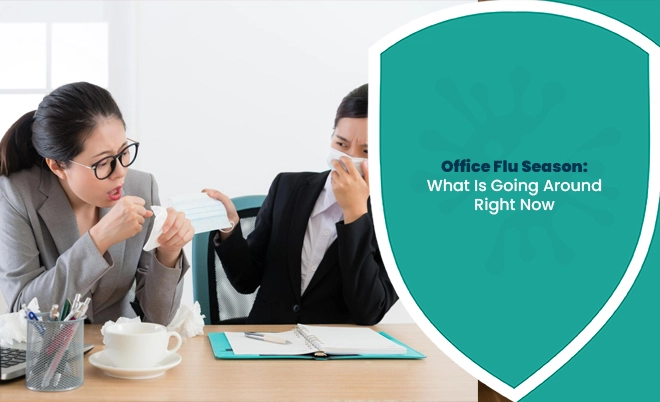
If you work in an office, you’ve probably noticed it already. Someone’s coughing in the corner, another person is clearing their throat every five minutes, and half the team is “just a little off” but still at their desk. It happens every year, but somehow it still catches people off guard.
Table of Contents
ToggleRight now, a lot of workplaces are dealing with a mix of seasonal viruses, lingering coughs, and those annoying cases where people are sick enough to feel terrible but not sick enough to stay home. That’s usually how Office Flu starts making the rounds. One person brings it in, and then it spreads through meetings, shared desks, elevator buttons, kitchen counters, and all of that.
It sounds simple, but once it gets into an office, it can move fast.
Why everyone seems unwell at once
There’s always this weird office pattern where one person gets sick, then suddenly three more people do too. It’s not always one thing, either. Sometimes it’s true flu, sometimes it’s a cold, and sometimes it’s just a rough viral bug that hangs around longer than expected.
The hard part is that early on, a lot of these illnesses look similar. You get the tiredness, the headache, and maybe a sore throat, and you think, Okay, maybe it’ll pass by tomorrow. Then it doesn’t. Or it does, but only partly, which is almost worse.
People also keep working through it, which honestly makes the whole thing messier. A cough in a packed meeting room is basically a shortcut for spreading germs.
A lot of this is why Office Flu can feel bigger than it is. It isn’t always one dramatic outbreak. Sometimes it’s just a chain reaction of mild-to-moderate illness moving around the office for weeks.

Flu, cold, or something else?
This is where people start guessing, and usually guessing wrong. The signs can blur together. But there are some rough differences between flu symptoms and a regular cold, even if they overlap a lot.
Flu usually hits harder and faster. More body aches, more exhaustion, more of that “I need to lie down right now” feeling. A cold is often milder, with a blocked nose, sneezing, and a scratchy throat. But real life isn’t neat, so sometimes it’s hard to tell without just waiting it out.
And then there’s the question of strains. This season, people keep hearing about the influenza A H3N2 strain, which is one of the flu types that tends to cause more noticeable symptoms and can spread well in crowded places. That doesn’t mean every bad cough is H3N2, of course. It just means offices are not exactly the best place to avoid it once it starts circulating.
Sometimes it’s not even flu at all. It might be another respiratory virus or the start of something that later turns into a sinus infection after the flu. That part is frustrating because you think you’ve recovered, and then the pressure in your face, the thick mucus, and the tiredness show up a few days later.
The office version of spreading illness
People talk about germs in offices like they’re invisible dust, which is kind of true, but also not the whole picture. Office flu tends to spread because offices are built for shared air, shared surfaces, and too much close talking in too little space.
There’s the obvious stuff: desks, shared phones, door handles, coffee machines. Then there’s the less obvious stuff, like sitting close to someone during a long meeting when they’re clearly not well. Or eating lunch in a small break room with bad ventilation. That sort of thing.
It’s easy to underestimate flu spreading at work because the first few people just seem a bit tired. But by the time everyone starts saying “I think something’s going around,” it usually already has.
And sometimes people push through symptoms because they don’t want to seem dramatic. Fair enough, but that’s also how offices end up with everyone sniffling at once.
When it’s more than a flu
Most of the time, a basic virus passes. But not always. Some people start feeling better and then suddenly get worse again, which is when you start wondering if it’s something else entirely.
A lingering cough, chest tightness, fever that comes back, or shortness of breath can point to a bacterial chest infection or another complication. That doesn’t mean every cough needs panic, but it does mean the “just a bug” assumption can go too far.
There’s also the odd situation where a sore throat hangs around and people start asking about azithromycin throat infection treatment like it’s a standard fix. It isn’t that simple. Antibiotics only help when bacteria are actually involved, and using them for the wrong thing doesn’t do anyone favors.
This is where people start searching the Bacterial Infections because they want to know what kind of infection they’re actually dealing with and whether it’s still viral or has shifted into something that needs proper medical attention.
A lot of people ignore the early signs
The annoying thing about the office flu is that it often starts quietly. A little fatigue. A bit of a sore throat. Maybe a headache that comes and goes. People wave it off because they’ve got meetings, deadlines, and a calendar full of nonsense.
Then by day two or three, they’re regretting everything.
And because it can be hard to tell flu vs common cold at the start, people often don’t adjust their routine soon enough. They keep commuting, keep talking closely with coworkers, keep touching shared stuff, and by the end of the week the whole place feels a bit off.
I think this is one reason office sickness keeps cycling. Nobody wants to be the one person who leaves early, but that one person might actually be helping the rest of the team.
What helps, even if nobody wants a lecture
This part is boring, but it matters. Hand washing helps. Staying home when you’re clearly sick helps. So does not sitting in a packed room coughing into the air like everything is fine.
Still, real office life is messy. People forget, people commute sick, and people make half-hearted attempts at being careful. So the best you can usually do is lower the odds a bit.
That means paying attention to shared spaces, wiping down stuff you touch a lot, and not assuming every sore throat is “just nothing.” It’s also worth remembering that a lot of infections spread before the worst symptoms even show up, which makes the whole thing more annoying.
A bit of office flu prevention sounds obvious, but it works better when people actually do it instead of just talking about it once a year and moving on.
When recovery drags on
Some illnesses resolve quickly. Others hang around and make you feel weirdly unwell for longer than expected. That’s when people start asking if something is wrong, or if they should be back at work yet, or whether it’s still the same infection.
Sometimes it is just a slow recovery. Other times, there’s a second issue layered on top, like a post-viral sinus problem or a chest infection that develops after the first illness. That’s one of the reasons people keep checking symptoms even after the fever is gone.
The frustrating thing is that you can feel “mostly better” and still not be fully normal. So you go back to work, and then you’re exhausted by lunchtime, which is not very helpful to anyone.
If symptoms are getting worse instead of better, or if breathing feels harder than it should, that’s not the time to just push through it.
The practical reality of office illness
There’s a funny disconnect in workplaces. Everyone knows illness spreads, and everyone still acts surprised when it happens. Then the sick leave messages start coming in, and suddenly the office feels half empty.
That’s usually the point when the office flu becomes the main topic of conversation, even if no one calls it that out loud. It’s just “something’s going around.” Which is true, but also vague enough to be unhelpful.
If you’re in the US or UK, the pattern is pretty familiar. Indoor heating, closed windows, commuting, shared spaces, winter fatigue, and a lot of face-to-face time indoors. It’s basically the perfect setup for respiratory bugs to move around.
And because these illnesses can begin with such ordinary symptoms, people often don’t act until they’re already really unwell.
Small signs people miss
One thing that keeps happening is people ignoring the little stuff. A mild fever. That strange heavy feeling in the body. A cough that doesn’t match a normal cold. A sore throat that feels deeper than usual.
Those details matter more than people think. Not because they always mean something serious, but because they tell you whether you’re dealing with a simple cold, flu, or something that needs attention.
I also think people sometimes try to label everything too quickly. If it’s not flu, it must be nothing. If it’s nothing, it must be bacterial. Real life doesn’t always work that cleanly, which is annoying, but there it is.
Final thoughts on the current wave
So, what’s going around right now? Mostly the usual mix: flu-like viruses, colds, stubborn coughs, and the occasional follow-on infection that takes longer to settle. A lot of it gets grouped together under Office Flu, even when it’s technically not just flu.
That’s probably why the whole thing feels so fuzzy from one office to another. Some people bounce back fast. Others end up dealing with lingering symptoms, and a few get complications they didn’t see coming. It’s uneven, which is very office-like in general.
If you’re feeling off, don’t just assume it’ll vanish by lunch tomorrow. And if you’re already sick, maybe skip the packed meeting room for a bit.
FAQs
- Is office flu the same as seasonal flu?
Not always. It usually means flu-like illness spreading at work.
2. How long does office flu last?
Often a few days to a week, but cough and tiredness can last longer.
3. Can you catch office flu from a meeting room?
Yes, especially if the room is crowded and poorly ventilated.
4. When should I worry more seriously about the office flu?
If your symptoms get worse, you have trouble breathing, or you get a fever again.
5. Do antibiotics help with the flu?
No, only bacterial infections need antibiotics.