
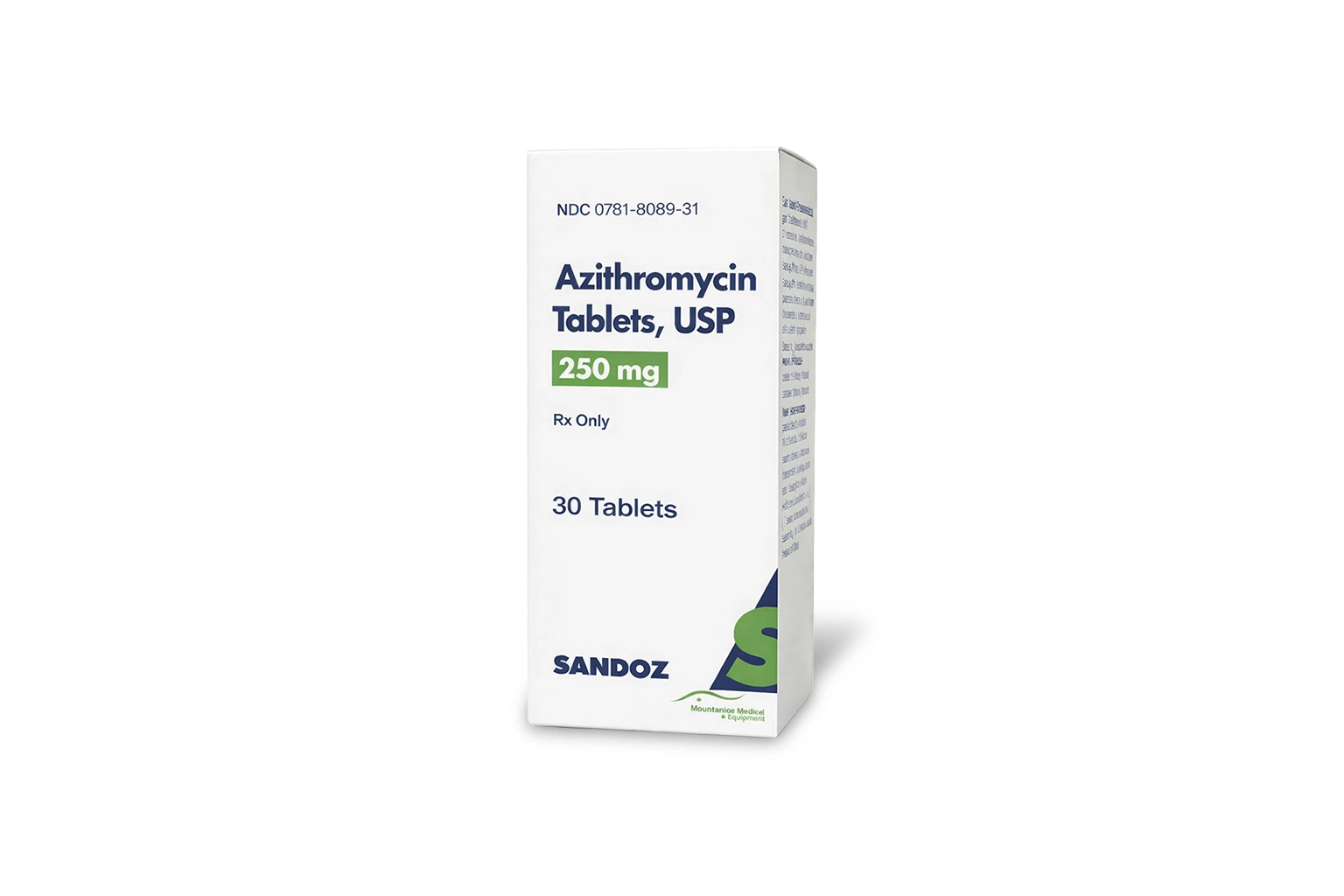
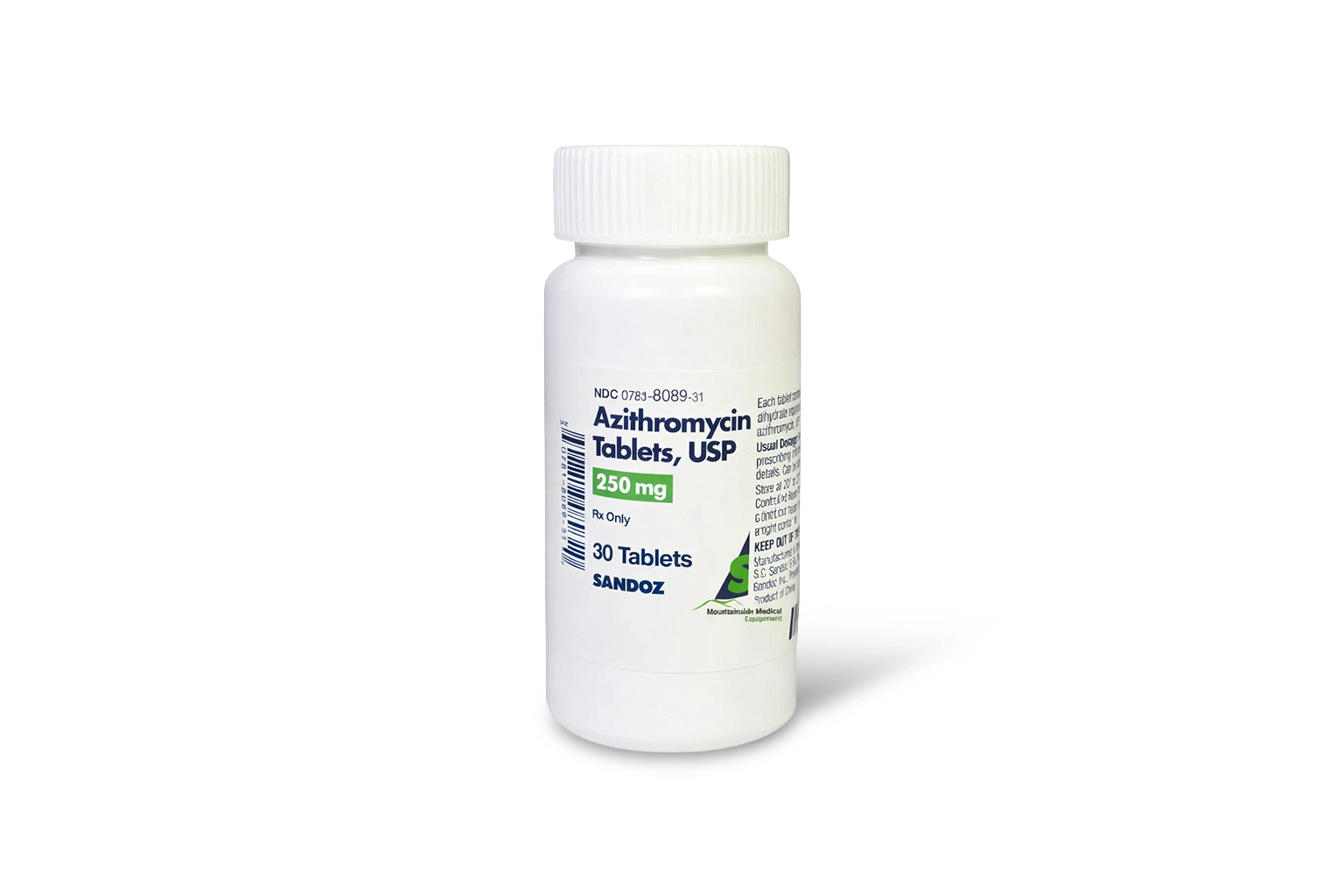
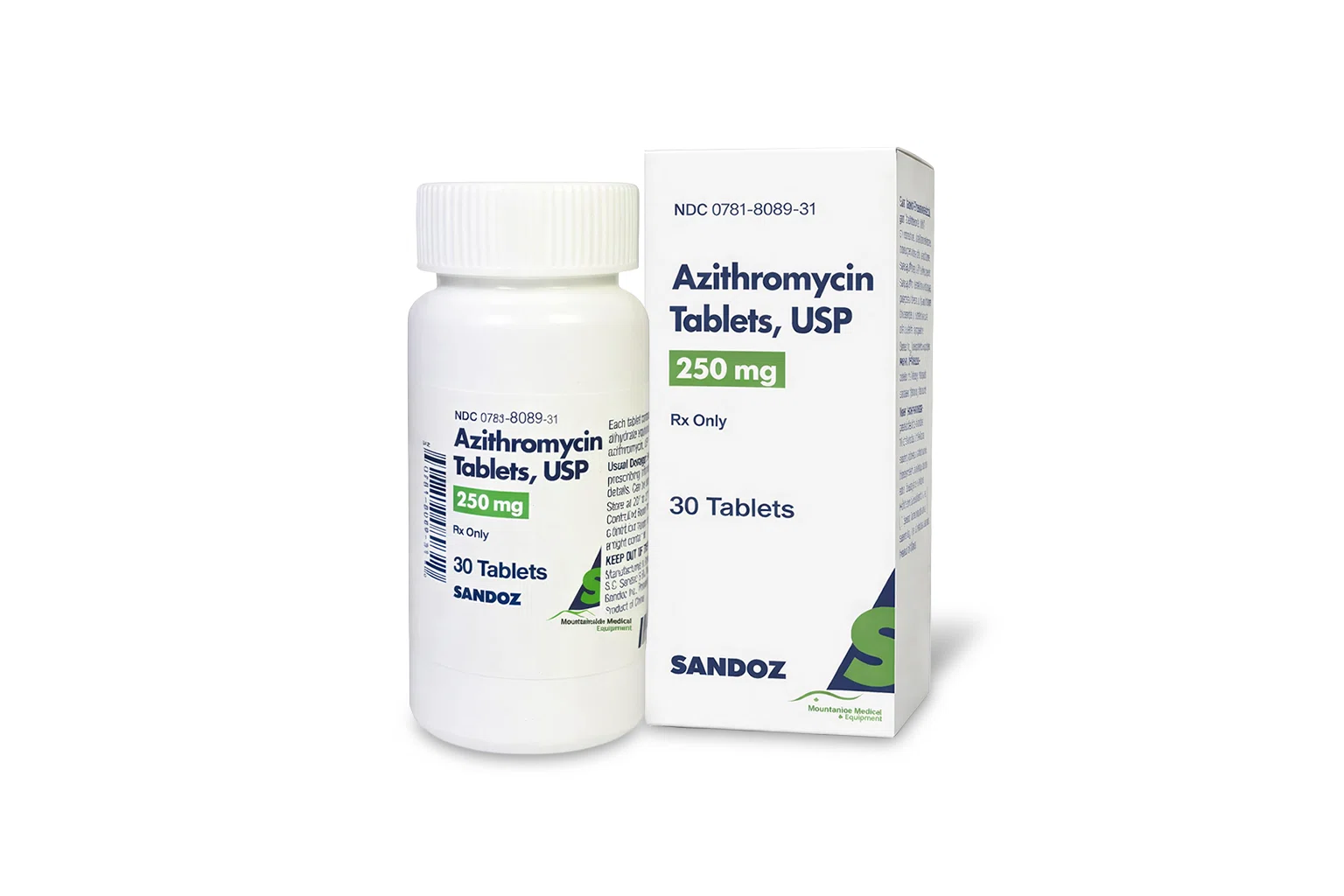

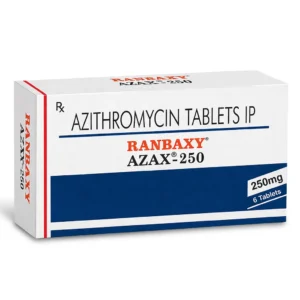
Azithromycin 250 mg is an antibiotic which comes under class macrolide, it is effective in treating bacterial infections like sinusitis, pharyngitis, tonsillitis, chlamydia trachomatis, otitis media. Azithromycin may work by targeting the 50s subunit of bacterial ribosome by preventing peptide chain elongation that inhibits protein synthesis, resulting in killing the bacteria.
Key Features
| About |
|---|
| Drug Class: Macrolide antibiotic |
| Subclass: Azalide |
| Product Details | |
|---|---|
| Composition | Active ingredients:
Inactive ingredients:
|
| Packaging Type | Box |
| Pack Size | 30 Tablets |
| Dosage | 250 mg |
| Therapeutic class | Antibacterial for systemic use |
| Action Class | Protein synthesis inhibitor |
| Chemical class | Azalide |
| Manufacturer | Sandoz |
| Shelf Life | 2-3 years from the date of manufacturing |
| Usages | Treats various bacterial infections (e.g., Bronchitis, pneumonia, sinusitis, and Otitis media) |
| Country of Origin | Switzerland |
| Storage | Store in a cool, dry place, away from moisture and direct sunlight. |
How does Azithromycin 250 mg work?
- Enters bacteria and binds to the bacterial ribosome as azithromycin diffuses into bacterial cells and attaches to the 50S subunit of the 70S bacterial ribosome. Specifically binds domain V of 23S rRNA.
- Blocks protein synthesis as it clogs the peptide exit tunnel. This stops the ribosome from adding new amino acids to the growing protein chain. No proteins as bacteria can’t replicate, build cell walls, or make enzymes.
- Resulting into bacteriostatic effect i.e., stops bacteria from multiplying so your immune system clears them. At high concentrations or for Strep pneumo and H. influenzae, it becomes bactericidal and kills directly.
Usage
It is used in dealing with bacterial infections like:
- Sinusitis
- Pharyngitis
- tonsillitis, AECB.
- Chlamydia trachomatis
- Chancroid
- Gonorrhea
- Acute otitis media
Dosage
- It can be taken 250 mg once a day.
- It can be taken with food to avoid stomach upset.
- Do not exceed the dosage on your own, prior consult your healthcare provider.
Side effects
- Diarrhea
- Nausea
- Abdominal pain
- Vomiting
- Headache
- Dizziness
- Taste disturbance
Interaction
- QT prolonging drugs like amiodarone, quinidine, sotalol, haloperidol, citalopram, fluconazole, ondansetron, methadone may increase an arrhythmia risk.
- Antacids like aluminium/magnesium may decrease absorption 24%. Take Azithro 1 hr before or 2 hrs after.
- Warfarin increase the bleeding risk, so it should be avoided.
- Digoxin increase the toxicity and side effects.
- Colchicine increase toxicity i.e., fatal cases so it should be avoided.
- Statins: Rare rhabdomyolysis with simvastatin/lovastatin.
- Cyclosporine, tacrolimus increases levels of immunosuppressant.
- Nelfinavir may increase azithromycin levels.
Pharmacokinetics
- Tmax, it may reach the peak plasma in just 2-3 hrs.
- Long half-life in tissues is about 2-4 days. Concentrates in lungs, tonsils, prostate, WBCs.
- Metabolism: Liver, minimal CYP3A4. No active metabolites.
- Elimination: Biliary excretion as unchanged drug >50%. Renal 6-12%. Terminal half-life 68 hrs.
Precautions
- ECG if risk factors for QT prolongation. Avoid if known long QT, low K+/Mg2+, bradycardia.
- Pregnant and breast feeding Womens should avoid taking such medications.
- The one with prior medical condition like liver disease, myasthenia gravis can lead to severe side effects.
- If you are allergic to azithromycin then avoid taking any such medications.
Conclusion
Azithromycin 250 mg is an antibiotic which comes under class macrolide, it is effective in treating bacterial infections like sinusitis, pharyngitis, tonsillitis, chlamydia trachomatis, otitis media. Azithromycin may work by targeting the 50s subunit of bacterial ribosome by preventing peptide chain elongation that inhibits protein synthesis, resulting in killing the bacteria. It may show some side effects that may vary from individual to individual prior taking any such medications consult your healthcare provider to avoid unwanted interaction and side effects.
Daniel –
Reliable product and worked as expected. My symptoms improved steadily.