
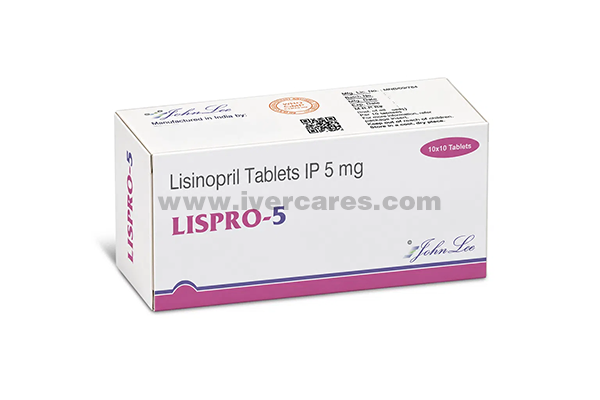

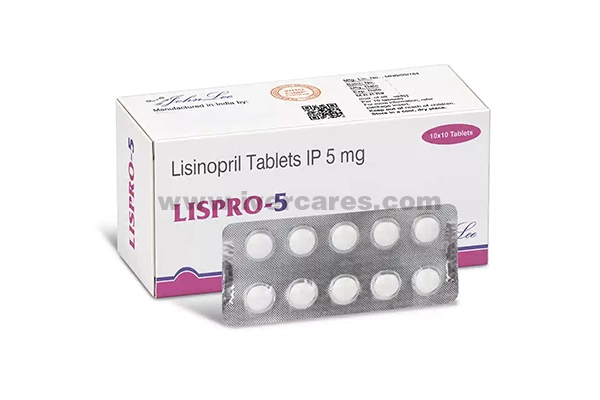

Lispro 5 mg is a medication commonly used to manage high blood pressure and heart failure. By lowering the levels of high blood pressure, it helps reduce the risk of serious cardiovascular events such as strokes and heart attacks.
Key Features
| About Lispro 5 mg |
|---|
| Drug class: Angiotensin Converting Enzyme (ACE) Inhibitor |
| Chemical class: Dipeptides |
| Product Details | |
|---|---|
| Active Ingredients | Lisinopril |
| Inactive Ingredients |
|
| Dosage Form | Tablet |
| Route of administration | Oral |
| Packaging | Blister Pack |
| Pack size | 10*10 |
| Strength | 5 mg |
| Used for | High Blood pressure |
| Manufacturer | Johnlee Pharmaceuticals Pvt Ltd |
| Shelf life | 24-36 months after the manufacturing date |
| Storage Instructions | Store at room temperature away from sunlight and moisture |
MECHANISM OF ACTION
Lisinopril is an Angiotensin Converting Enzyme (ACE) that prevents the conversion of Angiotensin I to Angiotensin II. This action prevents myocyte hypertrophy and vascular smooth muscle cell proliferation. By decreasing Angiotensin II, these medications protect the heart, blood vessels.
USES
- Hypertension (High Blood Pressure)
- Heart Failure
- Post-Heart Attack Recovery
- Diabetic Kidney Protection
SIDE EFFECTS
- Dry, persistent cough
- Lightheadedness
- Fatigue and weakness
- Hypotension
- Hyperkalemia
- Nausea
- Diarrhea
- Anaphylaxis (severe allergic reactions)
- Angioedema
- Kidney & Liver issues
INTERACTIONS
- Medicines like spironolactone, eplerenone, salt substitutes or potassium supplements can lead to dangerously high potassium levels.
- NSAIDs like Ibuprofen, Naproxen or high-dose aspirin can reduce the blood pressure lowering effectiveness of lisinopril and increase the risk of kidney problems.
- Combining Lisinopril with other anti-hypertensives can cause excessive dizziness or fainting from low blood pressure.
- Lisinopril can reduce the body’s ability to clear lithium, leading to increased blood levels of lithium and can lead to toxicity.
- Medications like furosemide or hydrochlorothiazide can cause a sharp drop in blood pressure when combined with an ACE inhibitor.
PRECAUTIONS
- Do not take this medicine during pregnancy, especially during second and third trimesters as it can cause serious harm or death to an unborn baby.
- Avoid taking Lispro if you are allergic to lisinopril or any other ACE inhibitors or if you have a history of angioedema.
- Avoid alcohol consumption.
- Avoid potassium supplements, potassium-sparing diuretics or salt substitutes containing potassium.
- Use with caution if you have liver or kidney diseases or are on dialysis.
- Do not stop using the medication abruptly without consulting a physician.
CONCLUSION
Lispro 5 mg is an effective and safe medication when used as prescribed by the healthcare provider. Do not stop the medication abruptly without consulting a physician. Follow the instructions and dosage suggested by the healthcare provider.

Mia Thomas –
Lispro 5 mg is a convenient tablet option for a precribed hypertension treatment routine. The simple format makes it easy to follow the recommended schedule.
Isabella Taylor –
A practical 5 mg tablet for a doctor directed medication plan. I like the straightforward format and ease of use.
Ava Moore –
Lispro 5 mg can fit easily into an organized treatment routine when prescribed by a healthcare professional. The tablet format is convenient.
Evelyn Jackson –
The 5 mg strength offers a convenient tablet format for an individualized treatment plan. Overall, a simple and practical option.
Luna Martin –
A straightforward option for maintaining a prescribed blood pressure management routine. Simple to take as directed.