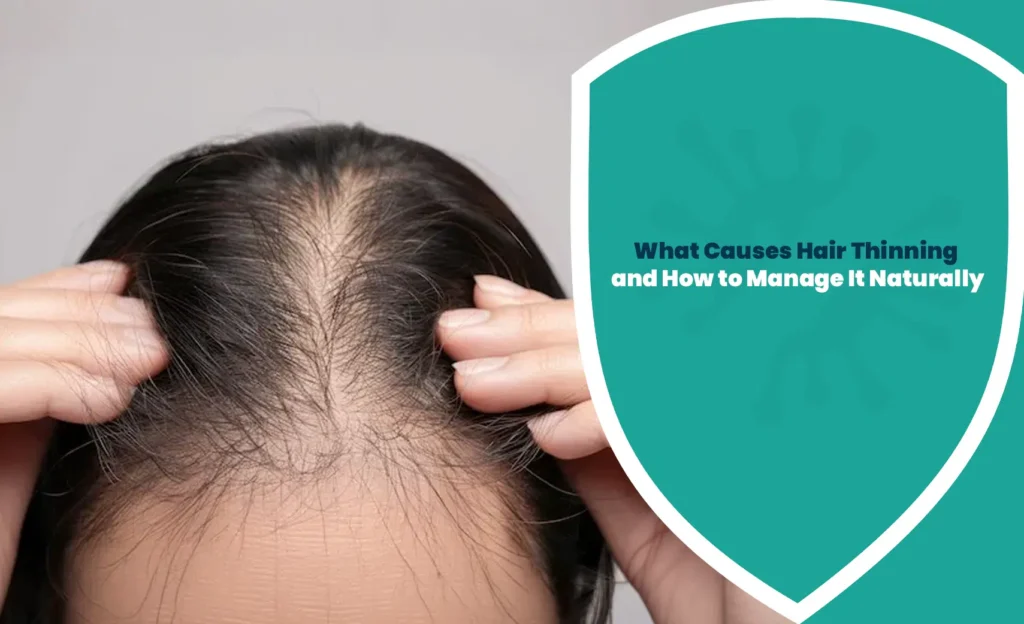
Hair thinning is connected to hair life, and it’s hard to believe that anyone wouldn’t notice it when it happens. Hair is a factor that is linked with self-image, and when you do notice that you are shedding more hair into the brush, the hair part is very wide, or you notice a receding hairline, it could be unsettling. The bad news is that thinning hair is not always a result of unknown factors, and once you know what is causing it, there is a lot you can do, backed by evidence, to slow down the process and promote better regrowth.
Table of Contents
ToggleThis blog covers the most frequent causes of hair thinning, the differences between thinning hair in men and women, and natural and medical solutions to help combat thinning hair, including how a product like Regaine 5% Solution 60 ml fits into a comprehensive hair care routine.
How to Stop Hair Thinning?
When discussing hair thinning, it is important to note that hair becomes thinner, more fragile, and less abundant over time. Unlike sudden, patchy hair loss (alopecia areata), thinning hair will occur gradually and unevenly over the scalp, or in certain patterns, such as the crown or around the hairline.
All of us lose our hair in the normal growth cycle, but if we lose more than what grows back or if the growth cycle gradually decreases in strength, we can see a decline in the amount of hair. Knowing this cycle is the first step to dealing with it effectively.
Differences Between Hair Shedding vs. Hair Thinning
It’s important to differentiate normal hair fall from real baldness. Hair naturally grows and falls out at the rate of 50-100 per day, going through a growth phase (anagen), a transitional phase (catagen), and a resting/shedding phase (telogen). This is totally natural and typically won’t impact the general density of the hair since new hair is regrowing where older hair has fallen.
Where this equilibrium is thrown off is when more follicles drop out at once (stress-induced telogen effluvium) or when follicles gradually atrophy and produce increasingly fine hair each cycle (hormonal and genetic factors play an important role in this). This miniaturization is what eventually causes the thinning to be detectable.
Common Causes of Hair Thinning
Progressive thinning is most often caused by male or female pattern baldness, also known as androgenetic alopecia. This genetic disease results in a progressive miniaturization of hair follicles that leads to shorter, thinner hairs with each growth cycle.
Weight gain, hormonal changes during pregnancy, childbirth, and menopause, thyroid conditions, and polycystic ovary syndrome (PCOS) can have a significant impact on hair growth cycles, leading to thinning.
Nutritional deficiencies of iron, protein, zinc, biotin, and vitamin D can hurt the health of the hair follicles and reduce the amount of healthy, strong hair produced.
Physical and emotional stress may induce a greater than normal number of hair follicles to enter the shedding (telogen) phase, causing visible hair loss several months after the stressor or illness.
Hair follicles need to be in a healthy environment for optimal functioning, and any scalp health issues, such as seborrheic dermatitis, psoriasis, or chronic inflammation, can impact the scalp’s health over time.
Overstyling, tight hairstyles, over- or underwashing, harsh chemical processes, and excessive heat styling will break the hair shaft, causing thinning or damage to the hair shaft.
Some drugs, autoimmune diseases, and chronic diseases can also disrupt the normal hair growth cycle.
Hair Thinning in Women vs Men
Hair thinning in men is usually very similar and includes a receding hairline and thinning at the crown area, with some men progressing to extensive baldness. This is mostly due to the genetic sensitivity to dihydrotestosterone (DHT), which is a by-product of the hormone that slowly shrinks sensitive follicles.
However, women may experience thinning of their hair in a more diffuse pattern, with hair loss and a wider part, as opposed to a receding hairline. In women, hormonal changes, especially those during pregnancy, during recovery from pregnancy, and at menopause time, have a more significant influence on female pattern thinning, in addition to genetics.
How to Stop Hair Thinning: Where to Start
For people who are not sure how to prevent thinning hair, the initial step is to discover the cause, as each treatment depends on the driver of the thinning hair, and it can vary from genetic to hormonal, nutritional, or scalp health. This can be done by a dermatologist or trichologist using a scalp exam, blood tests, and medical and family history.
However, there are a few that should work for everyone and are the cornerstone of most hair loss prevention strategies.
Natural Remedies for Hair Thinning
Some individuals choose to use natural treatments for thinning hair as a first level of action or in conjunction with medical treatments. Natural hair care alone will not stop the signs of genetic hair loss, but they can have a positive impact on the health of the hair follicles and existing hair.
- Gentle scalp massage can increase blood flow to the hair follicles, and some studies have indicated that this can help to maintain the density of the hair in the long term.
- Eat iron, zinc, biotin, protein, and omega-3 fatty acid-rich foods.
- Use rosemary oil or peppermint oil to improve blood circulation in the scalp.
- Reduce the use of curling irons, hair-strengthening machines, and hair dryers.
- Use sulfate-free shampoo, wash hair 2 days a week, comb daily, and avoid noon sunlight.
- Engage in exercise and meditation to reduce stress and tension.
Hair Strengthening Tips for Everyday Care
- Do a hot oil massage before a hair bath.
- Use natural oil for hair.
- Use suitable hair conditioner to minimize breakage.
- Take care not to scrub or rub hair dry to avoid over-dryness.
- If split ends start to travel up the shaft, trim regularly to stop this.
- Use hats or caps to avoid noon sunlight and UV rays.
- Do not wear tight ponytails, braids, or buns where hair is under tension.
Thin Hair Treatment: Medical and Topical Options
Regaine 5% Solution 60 ml is a clinically proven topical formulation that is applied directly to the scalp to help slow down the hair fall and promote regrowth in the affected area of pattern hair loss. The active ingredient, minoxidil, is believed to function by extending the growth phase of the “hair follicle health” and by improving blood circulation to the scalp, thereby stimulating the hair follicles to regenerate over time so that shrinking hairs appear dormant.
Regaine 5% Solution is generally used regularly on the affected area of the scalp, as described on the product label and by a healthcare professional, for best results. Improvements can sometimes take several months of regular use. Apply it to a clean and dry scalp, and don’t use more than the recommended amount, as an excessive amount doesn’t mean you’ll see the results sooner. In fact, it could irritate the scalp.
Like all other hair-thinning treatments, you should consult a doctor or dermatologist to see if it’s a suitable and safe option for you, especially if you have other skin problems on your scalp, are pregnant or breastfeeding, or are using other medication.
Combining Natural and Medical Approaches
The best hair-thinning treatment strategies involve using several treatments, such as overcoming nutritional deficiencies, using less harsh hair care treatments, reducing stress, nourishing the scalp, and, if applicable, applying the appropriate choice of a thin hair treatment, such as Regaine 5% Solution 60 ml, directly to the follicles. Patience and consistency are key: Hair growth is a gradual process, and you may not see significant results in terms of hair density for several months after starting any treatment, whether natural or medical.
When sudden hair loss or patchy hair loss is noticed, thinning hair with scalp pain, redness, or scaling, or when over-the-counter methods do not work after several months of regular use, it’s best to schedule a visit with a dermatologist.
Final Thoughts
Hair thinning is a very common and multifactorial problem that may be caused by genetic predisposition, hormonal imbalances, nutrition, and health of the scalp as well as regular hair treatments. It’s demoralizing, but once you identify the underlying issue, you have the power to overcome it, either by employing natural treatments or better hair care or with treatments that have been proven to work, such as Regaine 5% Solution 60 ml. Over time, many individuals can prevent further hair loss by following a consistent regimen and using a combination of strategies that produce healthier, thicker, and more luxurious-looking hair.
FAQs
1. What is hair thinning?
Hair thinning is the reduction of hair density, and hair follicles become smaller over time. The causes can be stress, poor sleep quality, genetic issues, hormonal issues, use of chemicals in hair, and pollution.
2. What is androgenetic alopecia?
Men lose hair by receding hairlines as per hair thinning patterns. Women experience reduction of hair loss from a wider part of the middle hair. Androgenetic alopecia is often familial. Affected people need immediate treatment.
3. Will natural remedies cure thinning hair?
Natural remedies help to manage hair follicles and improve scalp health. If it is a genetic or hormonal cause, you need to visit a clinic of a dermatologist.
4. Does Regaine 5% Solution 60 ml improve your hair density?
It depends on your health conditions, genetic issues, and medical history. Generally, it takes several months to bring changes in hair density as per daily use.
5. What is the treatment for thinning hair?
While the overall principles are the same, the treatment plans may vary in women depending on the underlying hormonal causes, and other women with thyroid-related causes should have them checked by a healthcare professional before beginning topical treatments such as Regaine.