
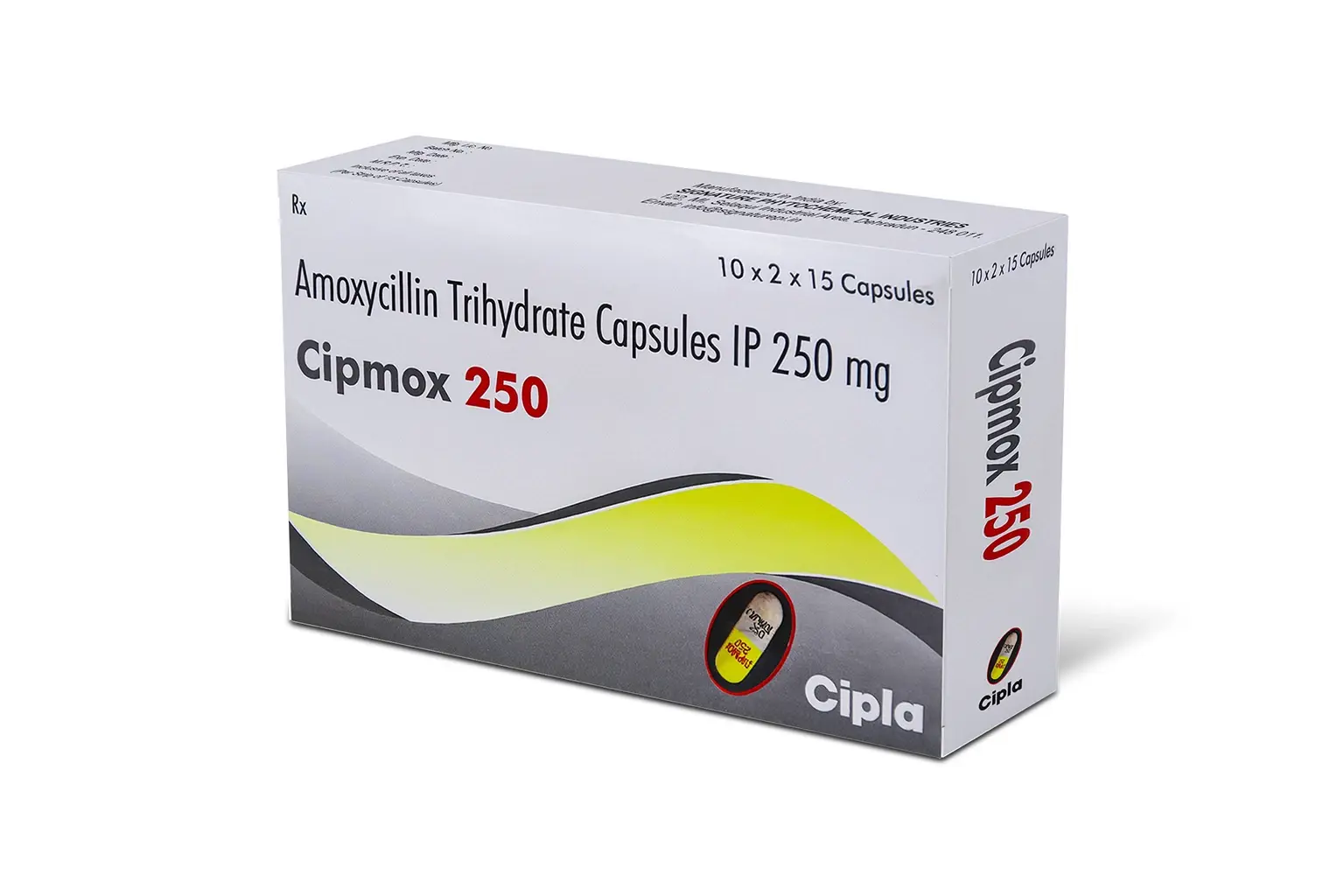
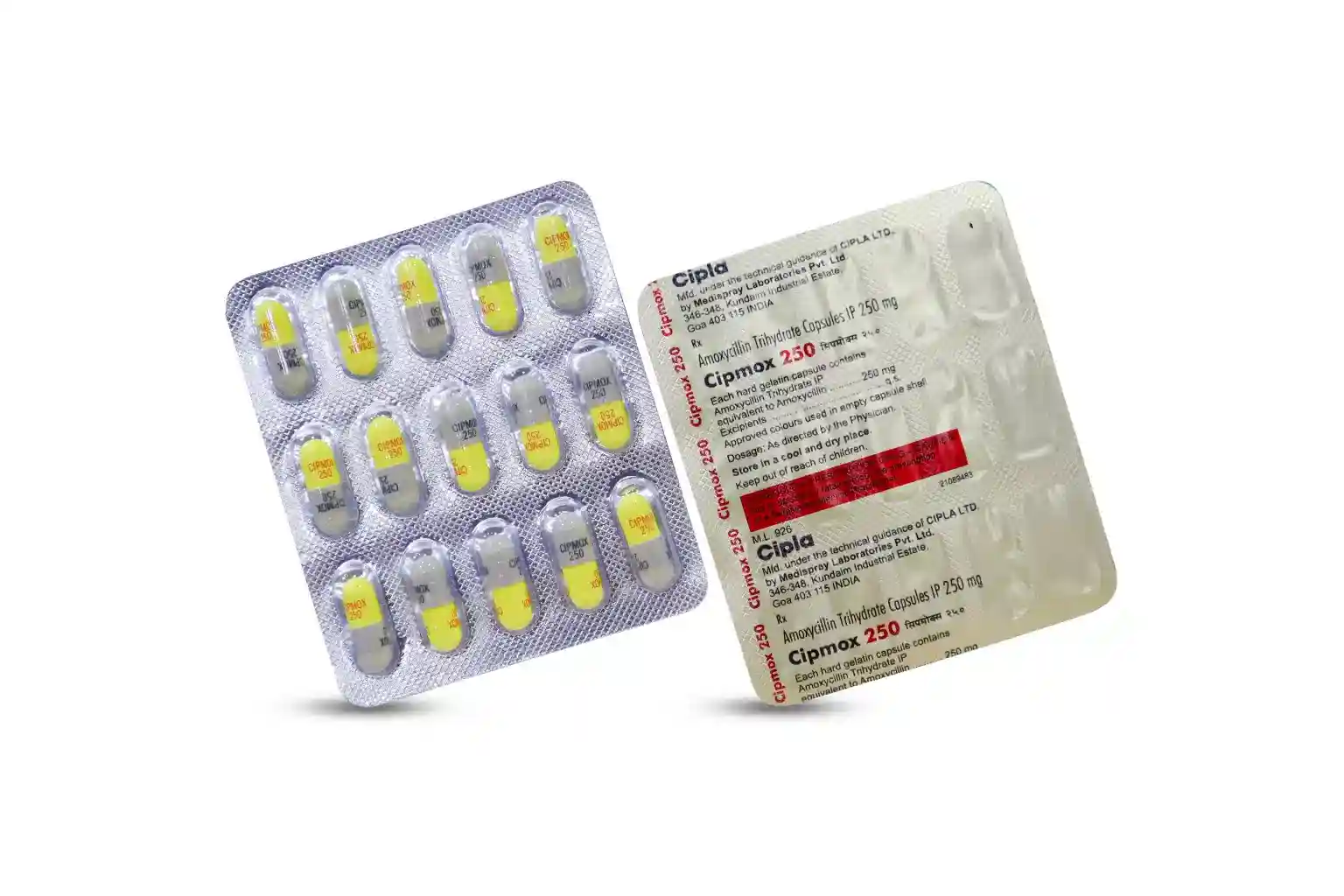
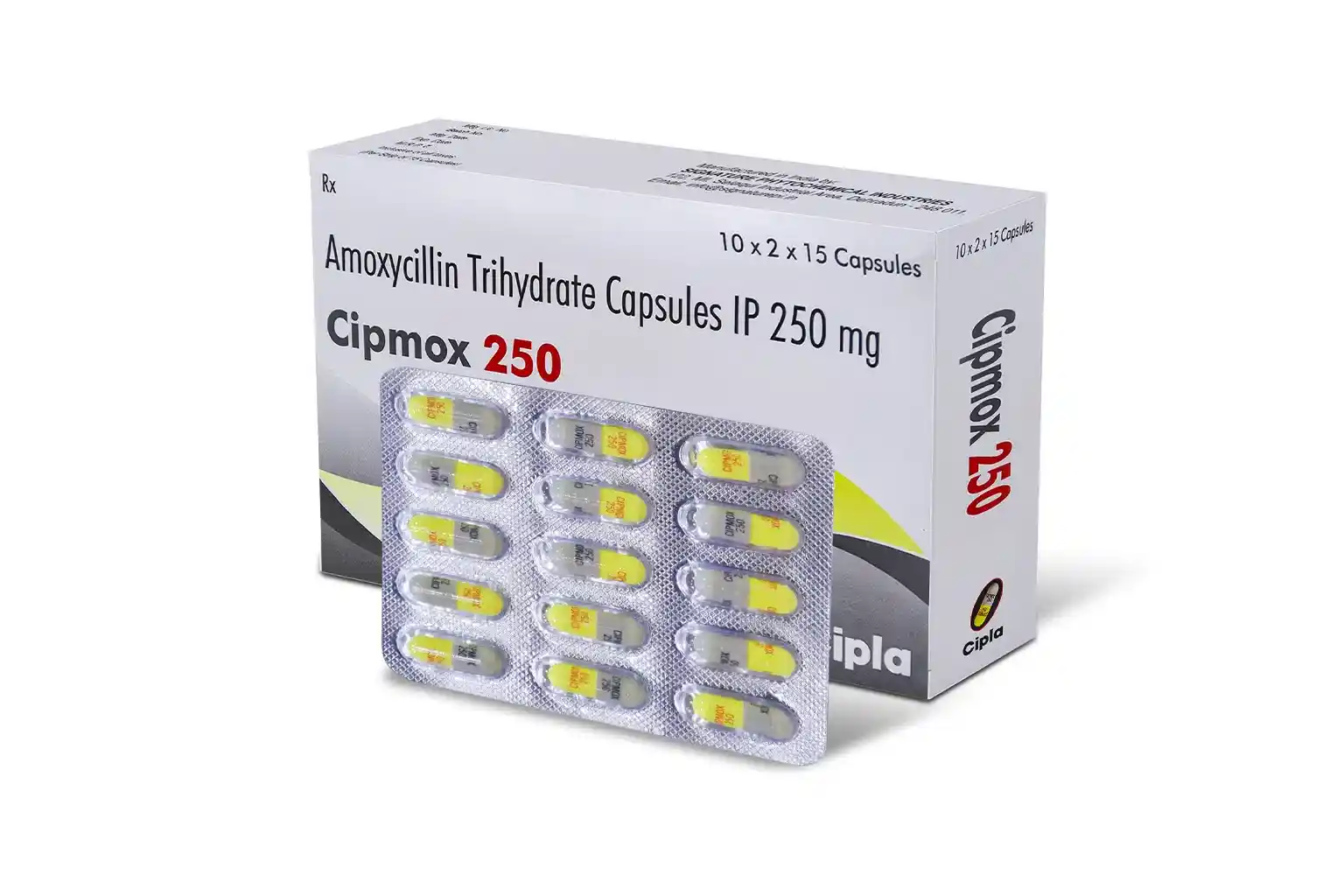

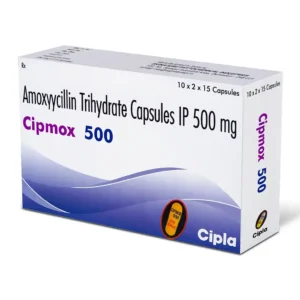
Cipmox 250mg is a brand name for amoxicillin, a broad‑spectrum penicillin‑type antibiotic. Each tablet contains 250 mg of amoxicillin, a β‑lactam that interferes with bacterial cell‑wall synthesis. Amoxycillin combines with penicillin-binding proteins (PBPs) in bacterial cell walls, which results in peptidoglycan inhibition and eventual bacterial cell lysis and death.
Key Features
| About Cipmox 250 mg |
|---|
| Drug Class: Beta-lactam antibiotic (penicillin group) |
| Subclass: Aminopenicillin (broad-spectrum) |
| Product Details | |
|---|---|
| Composition | Active Ingredient: Amoxicillin 250 mg Inactive Ingredients: |
| Packaging Type | Blister Pack |
| Pack Size | 10*2*15 |
| Dosage | 250 mg |
| Therapeutic Class | Antibacterial |
| Action Class | Bactericidal (kills bacteria) |
| Chemical Class | Beta-lactam penam derivative |
| Manufacturer | Cipla |
| Shelf Life | 2–3 years from the date of manufacturing |
| Usages | Treats bacterial infections (Note: Original text listed parasitic infections, but Cipmox/Amoxicillin is used for bacterial infections.) |
| Country of Origin | India |
| Storage | Store in a cool, dry place, away from moisture and direct sunlight. |
How does Cipmox 250mg work?
Amoxicillin inhibits cell wall synthesis in bacteria by:
- Binding to penicillin-binding proteins (PBP): Amoxicillin accumulates at penicillin-binding protein sites in bacterial cell walls.
- Peptidoglycan synthesis inhibition: Amoxicillin blocks peptidoglycan synthesis, an essential component of bacterial cell walls.
- Bacterial cell lysis: The bacterial cell wall is weakened and causes cell lysis and death.
Uses of Cipmox 250mg
- Respiratory tract infections include sinusitis, bronchitis, and pneumonia.
- Acute otitis media, pharyngitis/tonsillitis.
- Urinary tract infections.
- Skin & soft‑tissue infections.
- Certain gastrointestinal infections; e.g., H. pylori eradication when combined with other agents.
Dosage of Cipmox 250mg
- 250 mg every 8 h or 500 mg every 12 h depending upon the severity of the infection.
- Children: 20–40 mg/kg/day divided into 8‑hourly doses.
- Renal impairment adjustment: For CrCl < 30 mL/min, reduce frequency.
Other strength of medication
Side effects of Cipmox 250mg
- GIT Gastrointestinal tract upset (nausea, vomiting, diarrhea)
- Rash or mild skin eruption
- Yeast overgrowth (oral thrush, vaginal candidiasis)
- Severe allergic reactions (anaphylaxis)
- Stevens‑Johnson syndrome
- Pseudomembranous colitis (C. difficile)
Drug interactions
- Oral contraceptives: The alteration of gut flora may reduce their effectiveness.
- Anticoagulants such as warfarin: There is an increased risk for bleeding due to changed vitamin K production.
- Probenecid: It decreases renal tubular secretion of amoxicillin, thus increasing its half-life.
- Agents that affect renal function or intestinal flora: Administer cautiously in combination.
Pharmacokinetics
- Absorption: Approx. 70-80 % oral, food does not significantly affect it.
- Peak plasma: 1-2 h post‑dose.
- Distribution Into most tissues, widely; crosses placenta and into breast milk.
- Metabolism: Minimal hepatic metabolism. Elimination Excretion: primarily renal (60 % unchanged); half‑life approx. 1-1.5 h (longer in renal failure).
Clinical Trial
- New formulations: Nanoparticle-encapsulated amoxicillin is used for enhanced antibacterial efficiency.
- Combination treatments: Amoxicillin is combined with beta-lactamase inhibitors or other antibiotics to detour the resistance.
- Alternative treatments: Investigation of bacteriophages and antimicrobial peptides is done.
Efficacy in Various Infections
- Urinary Tract Infections: Amoxicillin demonstrates a very favorable clinical cure rate in uncomplicated cystitis of as high as 90% or higher. It is also highly effective against E. coli, the leading cause of Urinary tract infections UTIs, with bacteriologic efficacy rates between 85-95%.
- Respiratory Tract Infections: Amoxicillin is active against respiratory pathogens, including Streptococcus pneumoniae, Haemophilus influenzae, and Moraxella catarrhalis.
- Skin and Soft Tissue Infections: Amoxicillin can be used to treat skin infections like cellulitis and skin abscess.
- Ear Infections: Amoxicillin is commonly used for middle ear infection, especially in children.
Precautions
- Hypersensitivity: Caution should be exercised in patients with established penicillin allergy.
- Pregnancy and lactation: Caution is advised as there is available but limited data on safety.
- Kidney or liver disease, Dosage adjustment is possible.
Conclusion
Cipmox 250 mg is an effective, commonly used antibiotic for a Variety of bacterial infection . While bacterial resistance may eventually curtail its utility, appropriate use of amoxicillin with beta-lactamase inhibitors or utilization of proper practice can help to ensure its continued utility. Amoxicillin is effective against respiratory tract infections, urinary tract infections, skin and soft tissue infections, and ear infections. Proper dosing, awareness of allergic potential, and attention to drug interactions maximize benefits while minimizing risks. Always follow the guidance of a healthcare professional and complete the full prescribed dosage.
FAQs
2) How does Cipmox 250 mg work?
3) What can be the possible side effects?
4) Is Cipmox 250 mg safe?
Hugo –
“My doctor recommended something else, but this over-the-counter medicine was far more effective. I’m so happy with the results.”