


Why Some People Keep Getting UTIs Again and Again
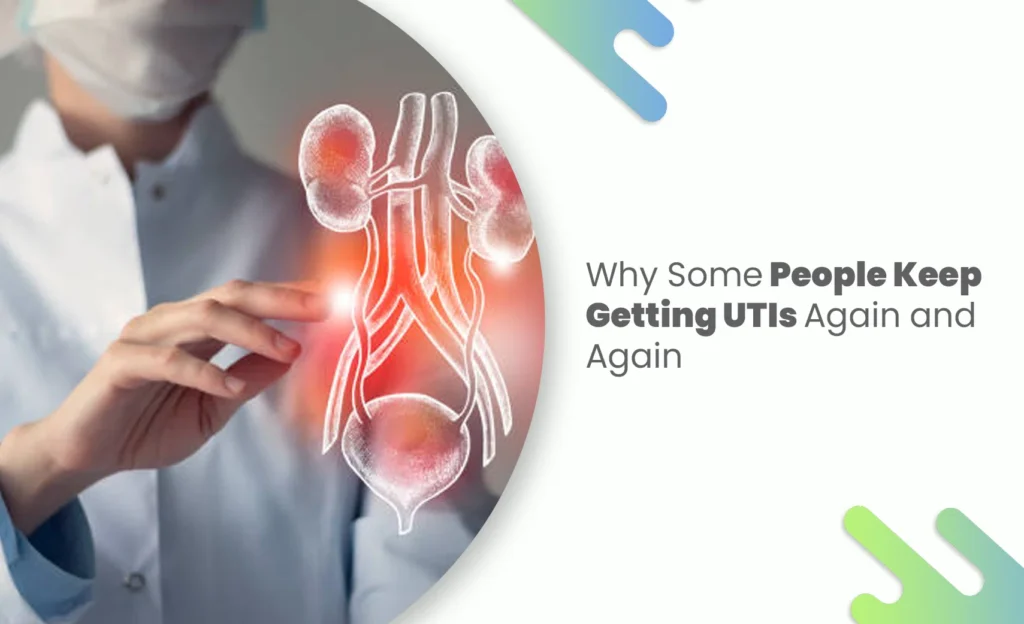
Few things are as maddening, inconvenient, and just… ugh as a urinary tract infection. One moment you’re fine, and the next you’re practically living in the bathroom, negotiating with your bladder like it’s your HR manager.
But here’s the thing: while most UTIs are treatable and manageable, some people get caught in this annoying loop where the infection keeps coming back. Again and again.
Like an unwanted sequel nobody asked for.
You might be wondering, why does this keep happening?
And trust me, after interviewing clinicians and digging through research (and honestly, listening to my own friends complain about their third UTI in six months), I’ve realized: it’s not as simple as you think.
In fact, recurrent UTIs behave a lot like those stubborn skin infections people get every winter (a topic I once explored in a feature on Why Some People Get Recurrent Skin Infections Every Winter) where underlying patterns matter more than the “trigger of the moment.”
So, let’s talk about what’s really going on.
It’s Not Just About Hygiene (Even Though Everyone Thinks It Is)
I’ll be honest, I used to think UTIs were mostly about hygiene.
Drink water, wipe front to back, avoid lingering in sweaty gym wear, blah blah.
But interestingly, clinicians say these are just supporting actors, not the lead villain.
For many people, especially women, recurrent UTIs are practically built into biology.
Shorter urethra + bacteria from skin and gut = easier invasion.
It’s simple anatomy, but also… not.
Because some women go their entire lives without a single UTI, while others get hit every few months. Sounds weird, right? Same anatomy, different outcomes.
So what gives?
Sometimes, it’s about how your immune system responds, not just exposure.
I’ve seen this same pattern come up while covering parasitic infections, like in that deep-dive on the broader use of antiparasitic medications. Some bodies simply handle microbial invaders better.
The Hidden Culprit: Embedded Bacteria
Now here’s where things get uncomfortable (and low-key creepy).
Researchers at Washington University found that certain bacteria burrow into the bladder wall and set up tiny colonies, like micro bunkers. Once inside, antibiotics may kill the surface bacteria… but the internal ones hide and wait.

Then, two weeks later boom your “new” UTI is actually the same old bacteria staging a comeback tour.
This phenomenon reminds me of how Demodex mites hide deep in the skin (yep, I’ve covered that too in a comprehensive guide on Demodex mites). Microorganisms love a good hiding spot.
And no, this doesn’t mean your bladder is dirty. It means bacteria are annoyingly strategic.
Sex, Hormones, and the “Three Days After” Pattern
If your UTIs always seem to show up a day or two after sex, you’re not imagining it.
Sexual activity can nudge bacteria into the urethra.
That said, it’s not about being “clean” or “unclean” so please don’t let guilt creep in.
It’s mechanics, not morality.
I’ve had urologists describe post-sex UTIs as “friction-driven migration,” which is a very medical way of saying: bacteria hitch a ride.
Add in hormonal changes like during perimenopause when estrogen dips and the urinary lining gets thinner, less protected, and more vulnerable.
This also explains why recurrent UTIs spike around menopause, much like how certain skin issues flare with hormonal shifts (I once compared this pattern in a feature on common causes of skin itchiness). Microorganisms love a good hiding spot.
Everything in the body is interconnected, whether we like it or not.
Antibiotics Help… but Sometimes Too Much Antibiotic Is the Problem
Here’s a twist most people don’t expect:
Using frequent antibiotics for recurrent UTIs can actually make recurrence more likely.
Not because the meds don’t work they do but because the constant killing of good bacteria messes with your natural defenses.
Antibiotic resistance is one of the biggest concerns globally (I’ve discussed this extensively in a detailed overview of antibiotic resistance). And when it comes to UTIs, resistant E. coli strains are becoming real bullies.
Still, when guided properly, antibiotics remain essential.
For example, doctors sometimes prescribe Cephadex 250 Mg for straightforward, uncomplicated bacterial UTIs when the causative organism is susceptible. But here’s the honest bit—not every UTI bacteria responds to the same drug. That’s why culture tests are so important, even if they feel like a hassle.
More importantly, Cephadex 250 Mg isn’t a magic shield against recurrence. It treats the infection you have right now. It doesn’t stop bacteria from returning later if your underlying risk factors stay the same.
I’ve personally spoken with women who were given a commonly prescribed antibiotic after multiple recurrences, only to feel better temporarily and then get hit again weeks later. And honestly, you can hear the exhaustion in their voices.
Which brings us to another overlooked angle.
Your Gut Microbiome Might Be Quietly Influencing UTIs
This part blew my mind the first time a researcher explained it.
The bacteria that cause most UTIs especially E. coli originates in the gut. Not externally.
Meaning the battlefield begins long before anything reaches the urinary tract.
If your gut microbiome is imbalanced (which happens after antibiotics, stress, travel, illness, you name it), certain strains of bacteria multiply more easily and then migrate.
I once interviewed a gastroenterologist for a story on whether stomach problems can be connected to parasites, and the same underlying message applies:
When the gut is off, the rest of the body feels it.
So, if someone keeps getting UTIs every few months, the gut-bladder connection is absolutely worth investigating.
Reinfection vs. Persistence: Two Very Different Problems
Clinically, recurrent UTIs fall into two buckets:
Reinfection – new bacteria invade each time
Persistence – old bacteria weren’t fully eliminated
Most people never know which one they’re dealing with.
But the treatment strategy can be drastically different.
For reinfection, prevention strategies like hydration, timed urination, and, yes, sexual-health-linked habits actually help.
For persistence, doctors may use targeted antibiotics like Cephadex 250 Mg after culture testing, but they may also recommend vaginal estrogen, immune-strengthening approaches, or even long-term low-dose prophylactic therapy.
One urologist once told me, “If we treat every UTI the same, we miss the real story.”
A line that stuck with me.
Interestingly, he also pointed out that some patients come in convinced they have a UTI, but tests reveal no bacteria, just bladder irritation. And these cases need a completely different approach.
(Weirdly similar to how people misdiagnose scabies from eczema, something I explored in a guide on telling scabies apart from eczema.)
The Role of Chronic Conditions No One Talks About
Some chronic health issues create an internal environment where UTIs thrive.
Diabetes, dehydration tendencies, kidney stones, hormonal imbalances, pelvic floor dysfunction… even subtle immune variations.
In fact, I once covered a story about why certain people are more prone to illness, and one immunologist said something that keeps coming back to me while researching UTIs:
“People assume infections are about exposure. They’re often about susceptibility.”
And it’s true.
Two people can be exposed to the same bacteria only one gets a UTI.
So if your UTIs keep coming back, it may not be your habits at all. It may be your internal landscape asking for attention.
When Antibiotics Are Needed (And When They’re Not)
Let’s talk honestly.
There are moments when antibiotics are absolutely necessary.
Severe pain, fever, visible blood in urine, those aren’t DIY moments.
Antibiotics like Cephadex 250 Mg are prescribed because they work reliably when the bacteria are susceptible. And for many people, the relief is almost immediate.
But taking Cephadex 250 Mg without confirming the strain?
Or using Cephadex 250 Mg when you actually have an interstitial cystitis flare instead of a bacterial infection?
That’s when problems start spiraling.
The challenge is distinguishing between:
- real bacterial infections
- inflammation
- urinary irritation
- post-antibiotic sensitivity
- bladder pain syndrome
And these lines get blurry without testing.
UTIs aren’t always what they seem on the surface.
The Prevention Conversation People Rarely Have
Here’s the uncomfortable truth: prevention isn’t one-size-fits-all.
But a few patterns emerge consistently.
And yes, this is where our secondary keywords come in because for anyone dealing with recurrent UTIs, prevention plays a bigger role than most people assume.
Doctors often emphasize urinary infection prevention through hydration, timed voiding, avoiding holding urine, and maintaining a healthy gut.
But they also highlight sleep, stress levels, diet, and yes even travel habits (a topic I dug into in an investigation about digestive issues following travel).
Everything influences everything.
If you’ve ever had a UTI flare during stressful periods, you know exactly what I mean.
So… Why Do Some People Keep Getting UTIs?
To be honest, it’s a blend of biology, behavior, immunity, microbiome, hormones, and sometimes pure bad luck.
It’s layered.
It’s nuanced.
And frankly, it’s unfair how casually people dismiss it with “drink more water.”
Chronic UTIs can impact work, intimacy, mood, confidence, physical comfort… pretty much every part of life.
If this is something you’re struggling with, please give yourself grace.
It’s not a hygiene failure. It’s not a weakness. It’s not “you are not trying hard enough.”
It might simply be your body asking for a more personalized approach.
A Final Thought From My Notes
In one interview, a urologist said something I scribbled in all caps in my notebook:
“Recurring UTIs are not a patient problem. They’re a diagnostic problem.”
And honestly, after years of interviewing experts, reading bladder-microbiome research, and even writing about broader infection patterns from everyday habits that can transmit infections to understanding UTIs that occur without pain, I couldn’t agree more.
When the right cause is identified, recurrence rates drop dramatically.
When the wrong cause is assumed, the cycle continues.
That’s really the heart of the issue.
FAQs
1. Why do UTIs keep coming back even after antibiotics?
Honestly, this is more common than people think. Sometimes the bacteria aren’t fully eliminated especially if they hide inside the bladder wall. Other times, it’s reinfection because the urinary lining is still irritated, making it easier for new bacteria to sneak in. Hormones, immunity, and gut health also play big roles.
2. Can recurring UTIs be a sign of something serious?
Most of the time, no. They’re usually caused by the same few patterns post-sex bacterial transfer, hormonal shifts, dehydration, or microbial imbalance. But if UTIs come back very frequently, or you have fever, flank pain, or blood in your urine, doctors might check for stones, diabetes, or structural issues just to be safe.
3. Do antibiotics like Cephadex 250 Mg prevent recurrence?
Not really. They treat the UTI you have right now, but they don’t stop future ones. Cephadex 250 Mg works when the infecting bacteria are susceptible, but recurrence usually happens because of deeper reasons like gut-bladder interaction or hormonal changes. Prevention needs a multi-angle approach.
4. Are home remedies useful for preventing UTIs?
Some can help hydration, cranberry, probiotics, and timed bathroom breaks aren’t myths. They genuinely support urinary health. But they’re supportive tools, not cures. Once a real bacterial infection sets in, home remedies alone usually won’t kick it out.
5. How do I know if my UTI symptoms aren’t actually something else?
Good question, because UTI-like symptoms can come from bladder irritation, interstitial cystitis, pelvic floor tension, or even dehydration. If your tests come back negative but the discomfort stays, a urologist may look at non-infectious causes. You’re not imagining it, bladder discomfort without infection is genuinely a thing.