
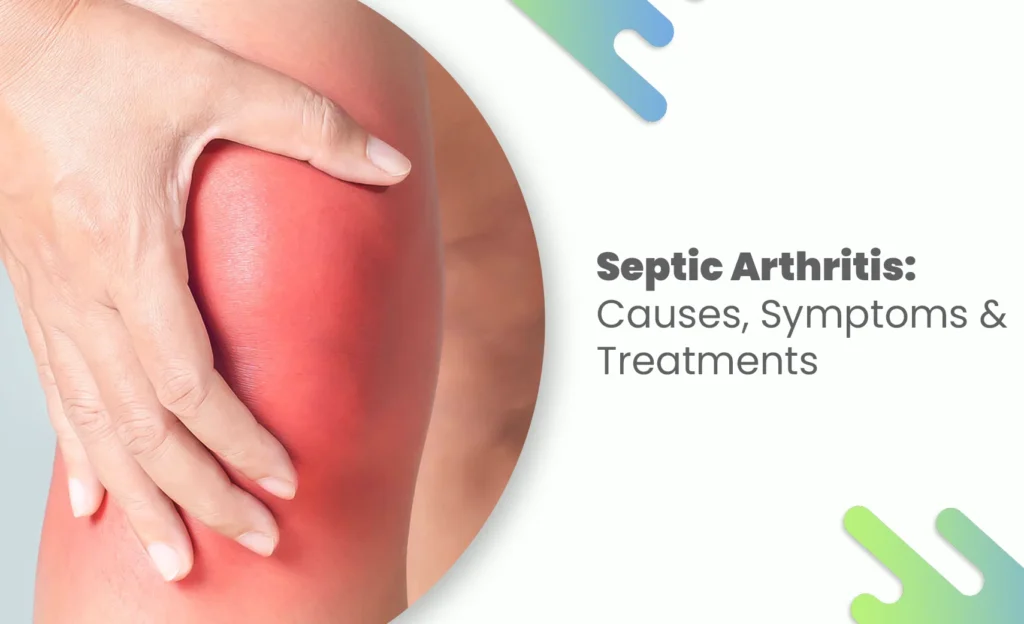
There’s something about joint pain that feels deeply unsettling. Maybe because joints are the quiet workhorses of the body always moving, always supporting, rarely getting any appreciation. So when a joint suddenly swells up, throbs, or refuses to cooperate, it’s alarming in a way that’s hard to explain.
Now imagine that pain being caused by an infection inside the joint. Sounds weird, right? But that’s exactly what septic arthritis is: a surprising, often fast-moving infection that can turn a healthy joint into a medical emergency.
And let’s be real, most people don’t hear about septic arthritis until they (or someone they know) land in a hospital bed wondering how a swollen knee turned into a serious diagnosis.
I’ve covered a lot of infections in my writing career from cellulitis to bone infections and septic arthritis has this particular “catch you off-guard” energy about it. It progresses fast, it hurts like hell, and it demands treatment now, not next week.
You might be wondering how bacteria even find their way into a joint. Honestly… it’s not as simple as you think.
So, What Exactly Is Septic Arthritis?
In simple terms, septic arthritis is a joint infection usually bacterial, sometimes fungal that inflames the synovial fluid and joint tissues. When bacteria get inside a joint, they multiply ridiculously fast, and the body responds with an intense inflammatory reaction.
The inflammation builds pressure, kills healthy tissue, and if untreated, can destroy the joint entirely.
I once interviewed an orthopedic specialist who said, “A joint can go from normal to destroyed in 48 hours.” That comment stuck with me, and it’s one reason I take this condition seriously when I write about it.
Interestingly, septic arthritis sometimes gets mistaken for gout or severe arthritis flare-ups because the symptoms overlap. I’ve seen similar diagnostic confusion in other pieces I’ve written like how skin conditions resemble each other in my blog on Staph Infection Explained: Risks, Prevention & Recovery Tips, or how bone infections mimic joint issues in my piece on Osteomyelitis (bone infection).
The point is: infections love causing chaos.
What Causes Septic Arthritis?
Here’s the thing, the causes depend a lot on how bacteria enter the body. Sometimes it’s obvious, like an injury or a surgery near the joint. Other times, it’s stealthy.
1. Bacteria entering through the bloodstream
This is the most common route. An infection elsewhere like a urinary tract infection, pneumonia, or even skin infections can spread through the bloodstream and settle into a joint.
I’ve talked about this pattern of “silent spreading” before in my blog about Sepsis: Symptoms, Causes and Treatment. Septic arthritis is one of those conditions that can happen when bacteria travel stealthily from another part of the body.
2. Direct contamination
Anytime the joint is exposed through surgery, injections, or trauma bacteria can slip in.
3. Skin infections near the joint
Conditions like cellulitis can pass bacteria into deeper tissues. If you’ve read my breakdown on Cellulitis: The Skin Infection You Shouldn’t Ignore, you know how quickly skin bacteria can invade deeper spaces.
4. Immune system problems
Those with weakened immunity, diabetes, kidney disease, or autoimmune conditions are more vulnerable.
5. Joint diseases
People with rheumatoid arthritis or osteoarthritis have structurally weaker joints, making infection easier.
And yes, sometimes it comes out of nowhere no trauma, no cuts, no recent illness. Just an angry joint out of the blue.
Symptoms: How It Shows Up
To be honest, the symptoms aren’t subtle. Septic arthritis doesn’t creep in quietly; it usually barges in with all alarms blaring.
• Sudden, severe joint pain
Even the tiniest movement feels like fire.
• Swelling that appears quickly
The joint inflates visibly warm, red, and impossibly tender.
• Fever
Your body sounds the internal warning siren.
• Difficulty moving the joint
Even the thought of moving it makes you wince.
• A feeling of “pressure” inside the joint
This is something many patients describe; it’s not like normal pain it’s deeper, heavier.
Interestingly, knee and hip joints are the usual suspects, but septic arthritis can hit ankles, shoulders, wrists, and even fingers.
I once wrote a piece about 7 Signs of Skin Infections You Should Not Ignore, and the parallels struck me. Infections often make themselves known through swelling, warmth, and sudden pain. Septic arthritis is no different, except it’s much more urgent.
Why It’s Dangerous (and Why Delay Is a Bad Idea)
Let’s be honest: septic arthritis is one of those conditions where waiting it out is not an option.
A delay of even 24-48 hours can lead to:
– permanent joint damage
– cartilage destruction
– bone erosion
– sepsis (a whole-body infection)
– lifelong mobility issues
I’ve seen how infections escalate in various topics I’ve covered whether it’s Sepsis, Bone Infections, or even Why You Should Never Stop Antibiotics Early During Chest Infections. When bacteria get into spaces they shouldn’t be, things go downhill fast.
Diagnosis: How Doctors Figure It Out
The diagnostic process is pretty methodical.
Joint fluid aspiration
A doctor inserts a needle into the swollen joint, draws fluid, and tests it for bacteria.
Sounds unpleasant? It is. But it’s crucial.
Blood tests
These show inflammation levels and can indicate septicemia.
Imaging
X-rays, MRIs, and ultrasounds help rule out fractures or bone involvement.
If there’s suspicion of bone spread, doctors look for osteomyelitis, the kind of deep infection I unpacked in my blog Osteomyelitis (bone infection).
Treatment: What Happens Next
Here’s where things get serious.
1. Antibiotics (fast, high-dose)
The moment septic arthritis is suspected, doctors begin antibiotics often IV first, then oral. One medication that sometimes comes into the picture is Cephadex 250 Mg.

Cephadex 250 Mg can help in cases where susceptible bacteria are involved, though treatment depends heavily on culture results. That said, antibiotics alone aren’t enough if the joint is filled with infected fluid.
I’ve covered antibiotic principles in other articles, like Antibiotic Resistance: Causes, Consequences, and How We Can Stop It. Conditions like septic arthritis are exactly why using the right medication is so important.
2. Draining the joint
Bacteria love fluid-filled spaces. The infected fluid must be drained.
This can be done via:
– needle aspiration
– arthroscopy (a minimally invasive camera procedure)
– open surgery (for stubborn infections)
3. Anti-inflammatory medications
These help ease the pain while the infection clears.
4. Physical therapy
After the worst is over, gentle movement helps restore mobility.
5. Ongoing antibiotic therapy
This is where Cephadex 250 Mg may continue, depending on the organism and response.
For some people, Cephadex 250 Mg forms part of the broader recovery plan, especially when transitioning from IV to oral antibiotics.
But and this is important, stopping antibiotics early or skipping doses is dangerous. I said the same thing in my blog Why You Should Never Stop Antibiotics Early During Chest Infections. Bacteria don’t vanish halfway through treatment just because you feel better.
Recovery: What It Actually Feels Like
Recovery varies. Some bounce back quickly; others take weeks.
To be honest, the fear of joint stiffness after treatment is real. Many patients worry they’ll never walk normally again.
But early treatment helps. Antibiotics like Cephadex 250 Mg play their part, but the true lifesavers are early intervention, drainage, and sticking to your treatment plan.
And yes septic arthritis can recur if the underlying risk factors aren’t addressed. I’ve seen recurring infections happen in people with chronic skin issues (like those I discussed in Staph Infection Explained) or uncontrolled diabetes.
Who’s at Higher Risk?
– Older adults
– People with autoimmune diseases
– Those with joint replacements
– Diabetics
– People who inject drugs
– Individuals with chronic skin infections
I once wrote about how infections spread more easily because of Common Household Habits That Spread Infections. You’d be surprised how bacteria find opportunities in the most ordinary places.
Prevention: What You Can Actually Do
Preventing septic arthritis isn’t always possible, but you can reduce your risk.
– Treat skin infections early
– Avoid self-medicating for infections
– Keep chronic illnesses like diabetes under control
– Address dental or sinus infections quickly (they can spread through blood)
– Maintain good hygiene something I broke down in Hygiene Mistakes That Lead to Infections
If you’ve had an artificial joint installed, follow your doctor’s preventive guidelines carefully.
Final Thoughts
Septic arthritis isn’t just a painful joint, it’s a race against time.
And while the name sounds intimidating, the real danger is in delaying treatment.
Antibiotics like Cephadex 250 Mg help fight the infection, and sometimes Cephadex 250 Mg is used as part of the follow-up oral therapy once the patient improves. But like I said earlier, Cephadex 250 Mg can’t replace drainage or early diagnosis. It’s one piece of a much bigger medical puzzle.
To be honest, the most important thing you can do is listen to your body. If your joint suddenly swells, burns, or refuses to move that’s not normal. Don’t wait. Don’t “see how it feels tomorrow.”
Early care can save your joints… and sometimes even your life.
I’ve seen enough infection cases writing about them and talking to specialists to know one thing for sure:
When your body sends a red flag, pay attention.
FAQs
- Can septic arthritis go away on its own?
To be honest, no, not even a little. Septic arthritis is one of those infections that gets worse the longer you wait. The joint fills with infected fluid, bacteria multiply like crazy, and the cartilage starts breaking down. Without medical treatment and proper drainage, the joint can be permanently damaged. So waiting it out isn’t just risky… It’s dangerous. - What’s the difference between septic arthritis and regular arthritis?
Good question, and surprisingly common. Regular arthritis (like osteoarthritis or rheumatoid arthritis) is inflammation without infection. Septic arthritis is inflammation because of an infection usually bacterial. The pain tends to be sharper, swelling comes on faster, and fever is often part of the picture. If it feels sudden and severe, that’s usually a red flag. - How quickly do symptoms appear after bacteria enter the joint?
Interestingly, symptoms can show up within a few hours to a couple of days. Some people wake up with what feels like a random swollen knee, and by lunchtime, they can barely move it. The speed of symptom onset is one of the clues doctors use to differentiate it from other joint problems. - Is septic arthritis contagious?
No, the infection itself isn’t contagious. You can’t “catch” septic arthritis from someone else. But here’s where people get confused: the bacteria that lead to septic arthritis (like Staph aureus) can spread through skin contact, shared items, or untreated wounds. That’s why managing skin infections early is so important. - Will my joint go back to normal after recovery?
The honest answer is… it depends on how early you get treatment. If septic arthritis is caught quickly, most people regain full or near-full movement. If there’s a delay and the cartilage gets damaged, some stiffness or long-term pain can remain. Early drainage, proper antibiotics, and physical therapy make a huge difference.