
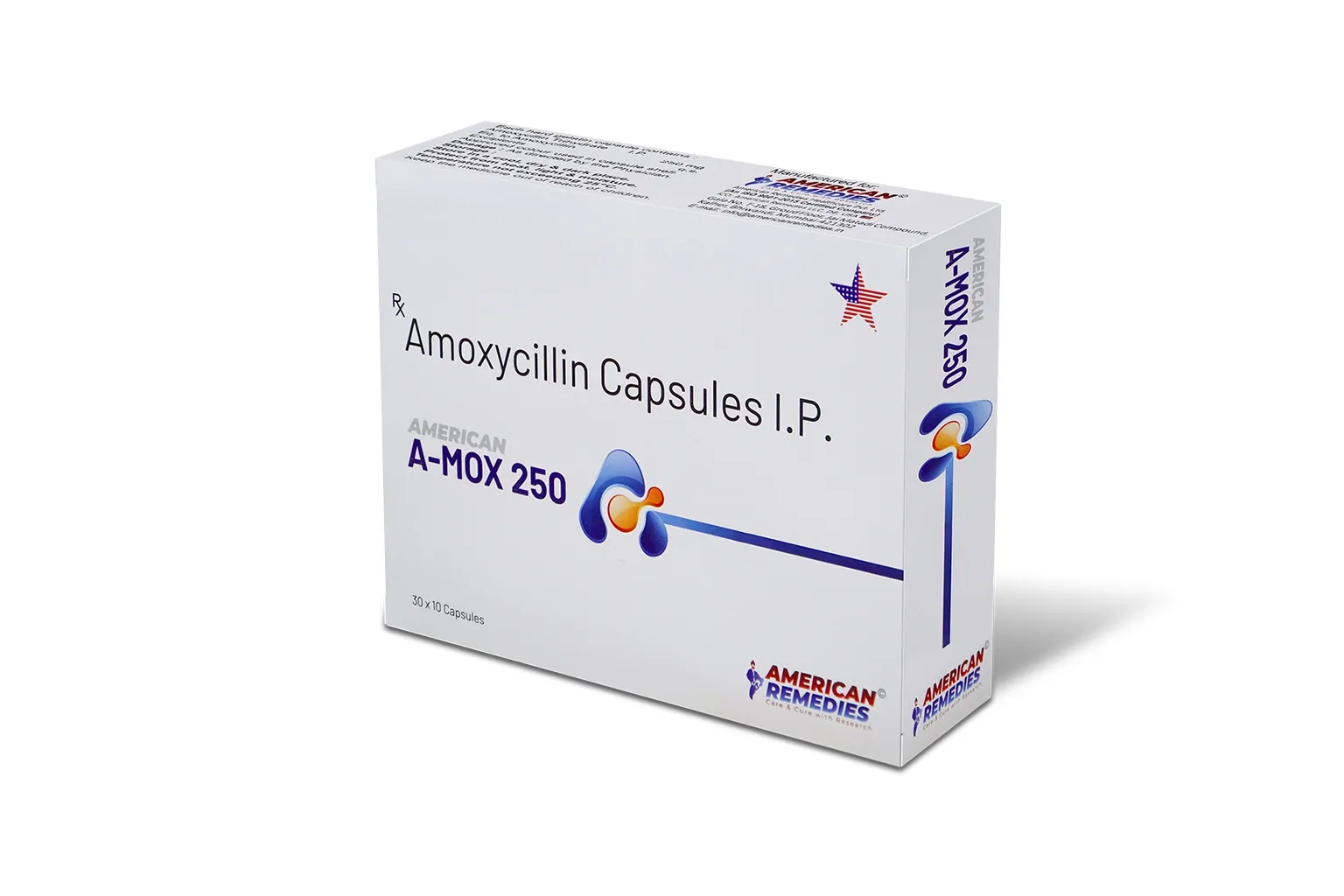
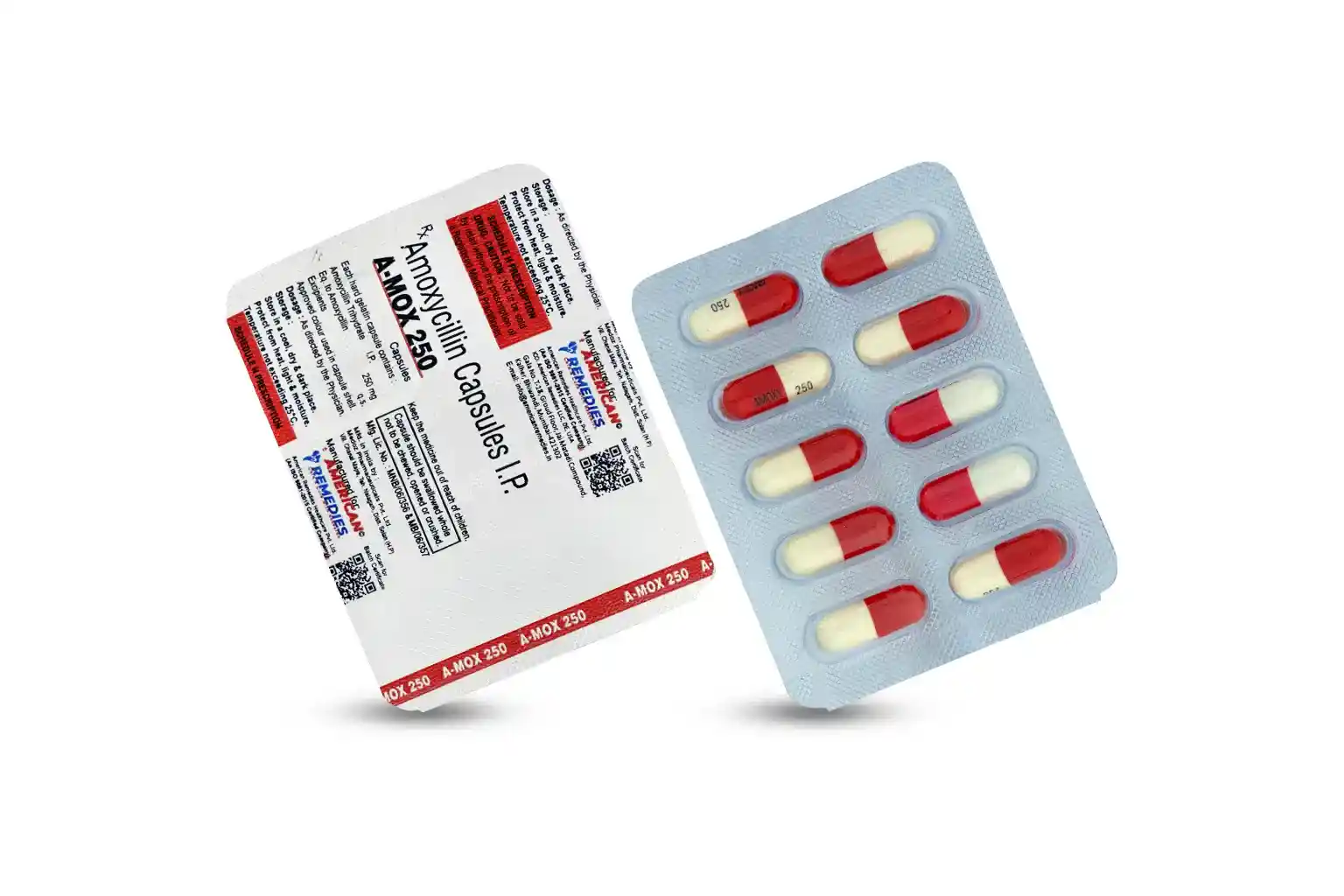
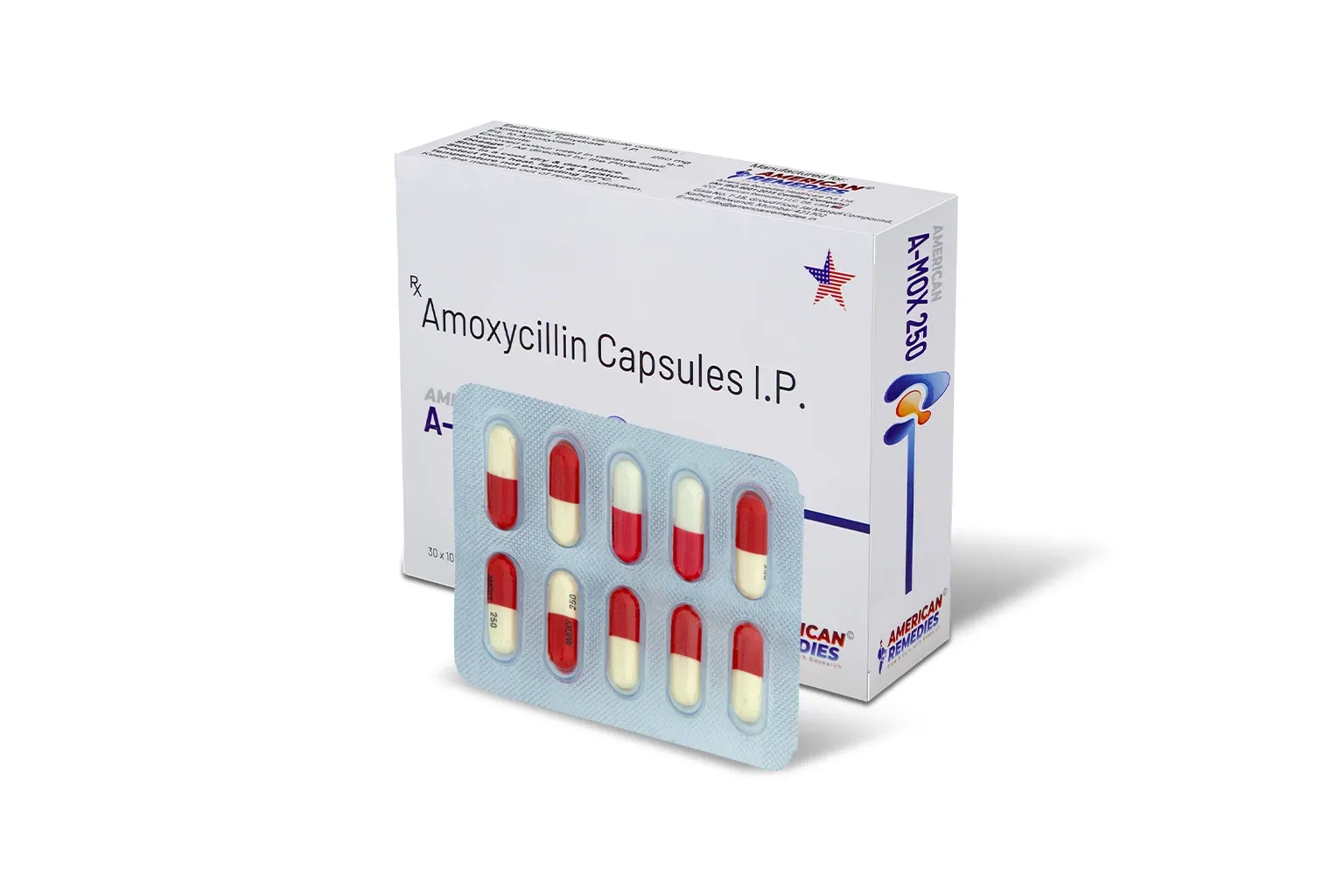

A-mox 250mg is a drug formulated to treat bacterial infections. Amoxicillin is a semisynthetic, broad‑spectrum penicillin antibiotic. Amoxycillin combines with penicillin-binding proteins (PBPs) in bacterial cell walls, which results in peptidoglycan inhibition and eventual bacterial cell lysis and death.
Key Features
| About A-mox 250mg |
|---|
| Drug Class: Antibacterial |
| Subclass: Penicillin (Aminopenicillin) |
| Product Details | |
|---|---|
| Composition | Active ingredient: Amoxicillin Inactive ingredients: • Microcrystalline cellulose • Croscarmellose sodium • Colloidal silicon dioxide • Pregelatinized starch • Magnesium stearate |
| Packaging Type | Blister (Box) |
| Pack Size | 10×3 |
| Dosage | 250 mg |
| Therapeutic Class | Antibacterial |
| Action Class | Bactericidal |
| Chemical Class | Aminopenicillin |
| Manufacturer | Jeerima Biocare |
| Shelf Life | 2 years from the date of manufacturing |
| Usages | Treats bacterial infections like pneumonia, bronchitis, otitis media, cystitis, and cellulitis. |
| Country of Origin | India |
| Storage | Store at room temperature (30°C), away from moisture and direct sunlight. |
How does A-mox 250mg work?
- Penicillin‑binding proteins or PBPs inside the bacterial cell wall.
- Amoxicillin irreversibly binds PBPs and inhibits the cross linking of peptidoglycan strands.
- Cell wall weakens, the bacterium swells and eventually lyses and bacterial death.
- Effective against many Gram‑positive (e.g., Streptococcus, Staphylococcus, except β‑lactamase‑producing strains) and Gram‑negative organisms (e.g., E. coli, H. influenzae, Proteus).
Uses of A-mox 250mg
- Use to treat Upper and lower‑respiratory infections: sinusitis, otitis media, bronchitis, pneumonia.
- Infections of the urinary tract: cystitis, pyelonephritis.
- Skin & soft‑tissue infections (cellulitis, impetigo).
- Dental Infections / Prophylaxis for Endocarditis.
- Certain sexually transmitted infections (e.g., uncomplicated gonorrhea, often as a single 3 g dose).
Dosage of A-mox 250mg
- Adults & children ≥ 12 yr: 250 mg-500 mg every 8 h or 500 mg every 12 hr, adjust for severity, higher doses for severe infections
- Children < 12 yr 20-40 mg/kg/day Divided q8h Max single dose usually 250 mg
- Renal impairment Reduce dose or extend interval Based on CrCl Consult dosing nomogram.
- Take with or without food; complete full prescribed course even if feeling better.
Strength of Medication
Side‑effects
- Nausea
- Vomiting
- Diarrhea
- Mild abdominal discomfort
- Maculopapular rash
Drug interactions
- Oral contraceptives: Their efficacy may be decreased by changing gut flora.
- Anticoagulants such as warfarin: Increased risk of bleeding due to changed vitamin K production.
- Probenecid: It decreases renal tubular secretion of amoxicillin, thus increasing its half-life.
- Drugs that influence renal function or gut flora: Use with caution when administered together.
Pharmacokinetics
- Absorption: Rapid, approx. 70‑80 % bioavailable; peak plasma 1‑2 h after oral dose.
- Distribution: Widely distributed; crosses placenta and enters breast milk.
- Metabolism: Negligible hepatic metabolism; excreted essentially unmetabolized.
- Elimination: Renal (glomerular filtration + tubular secretion), half-life approx. 1‑1.5 h (longer in renal failure).
- Dialysis: Removed by hemodialysis; supplemental dose may be needed after dialysis.
Efficacy
- Urinary Tract Infections (UTIs): Amoxicillin boasts an impressive clinical cure rate of up to 90% or more in uncomplicated cystitis. It’s also highly effective against E. coli, which is the leading cause of UTIs, with bacteriologic efficacy rates between 85-95%.
- Respiratory Tract Infections: Amoxicillin is active against respiratory pathogens such as Streptococcus pneumoniae, Haemophilus influenzae, and Moraxella catarrhalis.
Clinical Evidence
- Research has established that amoxicillin is as effective in treating cystitis in women, men, and women during pregnancy.
- Short-course amoxicillin regimens (3-7 days) have proven as effective as other first-line UTI drugs.
- Symptoms usually improve markedly within 1-3 days of initiating treatment.
Precautions
- Penicillin allergy: Contraindicated in patients with a history of immediate hypersensitivity to penicillin’s or cephalosporins (cross‑reactivity ~10 %).
- Renal failure: Dose adjustment; risk of accumulation
- Pregnancy & lactation: *FDA category B; generally considered safe, but use only if clearly needed.
- Superinfection: Prolonged use may promote fungal or resistant bacterial overgrowth.
- Severe hepatic disease: Use with caution; monitor liver function if high doses are used.
Conclusion
Amoxicillin 250 mg is a versatile, well-absorbed antibiotic that acts through the inhibition of bacterial cell wall synthesis. It is effective in the management of many common infections. It has a predictable safety profile and is usually inexpensive. Proper dosing along with completion of full courses and knowledge regarding allergic reactions and some key drug interactions will help in optimal outcomes. As always, discuss your personal medical history or concurrent medications with your healthcare provider before initiating therapy. This is for informative purposes only and should not be considered medical advice.
FAQs
2) How does A-mox 250mg work?
3) What can be the possible side effects of Amox-250mg?
4) Is A-mox 250mg safe for everyone?
Ryan Kim –
Loved every detail. Very responsive support. Top quality.