


Herxheimer Reaction: What It Feels Like During Holidays
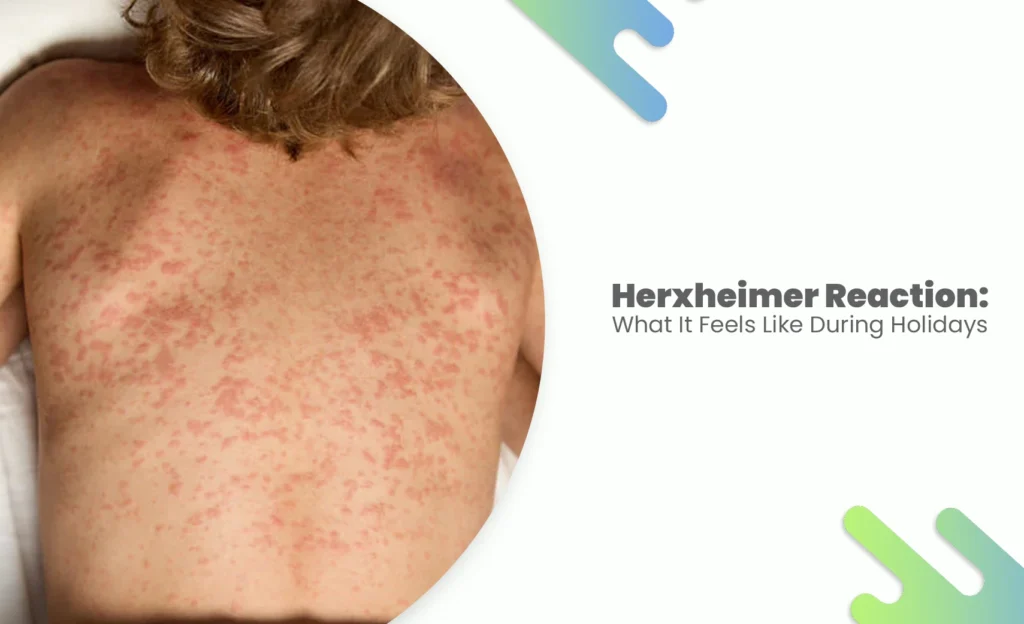
Nobody really plans to feel worse while getting better.
Yet that’s exactly how many people first encounter a Herxheimer reaction – right in the middle of the holidays, when life already feels loud, rushed, and emotionally overloaded. One day you’re wrapping gifts or booking travel, the next you’re waking up with a heavy head, sore muscles, and a strange sense that your body is lagging behind your intentions.
It feels unfair. Poorly timed. Almost insulting.
You tell yourself it must be stress. Or the cold. Or the food. Maybe a mild flu. During this time of year, everyone is tired and half-sick anyway, right?
Sometimes that’s true. And sometimes it’s something else entirely.
When Illness Doesn’t Look Like Illness
What makes this phase so confusing is how parasitic infections mimic other illnesses. Fatigue doesn’t arrive dramatically – it seeps in. Brain fog isn’t sharp enough to alarm you, just dull enough to frustrate you. The body aches feel flu-adjacent, not flu-level.
During the holidays, this mimicry works almost too well. Everyone around you is exhausted. Sleep schedules are off. Immune systems are already under pressure. So when symptoms start, they blend into the background noise of the season.
That’s often when treatment has already begun.
For some people, this is the window when medications like Iversafe 12 mg enter the picture – not as a sudden cure, but as the trigger for something quieter and more complicated: the body reacting to pathogens dying faster than it can clear them.
“I Feel Like I’m Getting Sick… But Not Sick Enough”
This is how people usually describe the first few days.
You don’t feel acutely ill. You can still function. But everything takes more effort. Getting out of bed feels heavier. Concentration slips. You cancel plans not because you can’t go, but because you don’t trust your energy to last.
The holidays magnify this discomfort. There’s pressure to show up, to be cheerful, to power through. When you can’t, guilt creeps in.
People taking Iversafe 12 mg often report this exact limbo – feeling unwell enough to worry, but not unwell enough to justify stopping life. It’s not dramatic suffering. It’s a persistent unease.
Are Stomach Issues Linked to Parasites? Here’s the Truth
Holiday food gets blamed for a lot, and often deservedly so. Rich meals, sugar, alcohol, unfamiliar cooking oils – it’s a digestive obstacle course.
But parasite-related gut symptoms behave differently.
People start asking themselves: Are stomach issues linked to parasites, or am I just paying for that dinner? The difference is subtle but real. Die-off-related discomfort doesn’t track cleanly with meals. It doesn’t spike and resolve. It lingers, shifts, and sometimes shows up even when you’re eating lightly.
Bloating without overeating. Nausea without a clear trigger. A sense that digestion is slow or unsettled for days rather than hours.
When Iversafe 12 mg is part of treatment, this phase can feel alarming – until you understand that the gut is one of the body’s main exit routes for toxins released during pathogen die-off. It’s not malfunctioning. It’s working overtime.
Brain Fog at the Worst Possible Time
There’s something uniquely distressing about brain fog during the holidays.
You forget names you’ve known for years. You lose your train of thought mid-sentence. You reread messages because they don’t land the first time. Conversations feel slightly delayed, like your responses are buffering.
It’s not severe cognitive impairment. It’s subtler than that – and that subtlety makes you doubt yourself.
People often ask whether this fog is stress, aging, or anxiety. Rarely do they consider that parasitic infections can affect mood or anxiety indirectly through inflammation and immune activation.
During treatment with Iversafe 12 mg, this mental heaviness sometimes becomes one of the most unsettling symptoms – not because it’s dangerous, but because it’s unfamiliar.
Why Holidays Make Everything Feel Worse
There’s nothing biologically special about December. The body doesn’t recognize holidays.
But the conditions surrounding them matter.
Sleep is shorter and less consistent. Alcohol sneaks in more often. Hydration drops. Stress rises quietly – through social expectations, family dynamics, travel delays, and financial pressure.
When a Herxheimer reaction happens in this environment, it feels amplified. Not necessarily because symptoms are stronger, but because your margin for discomfort is thinner.
That’s why people often look back and realize: If this had happened in a calmer month, I’d have handled it better.
When Iversafe 12 mg is taken during this period, the reaction itself doesn’t change – but your capacity to cope with it does.
Parasite Detox: Does It Really Work or Is It a Myth?
The word detox has been stretched beyond recognition, so it’s understandable when people roll their eyes.
But parasite detox, in its real biological sense, isn’t a myth. It’s not about teas or cleanses. It’s the body clearing what dies inside it – through the liver, gut, kidneys, and lymphatic system.
That process isn’t elegant. It can be uncomfortable. And it doesn’t always respect your calendar.
People sometimes expect treatment to feel immediately relieving. When it doesn’t, panic sets in. This is where self-medicating for parasites can be dangerous becomes obvious. Changing doses, stopping early, or layering random remedies only confuses the body further.
With Iversafe 12 mg, clinicians often emphasize that temporary discomfort does not mean treatment failure. It often means activity.
Emotional Shifts Nobody Warns You About
One of the least discussed parts of a Herxheimer reaction is the emotional layer.
Mood dips. Irritability. A low, unexplained anxiety that doesn’t match your circumstances. During the holidays, this can feel especially jarring – when you’re “supposed” to feel connected and grateful.
But inflammation doesn’t stay neatly in one system. It affects neurotransmitters, sleep quality, and emotional regulation. This is why people ask, often quietly, whether parasites can affect your mood or anxiety.
The answer is yes – temporarily, biologically, and usually reversibly.
Those using Iversafe 12 mg sometimes mistake these emotional shifts for personal weakness or burnout. In reality, it’s chemistry, not character.
The Temptation to Stop Early
At some point, almost everyone asks the same question: Should I stop?
The symptoms aren’t unbearable. But they’re inconvenient. And the holidays already feel like too much.
This is where context matters. Mild to moderate discomfort that fluctuates is common during die-off. Severe, worsening, or alarming symptoms are not – and they deserve medical attention.
Stopping treatment prematurely often extends the process rather than shortening it. That’s why guidance matters, especially with medications like Iversafe 12 mg, where consistency plays a role in outcomes.
Discomfort alone isn’t danger. But ignoring red flags isn’t wise either.
Testing Brings Clarity
Unlike stress or hangovers, parasitic infections don’t have to remain a mystery.
There are different tests for parasitic infection that help distinguish coincidence from cause. For many people, simply understanding why they feel the way they do reduces anxiety.
It turns vague fear into informed patience.
Looking Back, After the Holidays
A pattern shows up again and again.
Weeks later, people realize that the hardest part of treatment overlapped with the most chaotic time of year. Once routines returned – regular sleep, better hydration, lower stress – the body caught up.
The Herxheimer reaction faded. Improvement became steadier. Not dramatic. Just reliable.
For those who stayed consistent with Iversafe 12 mg, that uncomfortable holiday window often marked a turning point rather than a setback.
Final Thought
Healing doesn’t ask for permission.
It doesn’t wait for quiet weeks or perfect timing. And it certainly doesn’t pause for holidays.
A Herxheimer reaction during this season can feel like betrayal – your body choosing the worst possible moment to demand attention. But it isn’t sabotage. It’s response.
Sometimes, feeling worse for a while is simply what change looks like from the inside.
And once you recognize that, the experience becomes less frightening – even if it’s still inconvenient.
That understanding alone can make the holidays feel survivable again.
FAQs
- How do I know if what I’m feeling is a Herxheimer reaction or just holiday burnout?
That’s honestly one of the hardest parts. Holiday burnout usually improves with rest and a day or two of normal routine. A Herxheimer reaction tends to linger or come in waves, especially if it lines up with treatment timing. If the symptoms feel physical rather than purely emotional – and don’t fully reset after sleep – that’s often a clue. - Is it normal to feel worse before feeling better during treatment?
Yes, and that reality catches a lot of people off guard. We expect medicine to make us feel better immediately. With die-off reactions, the body is processing debris from dying pathogens, and that can temporarily make symptoms louder. It’s uncomfortable, but it doesn’t automatically mean something is wrong. - Why does this seem to hit harder during the holidays?
Because your body is already under pressure. Less sleep, more stress, travel, alcohol, irregular meals – it all lowers your tolerance for discomfort. The reaction itself may not be stronger, but your ability to cope with it definitely is. - Should I stop treatment if I feel emotionally low or anxious?
Emotional shifts can be part of a Herxheimer reaction, which surprises many people. That said, severe anxiety, panic, or mood changes that feel unmanageable shouldn’t be ignored. Mild emotional dips are common; intense or worsening symptoms are a reason to check in with a healthcare professional rather than deciding alone. - What’s the biggest mistake people make during a Herxheimer reaction?
Assuming they’re failing or that their body is “rejecting” treatment. That fear often leads to stopping early, changing doses randomly, or adding unplanned remedies. In many cases, patience, hydration, and understanding what’s happening would have made the experience far easier.