


Can Parasites Hide Inside Tattoos? Understanding Ink-Related Infections
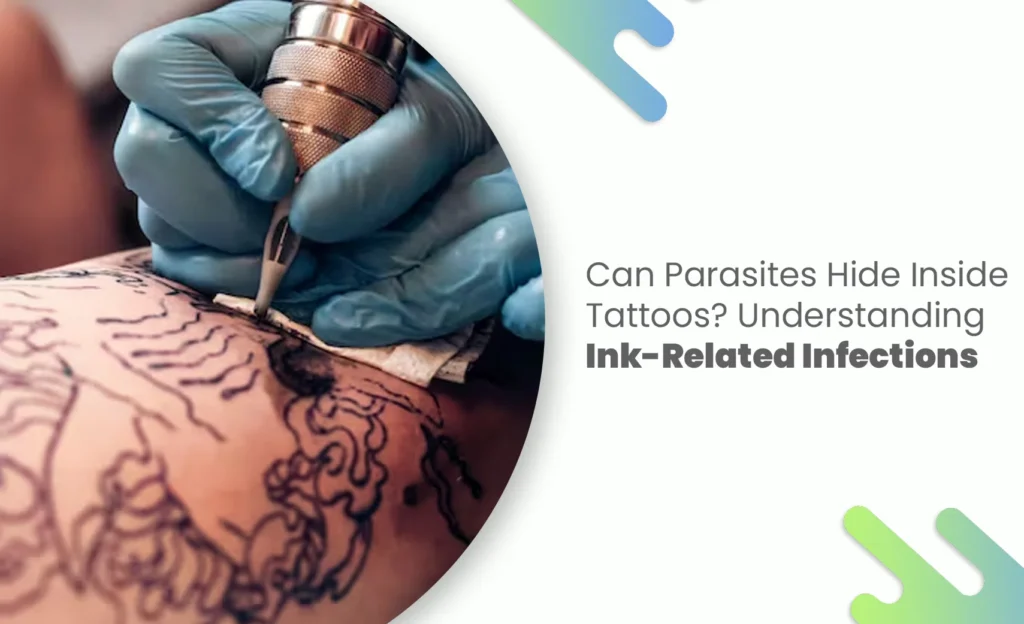
Tattoos have gone from edgy subculture to something your barista, your accountant, and maybe even your grandma proudly flaunt. Tattoos are everywhere. Minimalist ones, bold sleeves, delicate fine-line pieces. They’re personal stories etched onto skin.
But every now and then, a strange headline pops up:
“Worm found under tattoo,”
“Tattoo ink contaminated with microbes,”
or the infamous Reddit threads where someone posts a photo and the comments instantly spiral into:
“Bro, that’s definitely a parasite.”
You might be wondering if that is even possible? Can parasites actually hide inside tattoos?
Here’s the thing: the answer is not a simple yes-or-no. It’s layered, a little weird, and honestly, kind of fascinating. Because while parasites don’t use your tattoo ink as a secret Airbnb (thankfully), there are very real ways tattoos can become gateways for infections, including parasitic ones.

And yep, as someone who has spent years writing about everything from Demodex mites to intestinal worm treatments (I once covered How to Deal With Intestinal Worms? and even a deep-dive on Parasites and Malnutrition), the overlap between tattooing and parasitology is more real than most people realize.
So, let’s break it down human-style, not textbook-style.
The Fear: Parasites Crawling Into Tattoo Ink
This is where most myths begin.
When people imagine parasites in tattoos, they picture a tiny worm slithering under the colorful ink or hiding in the shading. Sounds weird, right? But that mental image has been shared so many times online that it almost feels believable.
But interestingly, dermatologists and parasitologists agree: parasites don’t crawl into ink pigments. They don’t “swim” through tattoo ink. They’re not chilling under your design like they’re stowaways in a submarine.
However and this is the part most people don’t know, parasites can enter through breaches created during tattooing, especially if the tools or ink were contaminated, or if aftercare wasn’t ideal.
And that opens the door to something real:
parasitic skin infection risks.
I once interviewed a tropical disease specialist for a piece on Strongyloidiasis: Symptoms, Causes, and Preventive Measures, and she said something that stuck with me:
“The skin is only a barrier when it’s intact. Any break creates opportunities.”
A tattoo is, by definition, thousands of microscopic breaks.
Contaminated Ink: The Hidden Culprit Nobody Warns You About
A surprisingly large number of tattoo inks, especially imported, unregulated ones, have been found contaminated with bacteria, yeasts, and occasionally environmental organisms.
The CDC actually issued alerts in past years about tattoo inks contaminated with Mycobacterium chelonae, which causes chronic skin infections that look suspiciously like parasitic conditions. (Think of persistent redness, bumps, and slow healing.)
This is where things get tricky, because:
- Most people don’t expect ink to be contaminated
- Symptoms often take weeks to show
- The infection appears inside the tattoo, making it look like the design itself is infected
This is how myths about “parasites inside tattoos” gained traction.
In reality, it’s usually bacterial tattoo infections ones but the timing, appearance, and location make people suspect parasites.
That said, there have been rare cases where parasites entered through open skin during tattooing, but we’ll get to that in a moment.
Okay, But Can Real Parasites Enter Through a Tattoo?
Short answer:
Yes, but rarely and only if the environment is contaminated.
Longer answer?
It depends on the type of parasite and where you got the tattoo.
For example:
1. Hookworm larvae (in tropical beaches)
If you got tattooed near sand or soil contaminated with animal feces, especially in humid coastal regions, microscopic larvae could enter the open skin.
This is the same mechanism described in articles like Can You Get Infected Through Swimming Pools? and Street Food and Worms: How to Stay Safe While Eating Out where environmental exposure plays the starring role.
2. Leishmania (in desert or jungle regions)
If sandflies bite freshly tattooed skin, the parasite can enter more easily.
This is rare but documented in travel medicine journals.
3. Fly larvae (myiasis)
This is the shocking one that freaks people out in YouTube compilations.
If you’re in tropical regions and a fly lays eggs in healing tattoo skin, the larvae can grow under the surface.
I had to write about a similar case once for a story involving Strongyloides Hyperinfection Syndrome, and honestly, those photos stay with you.
But again these are rare and usually linked to environment + open wounds + poor aftercare.
Parasites don’t care about ink.
They care about access.
And a tattoo creates that access temporarily.
When a Tattoo Turns Into Something Else Entirely
Sometimes, what people think is a worm or parasite inside the tattoo is actually:
- foreign-body reaction to ink
- granulomas
- allergic response
- biofilm bacteria
- fungal infection
I once found myself deep in research for Causes of Itchy Skin Without Rash, and one dermatologist said, “Tattoo reactions can mimic almost every skin disease.”
That’s why misdiagnosis is so common.
And this is also where medications like Iverheal 3mg enter the conversation.
Where Does Iverheal 3mg Fit In?
Let me be upfront: Iverheal 3mg isn’t used to “treat tattoo infections” directly.
It’s not some magical tattoo-cleaning pill.
But Iverheal 3mg is used for parasitic infections like:
- cutaneous larva migrans
- strongyloidiasis
- scabies
- certain skin mites
- some soil-transmitted helminths
So in rare cases where a parasite does enter through tattooed skin, doctors may prescribe Iverheal 3mg as part of treatment.
For example:
If someone got a tropical tattoo on vacation and later developed creeping, wavy red lines (classic cutaneous larva migrans), Iverheal 3mg is a standard treatment.
Or if mites infest irritated healing skin something that can happen with poor aftercare Iverheal 3mg becomes relevant again.
I’ve seen similar use cases when reporting on Iverhuman 12mg for Parasitic Infections: What You Should Know.
So while the drug isn’t “for tattoos,” Iverheal 3mg absolutely plays a role in treating the rare parasitic complications that may follow a tattoo.
And to be honest, that nuance often gets lost in online discussions.
The Real Risk Is Aftercare – Not the Tattoo Itself
Here’s where I get opinionated:
People underestimate how vulnerable tattooed skin is in the first week.
You basically have a giant controlled wound exposed to:
- bacteria
- yeast
- environmental fungi
- the occasional parasitic larvae (in very specific regions)
It’s not as simple as “keep it clean.”
Aftercare is half science, half common sense, half art. (Yes, that’s three halves. Welcome to tattoo logic.)
I once interviewed a tattoo artist in California who said:
“Most bad tattoo infections start after the client leaves the studio.”
That lines up with public health articles, including insights from Hygiene Mistakes That Lead to Infections.
Fresh tattoos hate unwashed bedsheets.
Fresh tattoos hate dirty gym equipment.
Fresh tattoos hate pets snuggling your arms.
Fresh tattoos hate beaches.
Fresh tattoos hate hot tubs.
And parasites especially love all those places.
Travel Tattoos Are the Biggest Risk
If you’ve ever gotten a tattoo in:
- Bali
- Thailand
- Mexico
- Peru
- parts of Africa
- remote islands
- cruise ship port towns
…then your risk of infection is higher simply because environmental pathogens are different.
Not worse, just different.
In fact, a skin doctor once told me that travel tattoos behave similarly to stomach problems after traveling, where unexpected microbes enter your system without warning.
It’s the unfamiliar microbes that cause the drama.
So… Can Parasites Really “Hide” in a Tattoo?
To be honest, the word hide is misleading; parasites don’t interact with ink.
But can they enter:
- through the openings created by tattoo needles,
- or during the healing phase,
- or through contaminated equipment,
- or via environmental exposure?
Yes.
It’s not common, but it’s medically plausible.
In the rare confirmed cases, treatment often includes antiparasitic drugs like Iverheal 3mg, especially if the parasite type responds to ivermectin-class medications. Dermatologists familiar with travel infections use Iverheal 3mg when symptoms match parasitic activity rather than bacterial infection.
That’s where understanding the difference matters.
A Quick Reality Check
Most tattoo complications are not parasitic.
Most are:
- bacterial
- allergic
- fungal
- inflammatory
- or related to improper aftercare
Tattoo-related parasitic infections happen, but they’re unusual like a plot twist nobody saw coming.
Still, with the rise of global travel tattoos and cheap inks sold online, more dermatologists are seeing tattoo complications that mimic parasitic infections. Which explains why I keep stumbling across studies while researching for articles like Scabies: Causes, Symptoms, and Treatment or Different Tests for Parasitic Infection.
Final Thoughts
I’ve interviewed dermatologists, parasitologists, tattoo artists, infectious disease doctors and even an entomologist who studies biting flies (a fun day at work, honestly).
Their collective view?
“Tattoos aren’t the problem. Contamination is.”
Parasites aren’t circling your ink like sharks around a boat.
But they’ll take advantage of any breach in the skin if the environment gives them the opportunity.
Tattoos just happen to be one such opportunity when aftercare or hygiene is compromised.
So get tattooed. Enjoy your art. Celebrate your story.
Just be smart about where and how you get it done.
And if something looks like a creeping rash, bumps that move, extreme itching, weird patterns, prolonged redness, talk to a doctor.
You’re not “being dramatic.” You’re listening to your skin.
FAQs
1. Can parasites really get into a tattoo while it’s healing?
Surprisingly, yes but only in very specific situations. Parasites don’t care about ink, but they do care about openings in the skin. So if you’re in a tropical region with contaminated soil or insects, a fresh tattoo can make things easier for them. Thankfully, this is rare and usually preventable with standard hygiene.
2. How do I know if my tattoo issue is a simple infection or something parasitic?
That’s the tricky part. Parasitic skin infections sometimes mimic allergic reactions or bacterial tattoo infections. If you notice creeping lines, intense itching that gets worse at night, or bumps that don’t heal for weeks, that’s when a doctor might check for a parasitic cause instead of the usual bacteria.
3. Can I use Iverheal 3mg if I suspect a parasite in my tattoo?
It’s tempting to self-medicate, but honestly, don’t. Iverheal 3mg is used for certain parasites, but it’s not a universal fix and won’t help with allergic or bacterial tattoo infections. A doctor needs to confirm the type of infection before deciding whether Iverheal 3mg is appropriate.
4. Are tattoo inks themselves dangerous?
Most reputable studios use sterile, high-quality inks. The problem comes from cheap, unregulated inks that may contain bacteria or impurities. Infections linked to contaminated ink have been documented by the CDC, though they’re uncommon. So choosing a professional artist is half the battle.
5. What should I do if my tattoo looks infected weeks after I got it?
Don’t wait it out. Chronic redness, swelling, bumps, or pain aren’t normal after the first week or two. Whether it’s a tattoo infection or something more unusual like a parasitic skin infection, early treatment makes a huge difference. A dermatologist can tell what’s going on and guide you properly.
References
- https://www.fda.gov/cosmetics/cosmetic-products/tattoos-permanent-makeup-fact-sheet
- https://www.who.int/news-room/fact-sheets/detail/soil-transmitted-helminth-infections
- https://dermnetnz.org/topics/tattoo-associated-skin-reactions
- https://doi.org/10.1111/ijd.16389
- https://doi.org/10.1016/j.tmaid.2023.102655