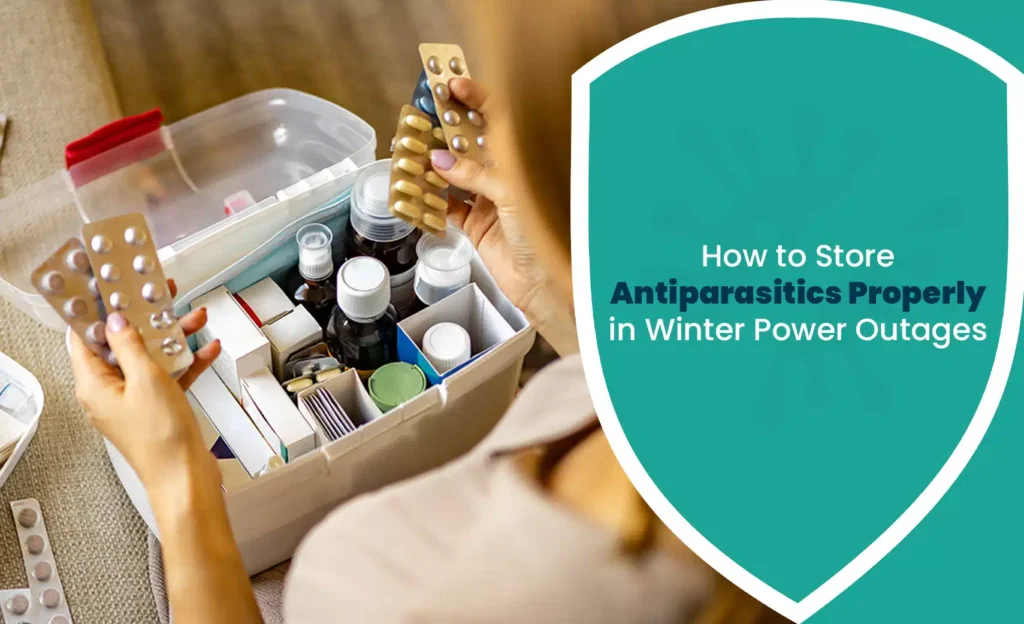
Winter doesn’t usually make people think about parasites. It makes us think about heating bills, frozen pipes, and whether the power will hold through the night. But winter has a quiet way of complicating health routines – especially when electricity drops and indoor temperatures stop behaving the way we expect.
I learned this during a long power cut a few winters ago. The house didn’t freeze, but it didn’t stay stable either. Rooms cooled unevenly. Cabinets near outer walls felt colder than the air itself. When the lights finally came back on, I opened a cupboard where I keep medications and had a small, uncomfortable realization: I had no idea whether they’d been affected – or how I’d even know.
That moment stuck with me. Especially because antiparasitic medications are often stored for later. They sit untouched for months, sometimes longer, waiting for a moment you hope never comes. And when winter outages interfere, that waiting period suddenly matters.
It’s something I’ve explored before while working on pieces like Do You Still Need Antiparasitics in December & January? Winter doesn’t pause infections. It just hides the risks better.
Why Winter Power Outages Are Harder on Medication Than Summer Heat
We’re conditioned to worry about heat. Summer cars. Direct sunlight. Warm bathrooms. Cold, by contrast, feels harmless. Clean. Preserving.
That assumption isn’t always correct.
Winter outages create something more unpredictable than heat: fluctuation. Temperatures drop slowly, then rebound quickly when power returns. Heating systems overcorrect. Air dries out. Condensation forms in places we rarely check.
Medications are designed with stability in mind – but stability assumes consistency. When that disappears, even sturdy tablets can start to degrade in subtle ways.
This becomes especially relevant for antiparasitics like Ivecop 12 mg, which many people keep on hand rather than use immediately. Time and environment interact quietly. Nothing looks wrong at first. That’s what makes it risky.
Cold Doesn’t Kill Parasites the Way We Think
There’s a popular belief that winter “solves” parasite problems. Cold weather equals safety. Fewer bugs. Less exposure.
Reality is messier.
Research and clinical observation – summarized well in articles like Do Parasites Survive Freezing Weather? (US Winter Truth) – show that many parasites tolerate cold far better than expected. Some slow down. Some go dormant. Few simply vanish.
Which means treatment still matters in winter. And treatment only works if the medication itself hasn’t been compromised by the very season we assume is safer.
This comes up often in households dealing with recurring problems like pinworms. Anyone who’s lived through Pinworm Itching at Night: Causes, Relief, and Prevention knows how frustrating it is when treatment feels incomplete. Storage issues don’t announce themselves, but they can undermine outcomes.
The Real Winter Threat: Moisture, Not Temperature
If cold were the only issue, storage would be simple. But winter outages introduce moisture – and moisture is where problems begin.
When power goes out, indoor air cools. When it comes back, heaters run hard. That rapid change creates condensation on windows, walls, and sometimes inside cabinets. Even sealed packaging isn’t immune if it’s stored near external walls or poorly ventilated areas.
I’ve opened a medicine box after a winter outage and felt it slightly damp. Not soaked. Not obvious. Just… off.
That’s enough to matter.
This overlap between winter dryness, itching, and parasite symptoms is why people often misread their bodies during colder months. Articles like Winter Itch or Skin Parasites? How Americans Can Tell exist because the line between seasonal irritation and infection is thinner than we’d like.
Where Antiparasitics Struggle Most During Outages
Most people store medicine where it’s convenient, not where it’s ideal. Kitchens near outer walls. Bathrooms with humidity swings. Basements that stay cool but trap moisture.
During winter outages, these spaces behave unpredictably.
Antiparasitics – including Ivecop 12 mg – do best in boring conditions. A dry room. Consistent temperature. No light. No drama.
Boring is underrated.
I’ve stopped chasing convenience and started prioritizing predictability. A quiet interior cupboard. A secondary container for insulation. Nothing fancy. Just fewer variables.
Why Refrigeration Usually Makes Things Worse
This comes up every winter: should you move medication into the fridge during an outage?
Unless the label specifically says so, the answer is almost always no.
Fridges don’t stay cold during outages. They warm slowly, trap moisture, then cool rapidly when power returns. That cycle is rough on tablets designed for room temperature stability.
For medications like Ivecop 12 mg, consistency matters more than cold. A stable cupboard beats a fluctuating fridge every time.
Winter Travel Complicates Everything
Winter isn’t just a season – it’s a travel pattern. Holidays. Flights. Packed luggage. Cold car boots.
I’ve written before about how exposure increases during travel in pieces like How to Treat Traveler’s Diarrhea vs Parasites Fast, and storage is part of that equation. Medications left in cars overnight can reach near-freezing temperatures. Checked luggage in cargo holds isn’t climate-controlled the way we assume.
If you travel with Ivecop 12 mg, keep it close. Carry-on. Inner bag. Somewhere buffered by body heat rather than metal and air.
It’s a small habit that makes a real difference.
Planning Isn’t Panic – It’s Prevention
Winter outages create stress. Stress leads to rushed decisions. Rushed decisions lead to mistakes – double dosing, self-medicating, or using compromised medication because it’s all that’s available.
That’s why discussions around Why Self-Medicating for Parasites Can Be Dangerous feel especially relevant in winter. When routines break, people improvise. Storage discipline reduces the need to improvise at all.
Good storage is quiet prevention.
Why Storage Is Part of Treatment (Even If No One Says It)
Antiparasitic care isn’t just about swallowing a tablet. It’s about timing, environment, follow-through, and trust in what you’re taking. That’s why broader guides like Antiparasitic Medication for Humans: Uses & Safety Tips or Parasites in Humans: Types, Symptoms, and Best Treatments matter – they frame medication as part of a system, not a standalone fix.
Storage sits inside that system.
If you’re keeping Ivecop 12 mg on hand because you’ve needed it before, proper storage is part of respecting that experience. It’s acknowledging that future-you deserves medication that works as intended.
After the Power Comes Back: What to Check
Most winter outages won’t ruin medication. But it’s worth checking.
Does the packaging feel damp?
Is there condensation inside blister packs?
Do tablets look different than you remember?
Medicine should feel unremarkably normal. If something feels questionable, don’t talk yourself out of that instinct.
Especially with Ivecop 12 mg, which people often rely on during moments they’d rather not repeat.
A Quiet Truth About Winter Health
Parasites don’t disappear because it’s cold. They adapt. People, on the other hand, assume safety and relax vigilance. That mismatch causes problems.
Articles like Do You Still Need Antiparasitics in December & January? exist because winter is when people underestimate risk – and overestimate resilience.
Storage is part of that blind spot.
Final Thoughts
Winter power outages don’t destroy medications overnight. They wear them down quietly, through cold, moisture, and inconsistency.
Storing antiparasitics properly during winter isn’t about perfection or paranoia. It’s about reducing uncertainty – so that when you reach for treatment, you’re not second-guessing whether it’s still reliable.
For anyone who keeps Ivecop 12 mg on hand, that peace of mind matters more than people admit.
Winter is unpredictable enough. Your medication doesn’t have to be.
FAQs
1. If the power goes out for a few hours, should I assume my medication is ruined?
Not automatically. Most antiparasitics are more resilient than we give them credit for. A short outage usually isn’t a problem on its own. What matters more is what happened around it – big temperature swings, moisture, or repeated outages. If everything looks and feels normal afterward, it probably is.
2. I keep my medicines in the bathroom. Is that actually a problem in winter?
In winter, yes – more than people realize. Bathrooms go through sharp humidity changes, especially when heating systems cycle on and off after an outage. That moisture is tougher on tablets than cold air alone. It’s one of those habits that feels harmless until it isn’t.
3. Wouldn’t putting antiparasitics in the fridge be safer during a winter outage?
It sounds logical, but it usually backfires. Fridges don’t stay cold during outages, and when power returns they cool fast while trapping moisture. That constant warming and cooling is rough on medications meant for stable room temperature. Unless the label says “refrigerate,” it’s better not to improvise.
4. How can I tell if tablets were affected by cold or moisture?
You won’t always see dramatic signs, which is frustrating. Still, check for things like damp packaging, cloudy blister packs, crumbling tablets, or anything that feels different from when you last handled them. Medicine should feel boring. If it doesn’t, that’s a signal worth listening to.
5. Is it overthinking to worry about storage this much?
It can feel that way – until you need the medication. Storage isn’t about anxiety; it’s about removing doubt later. Winter outages are unpredictable. Taking a few quiet precautions now means you’re not questioning effectiveness at the exact moment you want certainty.