Every December, something strange happens to privacy.
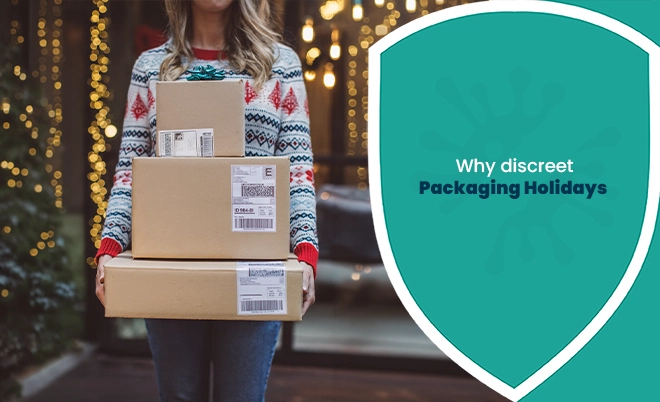
Front doors stay open longer. Family members pick up parcels meant for someone else. Neighbors accept deliveries “just for a minute.” The hallway turns into a shared sorting zone of cardboard boxes, festive tape, and curious glances.
Most of the time, it’s harmless. A sweater. A book. A last-minute gift.
But sometimes, what’s inside that box isn’t meant for group discussion.
I learned this the uncomfortable way, years ago, when a delivery arrived during a family holiday lunch. Someone helpfully brought it inside, read the label out loud, and placed it right in the center of the table – between the roast and the cranberry sauce. I smiled. Inside, I wanted the floor to open.
That moment stuck with me. And since then, while reporting on health, medications, and infection control, I’ve realized discreet packaging isn’t a luxury. During the holidays, it’s a form of protection.
Holidays change how deliveries work (and who sees them)
Outside of peak season, deliveries are simple. Doorbell rings. You sign. End of story.
Holidays rewrite that script.
Couriers rush. Packages get left with neighbors. Names are read aloud. Boxes pile up. People open things for each other without thinking – it’s helpful, after all.
This is exactly why discreet packaging matters more in December than any other time of year. Not because anyone is trying to snoop, but because boundaries blur when households fill up.
This becomes especially sensitive when deliveries involve health-related items. Medications. Treatments. Preventive care. Things people are managing quietly.
I’ve spoken to readers who told me they delayed ordering essentials simply because relatives were visiting. Others waited until January, risking symptoms worsening, just to avoid awkward conversations.
That silence has consequences.
Privacy isn’t secrecy – it’s control
There’s a misconception that wanting discreet packaging means you’re ashamed. That couldn’t be further from the truth.
Privacy is about choice.
Who knows. When they know. How they know.
Health decisions are deeply personal, even when they’re common. Especially when they’re common. No one owes a dinner-table explanation for what they’re treating, preventing, or managing.
This is something we also touched on while investigating why self-medicating for parasites can quietly backfire. People delay care not because they don’t care – but because they don’t want exposure, judgment, or unsolicited advice.
Discreet packaging removes that friction.
The holiday factor nobody plans for
There’s another layer people don’t anticipate: timing.
During holidays, deliveries arrive earlier than expected. Or later. Or not at all – until suddenly they do, right when the house is full.
One reader shared how a medication delivery arrived during a Christmas gathering, accepted by a visiting relative, and left uncomfortably visible. It led to questions they weren’t ready to answer, and worse, assumptions that weren’t accurate.
We see similar patterns in other areas of health. It mirrors what happens when families misinterpret symptoms – like confusing winter itch with parasitic skin conditions – because too many opinions enter the room at once.
Discretion prevents misinformation from spreading before facts have a chance to catch up.
Packaging influences behavior more than we admit
Here’s something rarely discussed: people are more likely to stay consistent with treatment when they feel secure ordering it.
I’ve seen data and anecdotal evidence align on this. When packaging is neutral – no logos, no labels, no obvious cues – people don’t postpone care. They don’t hide boxes. They don’t skip refills.
That matters for medications like Iverford 12mg, which people may order during busy travel seasons or after potential exposure.
Consistency is part of effectiveness. Privacy supports consistency.
This also connects to broader education gaps. We’ve covered how parasites often mimic other illnesses, leading people to delay action. Add fear of exposure, and delays stretch even longer.
Shared spaces amplify unintended exposure
During holidays, homes become communal environments.
Bedrooms are borrowed. Bathrooms rotate users. Packages sit on counters. Everyone notices everything.
Even well-meaning curiosity can feel intrusive when it comes to health. A box doesn’t need to announce its contents to the entire household.
This is particularly relevant when ordering items tied to infections, parasites or preventive treatments. We’ve seen how common household habits unintentionally spread infections. Packaging that draws attention only adds another layer of risk – social, not biological, but impactful nonetheless.
With discreet delivery, a package stays just that: a package.
Why this matters for parasite-related treatments
Parasite conversations still carry stigma, despite how common exposure actually is.
Travel, pets, food, water, even shared environments can play a role. Yet people hesitate to talk about it openly.
This is why discreet delivery options are especially important for treatments such as Iverford 12mg, which may be ordered during or after holidays when exposure risks rise.
We’ve seen spikes in interest around topics like holiday-related parasite exposure and whether antiparasitics are still needed in winter. The demand is real. The silence around it is too.
Packaging shouldn’t add another barrier.
The ripple effect of one visible box
What starts as a single visible label can spiral quickly.
Someone Googles. Someone offers advice. Someone shares a story – often inaccurate. Suddenly, the focus shifts from celebration to speculation.
I’ve watched this happen in real homes.
It’s similar to what happens when people confuse conditions – like mixing up scabies with eczema or assuming all itching is harmless. Too many voices, too little clarity.
Discreet packaging keeps the narrative where it belongs: with the individual.
Trust is built in the details
In healthcare reporting, trust isn’t just about what’s inside the pill or tablet. It’s about the experience surrounding it.
Ordering Iverford 12mg shouldn’t feel like making a public announcement.
When companies invest in neutral boxes, minimal labeling, and privacy-first delivery practices, they’re acknowledging something important: health management is not a performance.
This is the same philosophy behind why people ask for guides on how to get tested for parasites privately or which deworming options fit different lifestyles. Access improves when embarrassment is removed.
Holidays already demand emotional energy
Family gatherings come with enough emotional navigation. Old dynamics. New conversations. Unspoken tensions.
Health shouldn’t add to that load.
Discreet packaging allows people to focus on being present instead of being defensive. It prevents explanations that shouldn’t be required.
For those ordering Iverford 12mg during peak holiday delivery periods, discretion isn’t about hiding – it’s about preserving peace.
And peace is already in short supply this time of year.
A quiet form of respect
One thing I’ve noticed while interviewing patients and clinicians alike: the most appreciated healthcare features are often invisible.
No unnecessary notifications. No flashy branding. No assumptions.
Just respect.
Discreet packaging communicates that respect clearly. It says: Your health choices are yours.
That philosophy mirrors what we’ve emphasized in discussions around responsible antiparasitic medication use and why rushing or misusing treatment causes more harm than good.
Privacy creates space for responsible decisions.
When discretion encourages timely care
Here’s the part that doesn’t get enough attention.
When people know their delivery will be discreet, they act sooner. They don’t wait until symptoms worsen. They don’t postpone until January. They don’t gamble with “maybe it’ll pass.”
This is especially relevant for medications like Iverford 12mg, which are often part of structured treatment discussions rather than impulse purchases.
Timely care changes outcomes. Packaging plays a surprisingly large role in that timing.
Not everything needs to be explained at dinner
I’ve come to believe this strongly:
If a health choice requires justification in a social setting, something has gone wrong.
Discreet packaging prevents that moment before it happens.
It protects people from having to answer questions they didn’t invite. It prevents assumptions. It keeps health from becoming entertainment.
During holidays, when households are fuller and privacy is thinner, this matters more than ever.
Especially when ordering something like Iverford 12mg, which is better discussed with a professional than a relative across the table.
The bigger picture
Discretion isn’t about shame. It’s about dignity.
It’s about letting people manage their health without commentary, curiosity, or confusion.
As we’ve seen across multiple investigations – whether it’s parasites lingering on shared surfaces or why infections spike after travel-heavy seasons – the quieter the process, the safer it tends to be.
For anyone ordering Iverford 12mg during the holidays, discreet packaging turns a potentially stressful moment into a non-event.
And in healthcare, non-events are often the best outcome.
Final thoughts, from someone who’s been there
I still think about that lunch-table delivery.
Not because anyone did anything wrong – but because it reminded me how fragile privacy becomes when houses fill up.
Good healthcare doesn’t draw attention to itself. It supports quietly. It arrives without announcement. It leaves no unnecessary footprint.
That’s why discreet packaging isn’t just a shipping detail – it’s part of care itself.
Especially during the holidays.
Especially when ordering Iverford 12mg.
Sometimes, the best delivery is the one nobody remembers seeing at all.
FAQs
- Why does discreet packaging become more important during the holidays?
Because privacy naturally drops during this time. Homes are fuller, deliveries are accepted by relatives or neighbors, and packages are often opened or discussed casually. Discreet packaging prevents personal health decisions from becoming unintended group conversations. - Is discreet packaging only about avoiding embarrassment?
Not really. It’s more about control than embarrassment. Discreet packaging lets you decide who knows about your health choices, when they know, and how much they know – especially in busy, shared household settings. - Can visible medication packaging actually affect health decisions?
Yes. Many people delay ordering or refilling important treatments simply because family is visiting. When packaging is discreet, people are more likely to act on time instead of postponing care until after the holidays. - What usually goes wrong when packaging isn’t discreet?
Questions, assumptions, unsolicited advice, and sometimes misinformation. Once attention shifts to a visible package, it can quickly turn into speculation – something most people want to avoid during already emotionally loaded family gatherings. - Is discreet packaging about hiding health issues from loved ones?
No. It’s about choosing the right moment and setting for those conversations – if you want them at all. Health discussions are personal, and discreet packaging simply keeps that decision in your hands, not the delivery label’s.