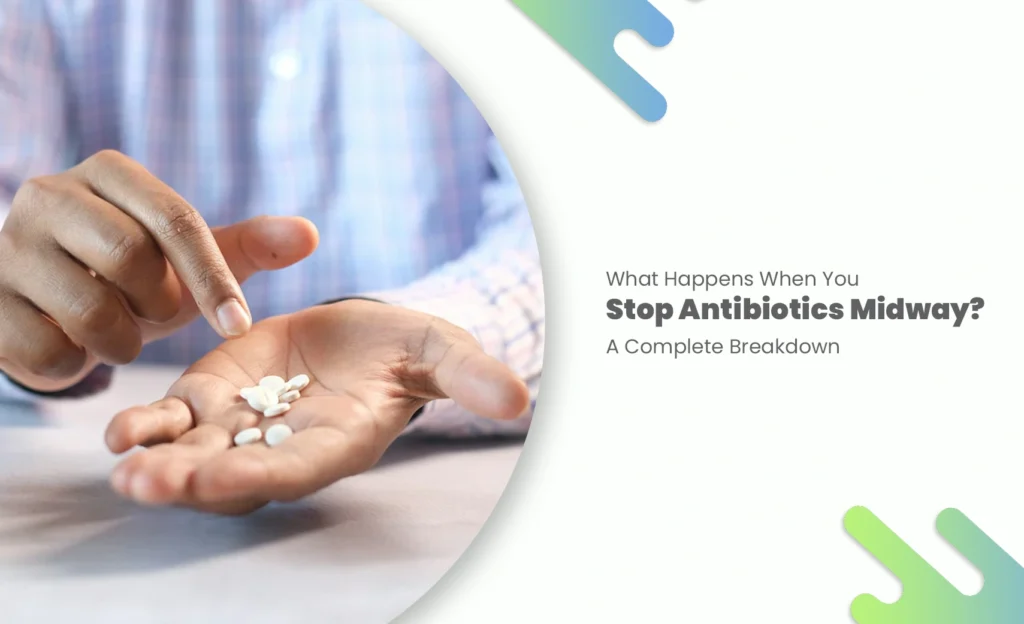
There’s a quiet little lie many of us tell ourselves:
“I feel fine now. I don’t think I need the rest of these antibiotics.”
Honestly? Been there. And I’ve heard this same confession from friends, family, and random interview subjects more times than I can count. We start feeling better halfway through the medication, and suddenly the rest of the pills feel…optional.
But here’s the thing and it’s a slightly uncomfortable one: stopping antibiotics early can set off a chain of events inside your body that’s way more complicated (and problematic) than most people realize.
It’s not dramatic to say this: the consequences ripple far beyond a missed pill.
Your Symptoms Disappear Before the Infection Does
Let’s be real: symptoms are terrible liars. They disappear before the underlying bacterial infection is fully wiped out especially when you’re on something like Doxycycline 100mg Capsules.

I once asked an infectious-disease specialist why this happens, during an article I was writing on Symptoms and Treatment of Bronchitis.
She told me:
“Pain and fever fade once inflammation drops. But that doesn’t mean the bacteria have stopped multiplying.”
That line stuck with me. It’s the same trick that happens in scabies, pinworms, or even intestinal parasites as I wrote in How to Protect Yourself From Intestinal Worms? symptoms are often just surface-level drama. The real story is happening underneath.
And when it comes to antibiotics, feeling better isn’t evidence of cure.
It’s just… evidence of relief.
What’s Really Happening Inside Your Body When You Stop Early
Okay, here’s the unfiltered version.
The early doses of Doxycycline 100mg Capsules kill off the weak bacteria, the ones that can’t put up a fight.
Then the tougher ones, the ones with attitude, the ones that survive longer, start getting hit.
But they need multiple doses to actually die.
Stopping midway is like giving these stubborn bacteria a motivational speech:
“Hey, you survived! Now go reproduce.”
This is exactly the kind of environment that leads to antibiotic resistance.
And trust me, it’s not as simple as you think.
I remember researching a piece called Why Your Infection Isn’t Improving With Antibiotics, and every expert I spoke to said the same thing: partial treatment doesn’t just fail, it strengthens the infection for next time.
It’s like you’re teaching the bacteria your attack strategy, then walking away halfway through the battle.
The Rebound Infection (It Comes Back Meaner)
You know what’s oddly universal?
The “I almost got better” cycle.
A person gets a sinus or chest infection, is prescribed Doxycycline 100mg Capsules, takes them for four days, feels human again, and decides they’re done.
Then a week later, they’re coughing more aggressively, or the fever creeps back, or the fatigue hits like a truck.
Interestingly, I saw a similar pattern researching Why UTIs Keep Coming Back – partial treatment leads to recurring infections that feel “mysterious” but are really just poorly treated earlier episodes.
Stopping antibiotics halfway sets the stage for
- rebound symptoms
- longer illness
- stronger bacteria
- and more expensive treatment
It’s a frustrating cycle because you think you’re recovering… until you’re not.
How Bacteria Outsmart You (And the Drug)
Think of your infection like a room full of people.
The weak ones leave first when Doxycycline 100mg Capsules show up.
But the resilient ones? They hang around, learn, adapt.
Stopping early is like calling off the security guard while the most dangerous troublemakers are still inside.
This is how antibiotic resistance develops – the surviving bacteria learn how to dodge that same drug next time. It’s the same logic behind why scabies infestations return (something I dug deep into in Scabies Treatment Mistakes). Leaving survivors behind always leads to trouble.
That said, it’s not your fault entirely. No one teaches us this stuff properly.
When Patients Say “But I Felt Fine…”
Here’s where things get complicated.
People stop antibiotics early for genuinely human reasons:
- The stomach upset is too annoying
- Pills feel like a chore
- They forget
- Side effects spook them
- They assume the infection has cleared
I’ve heard variations of this story a hundred times, especially while interviewing people for articles like Why You Get Skin Infections Every Winter.
Human behavior is predictable and completely understandable.
But biology?
Biology is not forgiving.
A half-treated bacterial infection doesn’t magically disappear. It waits.
Why Doctors Insist on Finishing the Full Course
It’s not to torture you, I promise.
Every antibiotic including Doxycycline 100mg Capsules is prescribed in a quantity that ensures complete bacterial elimination.
Early doses reduce the total bacterial load.
Middle doses weaken the persistent ones.
The final doses finish off the strongest survivors.
Skip the last few doses and it’s like skipping the final rinse cycle in your washing machine.
Things may “look” clean, but they aren’t.
This same pattern shows up in parasitic treatments too.
While writing Using Covimectin for Scabies, I learned that incomplete treatment often leads to reinfestation not because the medicine failed, but because the patient didn’t finish the course.
Infections thrive on incompleteness.
Stopping Early Doesn’t Just Affect You – It Affects Everyone
This is the part that people don’t talk about enough.
When your partially treated bacteria survive, they don’t stay politely inside your body.
They spread to partners, kids, coworkers, friends, strangers.
Stopping antibiotics early is one of the contributors to the global rise of drug-resistant infections, something I discussed in Antibiotic Resistance Explained.
Every unfinished course becomes part of a larger, invisible public health problem.
Not dramatic. Just biological.
Side Effects Make You Want to Quit – And I Get That
To be honest, one of the biggest reasons people stop Doxycycline 100mg Capsules early is side effects.
Nausea.
Weird taste.
Stomach bloating.
Photosensitivity.
It can feel like the pill is making things worse before making them better.
But as I found while writing Can You Be Allergic to Antibiotics?, most side effects are mild, temporary, and manageable. The real danger lies in incomplete treatment, not the discomfort.
Sounds annoying, and it is, but the stakes are higher than the inconvenience.
The “Shorter Antibiotic Course” Trend – Misunderstood by Many
Interestingly, newer research is exploring whether some infections need shorter antibiotic courses.
But and this is crucial, these shorter courses are doctor-prescribed, not self-edited.
It’s like when I wrote Should You Use Probiotics? the nuance often gets lost. People latch onto headlines without reading the medical context.
A doctor might adjust your antibiotic duration.
You shouldn’t.
Two very different things.
Rare Times When Stopping Early Is Necessary
There are exceptions, but they’re medically supervised:
- Severe allergic reaction
- Dangerous drug interaction
- Incorrect diagnosis
- Lab results requiring a change in treatment
This is similar to what I learned while working on Do Ear Infections Need Antibiotics? Sometimes the medicine isn’t right, and stopping is appropriate.
But only a clinician can decide that.
Stopping randomly isn’t the same as stopping safely.
If You Already Stopped Early… Here’s What You Should Do
Let’s say you took 3 out of 7 days of Doxycycline 100mg Capsules and stopped. Then symptoms restarted.
Don’t panic.
Just call your doctor.
To be honest they’ve heard worse.
They may:
- Restart the same antibiotic
- Switch to a different one
- Run a culture test
- Extend the duration
This is the same kind of practical approach I emphasized in Impact of UTIs on Everyday Life.
Treatment is fluid. Doctors adjust. That’s their job.
The Bigger Lesson: Infections Need Completion, Not Assumptions
Antibiotics aren’t like painkillers.
They’re missions.
And missions aren’t complete until every target is cleared.
Stopping halfway leaves the toughest bacteria behind which leads to recurrence, complications, or resistance.
Whether it’s chest infections (I explored this in why chest infections need full antibiotic course) or stomach issues after travel, or intestinal parasites like in From Gut to Lungs: How Worms Travel Inside the Body, the theme stays the same:
Half treatment = full problem later.
So the next time symptoms disappear on day three, remember: symptoms lie.
Bacteria don’t.
Finish the course.
Your future self and honestly, everyone around you benefits.
FAQs
1. Is it really dangerous to stop antibiotics once I start feeling better?
Honestly, yes. Feeling better doesn’t mean the bacterial infection is fully gone. Symptoms fade early, but the stronger bacteria remain. Stopping halfway through treatment whether it’s Doxycycline 100mg Capsules or another antibiotic can cause the infection to come back even worse.
2. What should I do if I accidentally missed a dose or two?
Don’t panic. It happens. Just take the next dose as soon as you remember (unless it’s almost time for the next one). What you shouldn’t do is double-dose or stop altogether. If you missed several doses, it’s safer to call your doctor and be upfront about it.
3. How do I know if stopping early caused antibiotic resistance?
You might not know immediately. But if the infection comes back quickly, becomes harder to treat, or needs a stronger medication, those are early signs. This is something I’ve seen often while researching why antibiotics fail or why infections keep returning.
4. Can I stop antibiotics early if the side effects are too much?
Side effects from Doxycycline 100mg Capsules nausea, stomach upset, mild headaches can feel annoying, but stopping without medical advice isn’t the answer. If the side effects feel severe or dangerous, that is a reason to call your doctor and ask if you should switch to something safer.
5. Are shorter antibiotic courses safer than long ones?
Not automatically. Some infections respond well to shorter doctor-prescribed courses, but this doesn’t mean you can shorten them on your own. A 3-day course recommended by your doctor is very different from taking only 3 days of a 7-day prescription.