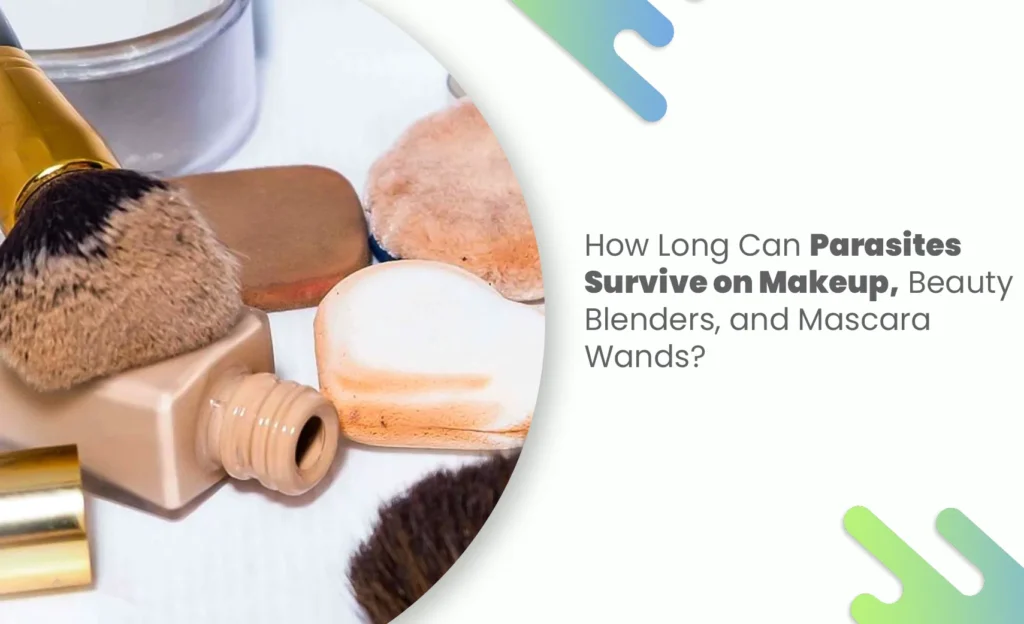
Most of us love our makeup routines. The soft swirl of a beauty blender, that satisfying click when mascara closes, the familiar little puff of air when you open a compact. It’s comforting… almost ritualistic. But here’s the thing most beauty lovers don’t want to think about:
Table of Contents
ToggleYour makeup tools might be crawling with microscopic parasites.
Sounds weird, right?
I know. When I first learned about this as a health journalist, I had to put down my own makeup sponge and stare at it like it had betrayed me.
But the more I dug, the more I realized how often parasites cling onto everyday objects we barely think twice about. From face brushes to lip gloss applicators, these tiny organisms are sneakier than influencers who “forget” to mention #ad.
And yet, it’s not as simple as you think. Parasites don’t behave the same way bacteria do. Some die quickly. Some survive longer than you’d ever expect. Some like Demodex mites practically thrive in oily environments like the base of your eyelashes.
So, let’s talk about how long parasites actually survive on makeup products… and what you can do to keep them from turning your beauty kit into a microscopic zoo.
The Makeup-Parasite Connection (Yes, It’s Real)
If you’ve ever wondered whether parasites can hop from person to person through shared cosmetics, the brutally honest answer is: yes.
A lot of people forget that parasites aren’t just tropical, dramatic, National Geographic creatures. Some of them are silent hitchhikers the kind that cause itchy skin, eye irritation, breakouts, and infections that don’t quite go away.
This is why articles like How to Clean Your Makeup Tools to Avoid Skin Mites or Demodex Mites on Humans: Symptoms, Causes, and Effective Treatments exist. They’re not clickbait. They’re warnings.
Interestingly, many parasitic infections that appear “mysterious” stubborn bumps, crusty eyelashes, recurring skin rashes often stem from organisms surviving far longer on makeup tools than anyone expects.
Let’s Talk About Beauty Blenders (Your Squishy Frenemies)
The beauty blender is basically a sponge. And sponges hold moisture. Parasites love moisture the way teenagers love TikTok obsessively and without boundaries.
In lab conditions, certain parasites survived up to 48 hours on porous surfaces. Some even longer if the sponge wasn’t washed or dried properly.
If you’re the type who tosses your beauty blender into a makeup bag immediately after use, still damp, still warm you’re basically creating a tiny Airbnb for parasites.
And if someone else borrows that sponge?
Well… say hello to possible cross-contamination.
I remember once interviewing a dermatologist who said she sees more cases of parasite-related facial irritation in makeup artists than in pet owners. That shocked me. But the logic tracks more clients, more tools, more unseen transfer.
Blogs like How to Deal With Intestinal Worms? and Are Stomach Issues Linked to Parasites? Here’s the Truth actually touch on how easily these organisms spread through unexpected contact surfaces.
Mascara Wands: The Perfect Parasite Shuttle
Mascara wands are sneaky. They go directly onto one of the most parasite-friendly parts of your face: your eyelashes.
And yes, eyelashes naturally have Demodex mites. Most of us have a few; that’s normal. But when numbers increase often due to old mascara, shared wands, or contaminated tools symptoms appear:
- Itchy eyelids
- Redness
- Crusty lash lines
- Feeling like something is “moving” in your lashes
Parasites can survive on mascara wands for up to 72 hours, depending on humidity and how much oil or dead skin is caught in the bristles. That said, if your mascara is older than a few months, that little tube becomes a dark, damp ecosystem that parasitologists whisper about.
This is the part where some people start panicking and googling things like Can You Treat Scabies at Home? or Parasitic Infection: Symptoms, Causes and Treatments which, honestly, is understandable.
Compact Powders and Foundations: Dry, But Not Safe
Most parasites don’t survive well on dry surfaces. That’s the good news. The bad news? Your makeup compact isn’t really dry. Pressed powders collect sebum, humidity from your bathroom, face oils, and little flecks of skin.
And parasites can cling to those.
Usually for 24–72 hours.
If you’re thinking: “OK but I only use my own makeup, so I’m fine,” remember this if you’ve ever tested a sample at a store, shared compact mirrors, used communal brushes, or touched up makeup after touching your pet?
You’ve already created the pathway.
Articles like Common Household Habits That Spread Infections highlight how often people unintentionally contaminate objects like brushes and mirrors without noticing.
Where Does Iverjohn 3mg Come In?
You might be wondering whether certain antiparasitic medications can help when parasites move from tools to skin. And yes, products like Iverjohn 3mg often come up in conversations about treating mite-related infections or stubborn skin issues caused by small parasites.
To be honest, I’ve seen dermatologists prescribe Iverjohn 3mg in cases where patients deal with chronic eyelid inflammation that doesn’t respond to ordinary cleansing. It’s not a “beauty fix,” obviously, but sometimes the underlying problem is parasitic rather than cosmetic.
Interestingly, some people with persistent skin irritation notice improvement only after using Iverjohn 3mg, especially when paired with proper makeup tool hygiene.
But this is important. Iverjohn 3mg isn’t something you take casually. It’s used for specific parasitic infections, not “occasional itchiness.” And doctors usually recommend supporting hygiene practices alongside it.
That said, if parasites from makeup tools trigger recurring issues, articles like Can You Get Scabies from Cats? or Scabies: Causes, Symptoms, and Treatment help clarify when medications such as Iverjohn 3mg become relevant.
Cross-Contamination: Your Makeup Bag Is Part of the Problem
A lot of people store makeup in dark, warm pouches. Guess what thrives in darkness and warmth?
Parasites. Fungi. Bacteria.
Makeup bags are like tiny climate-controlled pods for survival. Parasites from a brush can crawl onto a sponge, onto a mirror, onto your lip balm not immediately, but slowly, deliberately. It’s how they work.
If this freaks you out, you’re not alone. It’s the same feeling people get when they read Are Smartwatches and Fitness Bands Carrying Parasites? a surprisingly relevant article when you consider how often devices touch your face.
How Long Parasites Survive on Each Makeup Item
Let’s break it down, without turning this into a strict listicle:
- Beauty blenders: 24–48 hours (longer when damp)
- Mascara wands: Up to 72 hours
- Powder brushes: Around 48 hours, longer if moist
- Compacts/pressed powders: 24–72 hours depending on surface oils
- Lipstick surfaces: 12–24 hours
- Eyelash curlers: Up to 72 hours
There’s some variation depending on the specific parasite. This is why some people battling repeated skin issues eventually require medical treatment such as Iverjohn 3mg, especially if contamination keeps recurring.
Real Talk: Do Parasites Actually Cause Breakouts?
Some do.
If you’ve ever had random bumps that look like acne but feel itchy or inflamed, parasites could be involved. This is where related reads like Does Spicy Food Kill Parasites? or How to Treat Demodex Blepharitis Fast help unravel the mystery.
I once interviewed a woman who kept getting red patches near her cheeks. She switched foundations, moisturizers, even shampoos. Nothing worked. Then she discovered her makeup brush had been harboring tiny organisms. Once she washed everything and after her doctor put her on Iverjohn 3mg the symptoms faded within two weeks.
Parasites aren’t imaginary. They just hide well.
Can Makeup Actually Give You a Parasitic Infection?
Not typically in the dramatic “intestinal worm” way though if that’s what you’re researching, How to Get Tested for Parasites or Different Tests for Parasitic Infection are good starting points.
But yes, makeup can transfer:
- Eyelash mites
- Skin parasites
- Scabies mites
- Contaminated eggs or larvae (rare but possible)
Most commonly, makeup spreads skin-level parasites that cause irritation, breakouts, and inflammation.
Products like Iverjohn 3mg sometimes appear in treatment plans when the spread becomes persistent.
How to Reduce Parasite Survival on Your Makeup Tools
I promised no strict listicles, so think of this as advice floating together naturally:
Wash your brushes weekly. Let your sponges fully dry. Replace mascara every 2–3 months. Don’t share makeup, not even with your best friend. Don’t use tester products at stores unless they’re single-use.
And definitely read blogs like Hygiene Mistakes That Lead to Infections or Common Mistakes People Make When Treating Scabies. They’re like a crash course in not accidentally creating the perfect parasite habitat.
Some people even rotate two sets of makeup tools so one set can fully dry while the other is in use.
It sounds excessive… until you realize what happens when they don’t.
Final Thoughts: Makeup Isn’t the Enemy – Neglect Is
Makeup doesn’t attract parasites. But warm, moist, shared, or unwashed makeup tools? Yeah. Those are basically parasite hostels.
It’s not about paranoia; it’s about awareness.
Your beauty routine shouldn’t turn into a microbiology experiment gone rogue. A little hygiene, a little common sense, and the occasional doctor-prescribed treatment like Iverjohn 3mg (used only when actual parasitic infections are present) go a long way toward keeping your skin and your sanity intact.
If you ever suspect something more serious, browse articles like:
- How to Clean Your Makeup Tools to Avoid Skin Mites
- Demodex Mites on Humans
- Common Household Habits That Spread Infections
- Parasites in Humans: Types, Symptoms, and Best Treatments
Your skin will thank you later.
FAQs
1. Can parasites really survive on mascara wands?
Surprisingly, yes and longer than most people think. Mascara wands trap oils, skin flakes, and moisture, which are basically snacks for tiny organisms. Some parasites can linger for up to 72 hours on the bristles. That said, this usually becomes a problem only if the mascara is old, contaminated, or shared. If you’ve dealt with recurring eyelid irritation, reading something like How to Treat Demodex Blepharitis Fast can help you make sense of the symptoms.
2. Do beauty blenders hold more parasites than brushes?
Honestly? Often, yes. Beauty blenders are porous, absorb moisture, and sometimes never fully dry which is a dream environment for microscopic organisms. I’ve seen dermatologists call them “germ hotels.” If the sponge stays damp inside a makeup bag, parasites can survive for days, not hours. Hygiene tips from blogs like How to Clean Your Makeup Tools to Avoid Skin Mites can be surprisingly useful here.
3. Can parasites from makeup cause acne-like breakouts?
They can especially if the culprit is tiny skin parasites like mites. These organisms irritate follicles, trigger inflammation, and make breakouts look “different” than usual acne. If your bumps feel itchy or clustered around the eyes, cheeks, or hairline, parasites might be involved. Related reads like Demodex Mites on Humans: Symptoms, Causes, and Effective Treatments go into the gritty details that most people never hear about.
4. How do I know if my makeup is contaminated?
There’s no dramatic sign, unfortunately. Makeup won’t suddenly smell rotten or change color. Instead, your skin will tell you through unexplained rashes, itchiness, sudden eyelid crusting, or breakouts that don’t behave like normal pimples. If symptoms keep coming back even after switching products, contamination could be part of the story. That’s when articles like Common Household Habits That Spread Infections become eye-opening.
5. What’s the safest way to prevent parasite transfer through makeup?
Start with the basics: don’t share products, wash tools weekly, and replace mascara every 2–3 months. Let your beauty blenders dry completely sunlight helps. And keep your makeup bag clean (yes, wipe the inside). If you suspect a more serious infestation or persistent irritation, medical treatments may be needed, which is why blogs like Parasites in Humans: Types, Symptoms, and Best Treatments give helpful background before you see a doctor.