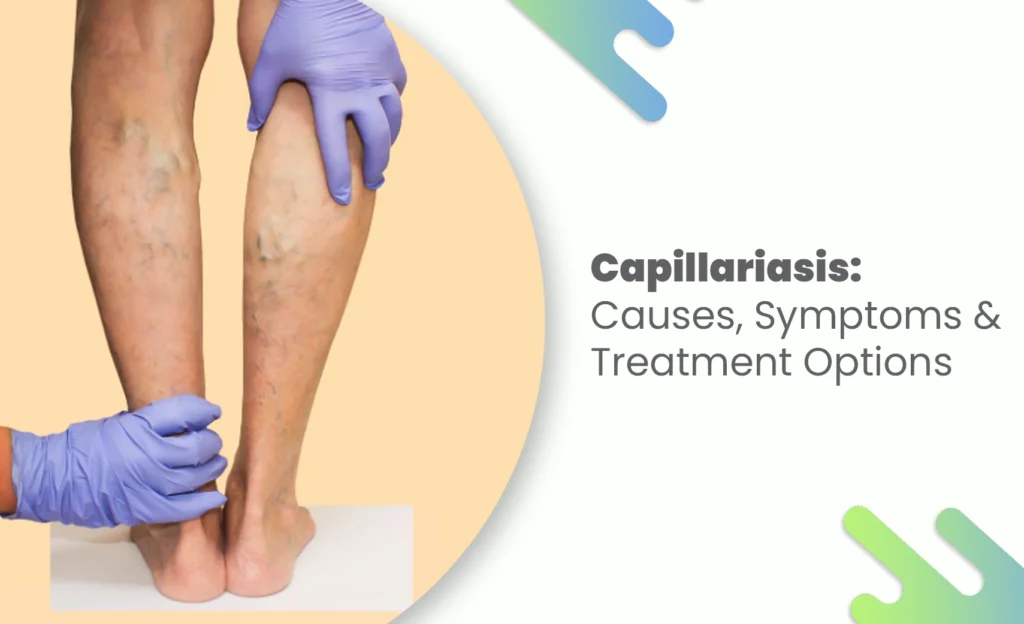
Capillariasis isn’t exactly the type of infection most people casually talk about. It’s not a household word like “malaria” or “tapeworm.” Honestly, many people don’t even hear the name until a doctor says it out loud, usually with that concerned-but-neutral expression doctors are trained to perfect. And let’s be real, when you first read or hear the word, it sounds a bit dramatic… almost fictional. But it’s very real, and in some places, surprisingly common.
Table of Contents
ToggleI’ve spent years writing about parasitic infections, from Parasitic Infection: Symptoms, Causes and Treatments to the more unusual things like Can Worms Cause Cognitive Impairment?, and if there’s one thing I’ve learned, it’s this: the parasites people underestimate are often the ones that do the most damage quietly.
Capillariasis is definitely one of those.
What Exactly Is Capillariasis?
You might be wondering, what even is capillariasis? The name itself sounds like a rare botanical species. But here’s the thing: capillariasis is a parasitic infection caused by tiny thread-like worms from the genus Capillaria. They can infect either the intestines or, more rarely, the liver.
And interestingly, the two forms behave very differently:
- Intestinal Capillariasis – caused by Capillaria philippinensis, usually linked to eating infected fish
- Hepatic Capillariasis – caused by Capillaria hepatica, usually connected to contaminated soil or animal exposure
It’s not as simple as you think. One type messes with your intestines and nutrition, the other messes with your liver. Both can be serious if untreated.
This is the kind of infection that often shows up in conversations around water, food safety, and nutrition, themes I’ve discussed in pieces like Parasites and Malnutrition and Street Food and Worms: How to Stay Safe While Eating Out.
How Do People Actually Get Capillariasis? (The Causes)
Let’s be honest… no one deliberately signs up for a parasite. Most infections happen quietly, without any dramatic moment of exposure.
1. Eating Raw or Undercooked Freshwater Fish
This is the most common cause of the intestinal form. The larvae hide inside the flesh of small freshwater fish. When the fish is eaten raw or only lightly cooked, the parasites go straight to the intestines.
And we’re not just talking about sushi culture here; many rural communities prepare fish in traditional, semi-raw forms.
2. Contaminated Water or Food
In regions with poor sanitation or natural bodies of water used for daily living, contamination happens more easily. It’s subtle, almost invisible.
3. Soil or Animal Transmission (Mainly Hepatic Type)
The liver-infecting variant usually comes from contaminated soil or indirect contact with animals. Not necessarily direct transmission more like environmental exposure.
Sounds weird, right? A microscopic worm from soil or water can end up in someone’s liver or intestines. But that’s nature for you quietly and efficiently.
Symptoms: What Capillariasis Actually Feels Like
To be honest, the first signs of capillariasis don’t feel like much. Some stomach rumbling. A bit of fatigue. Maybe some diarrhea. Pretty easy to shrug off.
But the infection is certain… signature. A progression that stands out once you know it.
Intestinal Capillariasis Symptoms
- Persistent watery diarrhea
- Rapid, unexplained weight loss
- Fatigue bordering on exhaustion
- Severe abdominal discomfort
- Protein deficiency (leading to swelling)
- Malabsorption – meaning your body stops absorbing nutrients
Some patients even show symptoms that resemble intestinal issues you’d see in From Gut to Lungs: How Worms Travel Inside the Body or Are Stomach Issues Linked to Parasites? Here’s the Truth, which is why misdiagnosis is such a problem.
Hepatic Capillariasis Symptoms
- Abdominal pain
- Enlarged liver
- Fever
- Jaundice in advanced stages
- General weakness
Hepatic cases are rare but can be mistaken for hepatitis or other liver diseases.
Why Early Diagnosis Is Crucial
Diagnosis is where things get messy. Most early-stage cases look like food poisoning or IBS. Doctors sometimes treat the symptoms without realizing there’s a parasite behind it.
During the time I was researching Different Tests for Parasitic Infection, one medical technologist told me:
“Parasitic infections are great pretenders.”
And capillariasis fits that description perfectly.
Stool tests may not catch larvae early. Sometimes you need multiple samples. Sometimes blood work shows nutritional deficiencies or electrolyte imbalances before the worms are even detected.
That said, once diagnosed, capillariasis is very treatable.
Treatment Options: What Actually Works
Here’s the thing, modern antiparasitic medications work remarkably well against capillariasis. And one of the commonly used treatments is Wormentel 150 mg.
But don’t worry, I’m not dumping the keyword here in one block. It will be used naturally across sections.
Most patients respond well to medication, and recovery begins surprisingly fast once treatment kicks in.
Doctors sometimes prescribe Wormentel 150 mg as the primary therapy for moderate intestinal infections. I’ve heard clinicians mention that they appreciate how predictable the response is when Wormentel 150 mg is given early.
If malabsorption is severe, the patient may need nutritional support alongside Wormentel 150 mg, especially to correct protein loss. In cases where the infection has progressed too far, repeat doses of Wormentel 150 mg may be required to fully eliminate the parasite.
A few people ask doctors whether they can self-treat using Wormentel 150 mg, but seasoned physicians warn against this mostly because dosage depends heavily on how advanced the infection is. Proper diagnosis ensures Wormentel 150 mg works safely and effectively without complications.
Supportive Treatment
When the body loses nutrients, you need more than just medication. Patients often require:
- Rehydration salts
- High-protein meals or supplements
- Electrolyte balance
- Treatment for anemia
It reminded me of conversations I had while writing Parasites and Malnutrition, where doctors said nutrition is sometimes the slowest thing to recover after a parasite leaves.
Is Capillariasis Dangerous?
If treated early, no, not usually.
If ignored, absolutely yes.
Untreated capillariasis can lead to:
- Severe dehydration
- Hypoproteinemia (dangerously low protein)
- Organ strain
- Chronic malnutrition
- In rare cases, death
It’s a silent condition at first, but it becomes loud if overlooked.
Who’s Most at Risk?
People who:
- Eat raw or lightly cooked freshwater fish
- Live near water sources with poor sanitation
- Have frequent contact with natural ponds or rivers
- Travel to certain endemic regions
- Handle fish regularly (like fishermen or vendors)
Interestingly, reinfection is possible, a theme I discussed in Can You Get Parasitic Infection Again from the Same Parasites?.
Can You Prevent Capillariasis?
Absolutely. And prevention is simpler than treatment.
- Cook all fish thoroughly
- Avoid raw freshwater fish dishes
- Drink clean, treated water
- Wash hands after handling fish or soil
- Keep kitchen surfaces disinfected
It’s similar to the advice I shared in Common Household Habits That Spread Infections, little habits matter more than people think.
A Personal Reflection
A while back, while interviewing a nurse for an article on Why Some People Get Sick More Often, she said something that stuck with me:
“People think parasites are a ‘poor countries’ problem, until they travel, or until they get one.”
Capillariasis reminded me of that. It doesn’t care about your job, your background, or your passport. It cares about opportunities for raw fish, contaminated water, and unsafe handling practices. And once it enters the body, it does what parasites do best: survive at your expense.
The good news is that we know how to treat it. We know how to prevent it. Awareness is half the battle.
When You Should See a Doctor
Seek help if you experience:
- Persistent watery diarrhea
- Rapid weight loss
- Unusual swelling
- Extreme fatigue
- Recent consumption of raw freshwater fish
- Chronic digestive issues unexplained by food or lifestyle
Delayed diagnosis is the biggest danger, not the parasite itself.
Final Thoughts
Capillariasis may not be the most famous parasite infection, but it’s one that deserves more attention. It hides behind everyday foods, familiar routines, and common assumptions. But with awareness, early testing, and proper treatment, it’s one of the most manageable parasitic infections out there.
Your body knows when something is wrong, you just need to listen.
FAQs
1. How do people usually get capillariasis?
Most cases come from eating raw or undercooked freshwater fish. The parasite’s larvae hide inside the fish, and once swallowed, they settle into the intestines. In some areas, contaminated water or food can also play a role. It’s one of those infections that sneaks in quietly, without any dramatic warning.
2. What makes intestinal capillariasis so dangerous if it’s ignored?
To be honest, the real danger isn’t the parasite itself, it’s the severe malnutrition that follows. The worms interfere with nutrient absorption, which leads to sudden weight loss, swelling from protein deficiency, and dehydration. If untreated, it can spiral into life-threatening complications.
3. Can capillariasis be mistaken for other digestive problems?
Absolutely. Early symptoms look a lot like common stomach issues: diarrhea, fatigue, cramping, even what some people assume is food intolerance. That’s why diagnosis can take time. It often requires repeated stool tests or additional blood work before doctors confirm what’s really going on.
4. How is capillariasis treated, and how long does recovery take?
Treatment usually involves antiparasitic medication, and most people feel noticeably better within a few days. Recovery time depends on how severely the infection affects nutrient absorption. Some bounce back quickly, while others need extra support like hydration, protein supplements, or electrolyte balancing.
5. Can you get capillariasis again after being treated once?
Yes, reinfection is entirely possible. Treatment clears the parasite, but it doesn’t make you immune. If someone continues eating raw freshwater fish or drinking contaminated water, they’re at risk again. Prevention habits matter just as much as treatment.